Picture a glass of water. Now imagine it contains not just water but the story of how
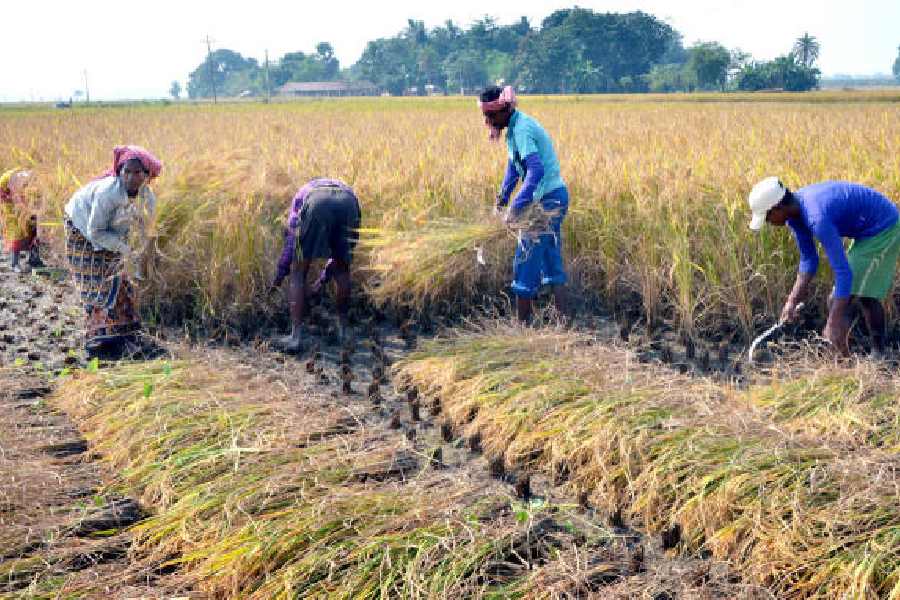
it travelled through soil, nourished crops, and eventually left India’s shores — not as water but hidden inside a sack of rice or a crate of sugar. This is the essence of ‘virtual water trade’, a concept revealing the fact that water-stressed India is among the world’s largest exporters of water embedded in the crops we ship overseas.
Between 2006 and 2016, research by Anna University found that India exported
an average of 26 billion litres of virtual water annually. More recent studies
by IFPRI and other institutions confirm that India remains a major virtual water exporter, with rice, cotton, and sugarcane — some of the world’s most water-intensive crops — driving this invisible drain. When India exported approximately 16 million tonnes of rice in 2023-24, it essentially sent away roughly 40 billion cubic metres of virtual water — equal to 17% of the country’s annual groundwater extraction.
If rice grabs headlines, sugarcane — perhaps the most problematic challenge — operates in the shadows. India is the world’s second-largest sugar producer and significant exporter. Sugarcane demands between 1,500 to 3,000 litres of water per kilogramme. Maharashtra — prone to drought — uses a staggering 2,450 litres per kg of sugar, compared to 990 litres in Uttar Pradesh. The math is sobering: sugarcane occupies just 3-4% of Maharashtra’s cultivated area but consumes 60-70% of the state’s irrigation water. This water-guzzling crop has been cultivated on record areas even during drought years, driven by assured procurement and political patronage of sugar cooperatives. India’s sugar exports in 2024-25 reached approximately 775,000 tonnes. With Maharashtra’s water footprint, this translates to billions of litres of virtual water leaving water-scarce regions.
The irony runs deep. India’s agricultural policies — designed to ensure food security —inadvertently incentivise virtual water exports from the most water-stressed regions. The minimum support price regime overwhelmingly favours rice and wheat, creating monoculture patterns divorced from regional water realities. Punjab, where groundwater extraction has reached 164% of sustainable recharge, continues to grow water-intensive paddy. Haryana follows suit at 136%. Between 2003 and 2020, these two states lost 64.6 billion cubic metres of groundwater.
Agricultural exports earned India $41.25 billion in 2020-21, sustaining millions of farming families. Rice exports support livelihoods across Punjab, Haryana, Uttar Pradesh, and Andhra Pradesh. The challenge is not whether to export but how to export sustainably. Research points to several pathways.
States with rain-fed agriculture and better water endowments should become primary sourcing zones for water-intensive exports. Haryana’s ‘Mera Pani Meri Virasat’ scheme, which pays farmers ₹7,000 per acre to shift from paddy to less water-intensive crops, deserves wider adoption.
Rather than eliminating rice and wheat MSPs, expand the basket to include millets, pulses, and oilseeds. Direct income support schemes like PM-KISAN can supplement this transition, maintaining farmer welfare while incentivising diversification.
Gradual shifts toward metered electricity, combined with compensatory cash transfers, could reduce wasteful extraction without hurting farmer incomes.
Micro-irrigation, System of Rice Intensification, and Alternate Wetting and Drying techniques can reduce water use by 30-40% without yield penalties.
The choice is ours: continue exporting water we cannot afford, or redesign our agricultural system to export prosperity instead.
Raktimava Bose and Sanjib Pohit are, respectively, Consultant and Professor at National Council of Applied Economic Research. Views are personal