The Centre’s unveiling of new protocols pertaining to the national song is revealing. The Union home ministry has notified that all six stanzas of “Vande Mataram” — these now comprise the official version of the national song — would have to be played or sung. Prime Minister Narendra Modi has been on record in Parliament accusing Jawaharlal Nehru of truncating “Vande Mataram” in a bid to yield to the demands of Muhammad Ali Jinnah. It needs to be pointed out that the Constituent Assembly had adopted only the first two stanzas of “Vande Mataram” in 1950. This decision, too, has a backstory. In 1937, the Congress, heeding the advice of Rabindranath Tagore, had adopted the two verses so as to affirm the nation’s secular ethos. There are other new developments that must be noted. The occasions in which “Vande Mataram” would be performed include the hoisting of the Tricolour: does this mean that the national song will now precede the national anthem at public functions such as Republic Day? Notably, standing during the performance of “Vande Mataram” has been made mandatory at public functions: this honour was so far reserved for “Jana Gana Mana”.
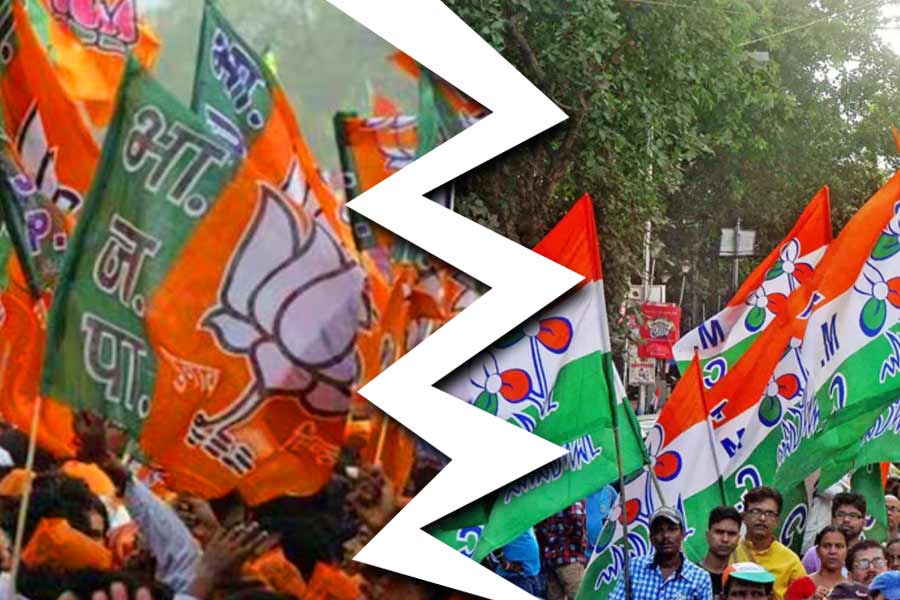
In an election year in Bengal, the Centre’s perceptible push for “Vande Mataram” has, unsurprisingly, set political tongues wagging. The ruling Trinamool Congress, which likes to project itself as the custodian of Bengal’s inclusive ethos, has alleged that the Bharatiya Janata Party’s ideological mantle is inimical to Tagore’s pluralistic vision that was mirrored by his decision to embrace an abridged version of “Vande Mataram”. Such an accusation — it is not shorn of evidence — could corner the BJP in a state where Tagore, justifiably, is perhaps the tallest icon. The BJP, on its part, appears to be fleshing out a counternarrative. It has, in confirmation of its ideological strain, sought to enquire whether the TMC is uncomfortable with passages that glorify Bengal’s beloved goddess. This bid to appropriate cultural and literary icons by rival political outfits can have an unfortunate consequence. It may create a perception, abetted by a shrill media, of Bankim Chandra Chatterjee being an ideological adversary of Rabindranath Tagore. The fact of the matter is that artists and their works are mirrors of their time. So their views need to be seen in specific contexts. The gleaning of these settings is best left to scholars and historians. For politicians, everyone, including icons, is a means to achieve a narrow aim.