Bangladesh has always been a breeding centre of conspiracy theories. Part of this can be explained by the imperfections of the local media, including its habitual, and often slavish, subservience to whoever is in power. There is, however, a more obvious explanation. Conspiracy is permanently in the air of Bangladesh simply because the country’s 55-year-old history is replete with actual plots and intrigues, many of which have succeeded and many more of which were somehow thwarted.
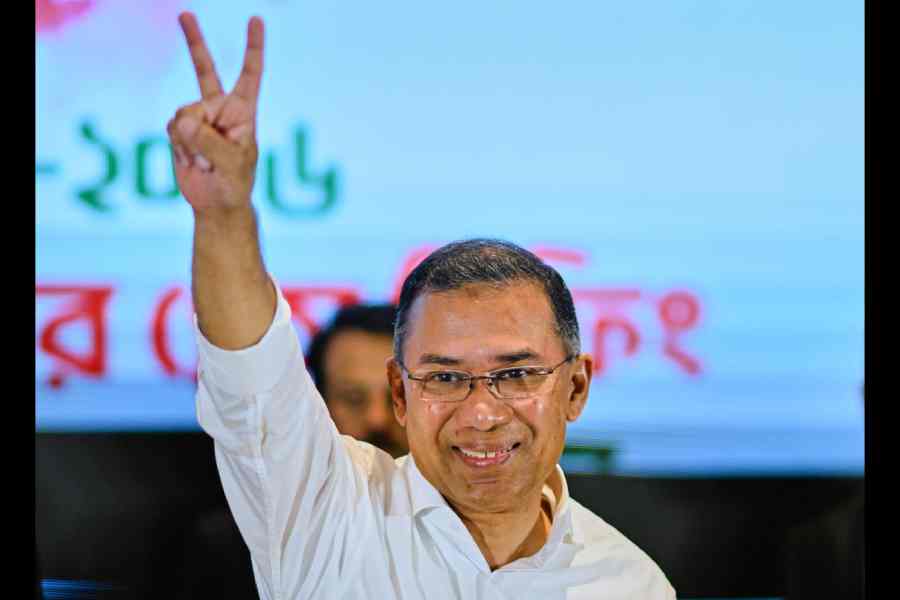
The February 12 election that resulted in an emphatic win for the Bangladesh Nationalist Party was preceded by whispers of multiple conspiracies. Among the more interesting developments that were supposed to have unfolded was the supposed proxy war between India and the United States of America, the voters of Bangladesh being the pawns in the conflict. India, or so it was suggested in the bush telegraph, had put its weight behind the late Khaleda Zia’s son, Tarique Rahman, and upstaged the US, which had put its money behind the Jamaat-e-Islami-led alliance that included the National Citizen Party, the organisation of the so-called July revolutionaries.
In the fortnight preceding the election, it was being increasingly suggested that the initial euphoria over Tarique Rahman’s return from a long exile in London had dissipated and that the disciplined cadres of the Jamaat would spring a big electoral surprise. It was also suggested by Sajeeb Wazed, the US-based son of the exiled and former prime minister, Sheikh Hasina, that Washington had plotted to ensure a fractured verdict that would justify the continued relevance of the coterie around Mohammed Yunus, the chief adviser of the caretaker regime.
The emphatic BNP victory is understood to have been contrary to the assessment of the lesser functionaries of the US state department who determine its Bangladesh policy. Although the Jamaat performed exceedingly well, polled approximately 2.41 crore votes (some 31.7%) and won 68 seats, its performance paled into insignificance compared to the around 3.79 crore votes (49.9%) and 209 seats won by the BNP. Predictably, like every defeated party in every Bangladesh election, the Jamaat cried foul. However, unlike others in the past, it has stated it will not take to the streets and function as a responsible Opposition inside Parliament.
Since the election outcome appears to have been accepted by all the players — the Awami League was kept out of the field — dissecting the conduct of the polls is an academic exercise. At the same time, understanding why the results were what they were may be a pointer to how political developments in Bangladesh could unfold in the near term.
First, there is reason to believe that the 59.4% turnout reported by the Bangladesh Election Commission is a generous overestimate. Apart from reports of voter-less booths, some supposedly triggered by panic arising from social media posts originating from India, there were reports of widespread impersonation and ballot stuffing — familiar to those who have observed local body elections in neighbouring West Bengal after 2018. It is impossible to estimate the quantum of dodgy votes. One estimate by Transparency International Bangladesh pointed to an actual turnout of less than 25%. If true, it would suggest that the legitimacy of the entire election was questionable.
Secondly, in his numerous post-election interactions with the media, the Jamaat ameer, Shafiqur Rahman, shied away from directly charging anybody with electoral irregularities. This squeamishness was not on account of any fear of BNP-inspired recrimination. Maybe the embarrassment stemmed from the awareness that in Dhaka and a few other towns, it was a late intervention by the cantonments that tilted the scales against the Jamaat and upset all calculations of a hung Parliament. It is, however, important to note that the BNP was not the exclusive beneficiary of guided democracy. In some constituencies, the police and armed personnel weighed in to prevent a Jamaat defeat.
Finally, despite widespread irregularities and the absence of Awami League candidates from the election, it would be overstretching the point to assert that the government headed by Prime Minister Tarique Rahman is illegitimate. The Jamaat and the NCP mounted a spirited bid to win power, believing that the absence of the Awami League would be to their advantage. However, the BNP deftly chose to occupy the middle ground and present itself as a party that wouldn’t rock the boat excessively. The Jamaat also scored a monumental own goal by denying women’s representation on theological grounds. The scale of the victory may not have been anticipated but it corresponded to the overall feeling that Bangladesh needed a booster dose of stability to overcome the damage caused by the uprising against the Hasina government and the venal mismanagement of the Yunus interregnum. This may be a reason why a flawed election did not provoke any adverse reaction either within the country or internationally. The muted reaction of the Awami League’s exiled leadership was also prompted by a sense of relief among their leaders and activists still inside the country that the period of vicious harassment was finally over. The Awami League still remains a banned organisation, but Tarique Rahman’s appeals for national unity have prompted a belief that it is only a matter of time before it resumes political activity.
An examination of the internal politics of Bangladesh should temper the irrational exuberance — particularly in some Indian circles — over the return of a stable government, blessed with a popular mandate. It is quite clear that the foundations on which the BNP government rests are fragile. The Jamaat failed in its bid to win power, but it has expanded its base, and the morale of its supporters is high. Its leadership has shown considerable maturity by not making an issue of the shortcomings in the electoral process. The immediate return to agitational politics is premature for any Opposition force.
Yet, the problems confronting Bangladesh are so monumental that it is only a matter of time before the government faces street protests. The Jamaat will be tempted to bare its fangs at this juncture. Whether the BNP has the political resilience to face a concerted challenge from a very well-organised Jamaat is in doubt. In such a situation, the return of the Awami League to the political arena may well become a necessity for the Bangladesh Establishment.
However much India desires political stability and a friendly neighbourhood, Bangladesh seems destined to experience another bout of choppiness. How India responds to another round of turbulence will be a test of its diplomatic dexterity.