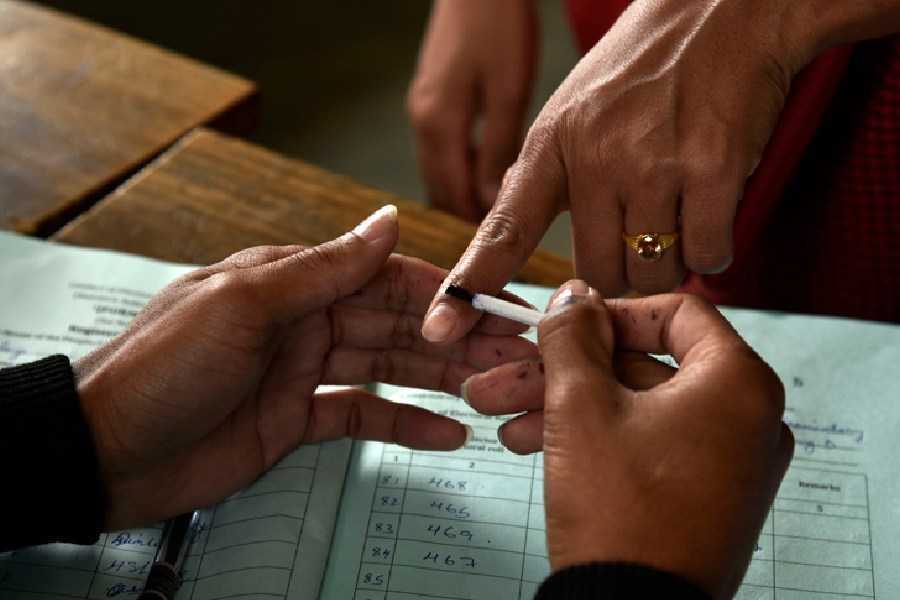
Elections are central to people’s participation in a democracy but not everybody chooses to vote. Sitting on a public interest litigation recently, the chief justice of India, Surya Kant, observed orally that there may be a need for a compulsory mechanism to ensure that people go to vote. The three-judge bench the CJI headed was hearing a plea that challenged Section 53(2) of the Representation of the People Act. This allowed unopposed election when there was a single candidate. It was proposed that the option of ‘none of the above’ or Nota be introduced in such cases so that voters could express their disapproval of the candidate if the need arose. The context of the CJI’s comment was the discussion that Nota had not markedly improved the quality of elected leaders or increased voter participation. The judges remarked on the lower participation by educated and affluent people than that by economically weaker sections. In rural areas, women are happy to vote. While this does happen, there is also unofficial compulsion in some villages, exerted by the political parties dominant in the specific area.
The CJI talked of the need for a compulsory mechanism to make voting mandatory but stated also that it would not be harsh or punitive. Perhaps what is needed is a rise in the standard of electoral competition, which would mean a majority of candidates with positive vision and non-criminal associations, who would attract more voters. It would also mean transparent electoral procedures and the need to demonstrate that votes do make a difference. But at the centre of the process is the individual voter, who is free to choose or not choose to vote. Freedom of choice is a basic tenet in a democracy as is personal autonomy. A mechanism to compel people to vote would impinge on these rights. In the context of the freedom to choose, any compulsory mechanism would seem harsh. Besides, it is puzzling to conceive of a compulsion without associated penalties. At a time when compulsion and penalties have increased and the freedom to choose even a marriage partner is being disrupted, any such mechanism might send a confusing message. But increasing voter participation is certainly necessary and, given the uneven voting percentages in different areas, requires serious attention.