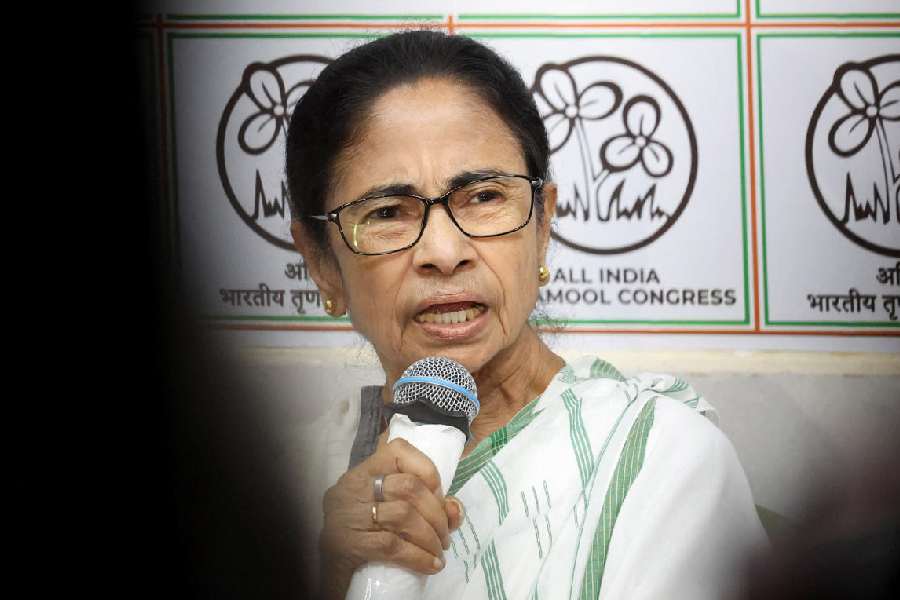
The wisecrack may have spotted a Trumpian moment during Mamata Banerjee’s first press conference since her electoral defeat. Much like the American president, Ms Banerjee has refused to resign as chief minister, alleging that she and her party had not lost the polls: institutional partisanship had robbed them of victory. If Ms Banerjee sticks to her plan, it would create an unprecedented — embarrassing — situation: no chief minister has ever refused to resign following an electoral debacle in independent India. There are, of course, ways out of such an impending constitutional crisis. The governor, for instance, can take on the role of a caretaker administrator with the presidential nod if there is an interregnum between the transfer of power. But that is not the point. Ms Banerjee’s ploy, if it is executed, would set a very poor precedent. In the future, a chief minister on the losing side would refuse to budge from the hot seat, embittering political ties and, worse, eroding public confidence in elections. That would be disastrous for democracy. Would such a conduct — tantrum — redeem
Ms Banerjee’s public image?
There is, however, a method in the madness. Ms Banerjee seems eager to varnish her image as a combative leader unrestrained by propriety. Her rise to popularity, it must be remembered, had been facilitated by her claims to feistiness. This, in turn, could energise the Trinamool Congress’s rank and file that is besieged not only by public disaffection but also political violence. There may be an additional incentive. Signals from the national Opposition indicate that its constituents are eager to mobilise public opinion on the issue of electoral infirmities. Understandably, Ms Banerjee would like to be a prominent face of that campaign. This sense of aggrievement — real or imagined — underlines a dangerous fault line that seems to be opening up within Indian democracy. The Opposition has not produced clinching evidence to prove its charge. Yet, it cannot be disputed that the Bengal elections took place under the shadow of the controversial Special Intensive Revision of electoral rolls that disenfranchised a large number of electors. The anti-incumbency against Ms Banerjee’s regime cannot be doubted. But there is data that suggest that the BJP outperformed its principal rival in seats that had suffered voter deletions. But the purity of elections cannot be soiled — either by the government or a finger-pointing Opposition.