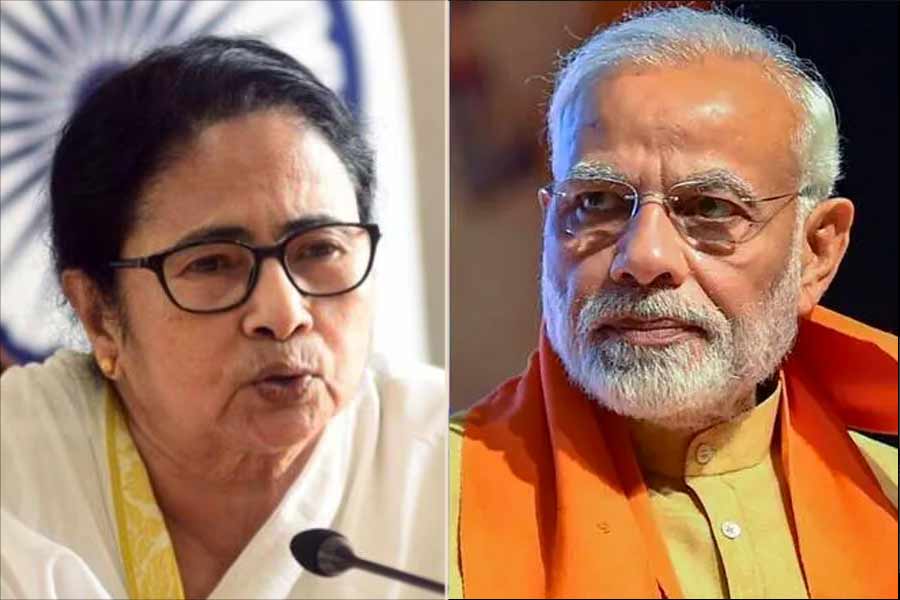
How's this for a staunch defence of free speech in a secular state? Earlier this month, Prime Minister Sheikh Hasina Wajed of Bangladesh denounced anyone who criticized religion or expressed their own lack of religious faith in striking terms: "I don't consider such writings as freethinking but filthy words. Why would anyone write such words? It's not at all acceptable if anyone writes against our prophet or other religions." So does she mean that it's all right to kill people who write such words? Hack them to death with machetes, usually? She didn't say yes, but she didn't exactly say no either. And this is regrettable, because quite a few people are being hacked to death in Bangladesh these days. Four high-profile secular bloggers were hacked to death in separate attacks in Bangladesh last year, in a campaign of murder that was clearly more than just random incidents of religious rage. What was remarkable was the response of the government - or rather, its lack of response.
Wajed leads a country of 160 million people that is officially committed to defending the freedoms of speech and belief of citizens of every religion. But while she publicly deplored the murders, she was careful at the same time to insinuate that the bloggers were outrageous people who in some way deserved to be killed. She also insisted that these murders were the work of the main Opposition party, the Bangladesh Nationalist Party, or more precisely of its political ally, the Jamaat-e-Islami. She firmly denied that foreign extremist forces like the Islamic State or al Qaida are active in the country. This probably seems to Wajed to be sound practical politics in a country where 90 per cent of the population is Muslim. So while not openly approving of murder, she publicly sympathizes with conservative Muslims who think they have the right to live in a society where their beliefs are never publicly questioned.
It's also good politics for her to blame the violence exclusively on the Opposition parties, since admitting that foreign Islamists are involved would mean that she was failing in her duty to defend the country. But the result of her pragmatism and passivity has been a rapid expansion in the range of targets that are coming under attack by the extremists.
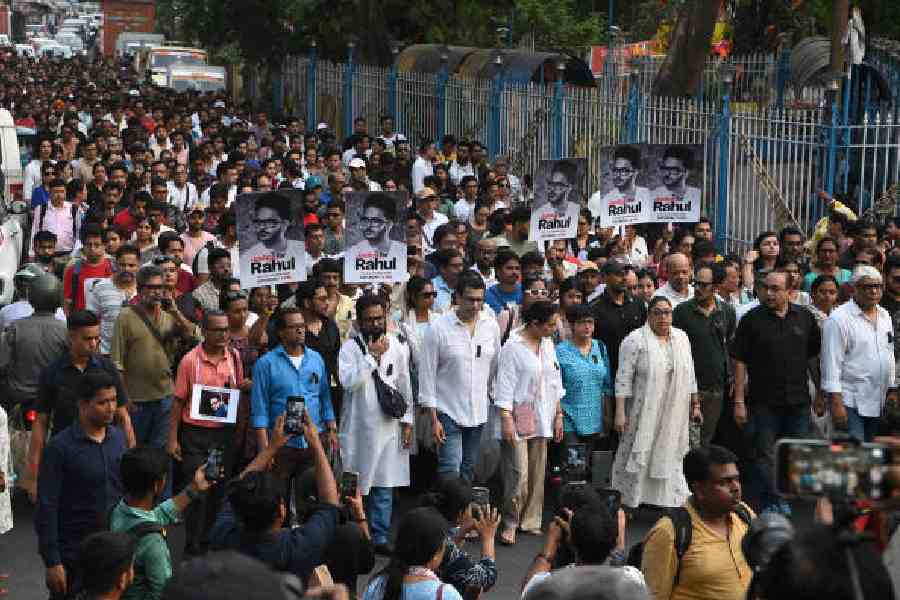
On April 23, Professor Rezaul Karim Siddique, who edited a literary magazine - and never blogged about religion at all - was murdered by machete-wielding men as he left his home to go to the university. He was an observant Muslim, but he was involved in cultural activities which many hard-line groups condemn as "un-Islamic". Two days later, gay rights activist, Xulhaz Mannan, editor of an LGBT magazine, and actor Mahbub Rabbi Tonoy were hacked to death in their apartment in the capital, Dhaka. In other recent instances of violence, religious minorities have been attacked: Shia and Ahmadi mosques, Christian priests and Hindus. So is Bangladeshi society drifting into the chronic terrorism against minorities of all sorts that afflicts its former ruler, Pakistan? The answer, unfortunately, is probably yes - and the blame lies mainly with the two women who have polarized Bangladesh's political life for so long.
In theory, at least, Wajed's Awami League represents the ideal of a secular Bangladesh that embraces its minorities, and Begum Khaleda Zia's BNP depends mainly on the support of conservative Sunni Muslims whose ideal society is explicitly Islamic. Such divisions exist in every Muslim society, but they are made far sharper by the mutual hatred of the two women who have utterly dominated Bangladesh's politics for the past 25 years.
The BNP's alliance with Islamist parties pushes it ever closer to the religious extremists, and Wajed's pandering to conservative Islamic sentiments is taking her party in the same direction. And the Islamic State and al Qaida definitely are active in the country. Bangladesh is in deep trouble.