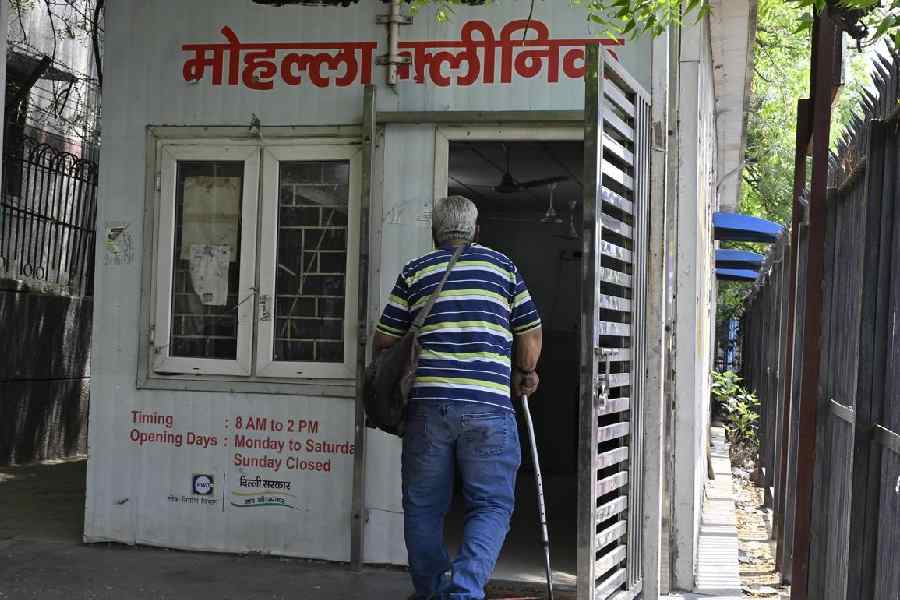
As reports emerge regarding the closure of numerous mohalla clinics in Delhi, their transformation into alternative health facilities, and their struggle for sustainability, the most concerning issue is not the political finger-pointing but, rather, the stark reality that millions of ordinary individuals are losing access to essential healthcare services. In a nation where public health systems already contend with inequity, this reduction signifies a more profound policy failure.
Mohalla clinics were inaugurated by the Aam Aadmi Party government in 2015 as an initiative in decentralised, preventive, and free primary healthcare. Embedded within neighbourhoods, they provided consultations, required medications, and basic tests at no charge to patients, eliminating time and financial barriers that frequently inhibit healthcare access in urban India.
From 2019 to 2024, these clinics documented 5.44 crore visits, with women constituting a significant majority — there were 3.02 crore visits by women compared to 2.42 crore by men during this time-frame — underscoring their essential role in addressing women’s routine health requirements, including reproductive care, chronic disease management, and childhood immunisation.
However, the reliability of community-based primary care is eroding currently. Official data and Right to Information responses reviewed by journalists indicate that clinic visits declined significantly by 28% in 2024, down from 1.94 crore in 2023 to merely 1.39 crore. Visits by both women and men decreased, with a 30.5% reduction for women and a 25.2% reduction for men, indicating a systemic disruption in primary
care use.
This narrative goes beyond mere footfalls; it addresses the degradation of health capacity, as highlighted by scholars such as Amartya Sen and Martha Nussbaum: documented access is insignificant if individuals are unable to translate services into tangible health outcomes.
A primary factor in the downturn has been the ongoing shortages, especially of medications and of personnel. Clinics throughout the city have indicated a shortage of necessary medications for six months or more, with antibiotics, asthma inhalers, tetanus injections, and basic bandages absent in numerous institutions. The deficit is not coincidental: officials ascribe it to procurement deficiencies following the assembly elections, as the Central Procurement Agency has not issued new tenders.
The supply breakdown has produced substantial effects. In the absence of complementary, regular prescriptions, individuals — particularly those with chronic diseases like hypertension or asthma — have been compelled to seek private pharmacies, incurring out-of-pocket expenses for treatments previously accessible locally. This transition not only incurs financial expenses but also diminishes individuals’ autonomy in managing their health, a crucial aspect of health capacity.
The deterioration of mohalla clinics extends beyond mere drug shortages. An audit by the Comptroller and Auditor General has shown deficiencies in staffing and facilities that compromise the foundation of basic care. Among the audited clinics, 18% were inactive for durations spanning from 15 days to nearly two years on account of physician shortages, resignations, and administrative deficiencies.
Furthermore, a compelling critique of system readiness reveals that 70% of patients received consultations lasting under one minute between October 2022 and March 2023, while numerous institutions are deficient in essential equipment such
as thermometers, pulse oximeters, and basic water and sanitation amenities.
These supply-side failures are interconnected, reflecting structural deficiencies in India’s primary care system: persistent understaffing, drug procurement obstacles, substandard facility conditions, and insufficient oversight. When primary care is inadequate, the responsibility transfers to hospitals or private practitioners, resulting in inflated expenditures and crowding in advanced facilities.
It is hardly coincidental that women have traditionally utilised mohalla clinics more extensively. Due to mobility limitations, caregiving duties, and frequently limited access to paid treatment, neighbourhood clinics emerged as vital sites for women to assert control over their health. The significant decline in visits is not merely a number; it represents a deprivation of the opportunity for facilitating healthcare for those who require it most.
The closures have also produced socio-economic repercussions. A significant number of clinic personnel, physicians, chemists, and assistants were employed under contracts directly linked to clinic operations. Between October and November 2025, more than 600 healthcare professionals were issued termination notices following the government’s decision to close 201 clinics. The Central Administrative Tribunal has suspended the terminations, citing procedural flaws; yet, this uncertainty underscores the potential disruption of health reforms on patient care and employment stability.
In response to these issues, the Delhi government is augmenting a network of Ayushman Arogya Mandirs: expansive, permanent establishments under the Ayushman Bharat initiative with intentions to establish around 1,100 such centres throughout the city. These are being promoted as enhancements, providing expanded services such as diagnostics, maternal healthcare, mental health assistance, and geriatric care.
Nonetheless, a disparity exists between intended enhancements and actual experiences. Numerous clinics are closing prior to the operational readiness of replacements, personnel confront uncertain re-employment prospects, and patients, particularly the economically disadvantaged, are losing the nearby, accessible treatment they previously depended on. Consequently, the transition jeopardises the continuity of care precisely when it is most essential.
The reduction of mohalla clinics has ignited political discourse. Yet, underneath the partisanship is a critical policy inquiry: how can we construct primary care systems that improve individuals’ ability to maintain their health?
The solution cannot be confined to rebranding or restructuring. It must encompass supply chain integrity, labour security, sufficient finance, and, most critically, the entitlement of all citizens, both women and men, to transform healthcare resources into enduring well-being. When services decline or cease, it is not merely a clinic that shuts down; it is the erosion of individuals’ freedom to maintain their health.
Delhi’s initiative in community primary care demonstrated the potential of health systems engaging with individuals in their communities. As governments shift their focus, they must recognise that health competence encompasses more than infrastructure; it involves guaranteeing that individuals in need of care can get it reliably, inexpensively, and with dignity.
Debarati Bhattacharya is a development sector practitioner bridging research and social impact