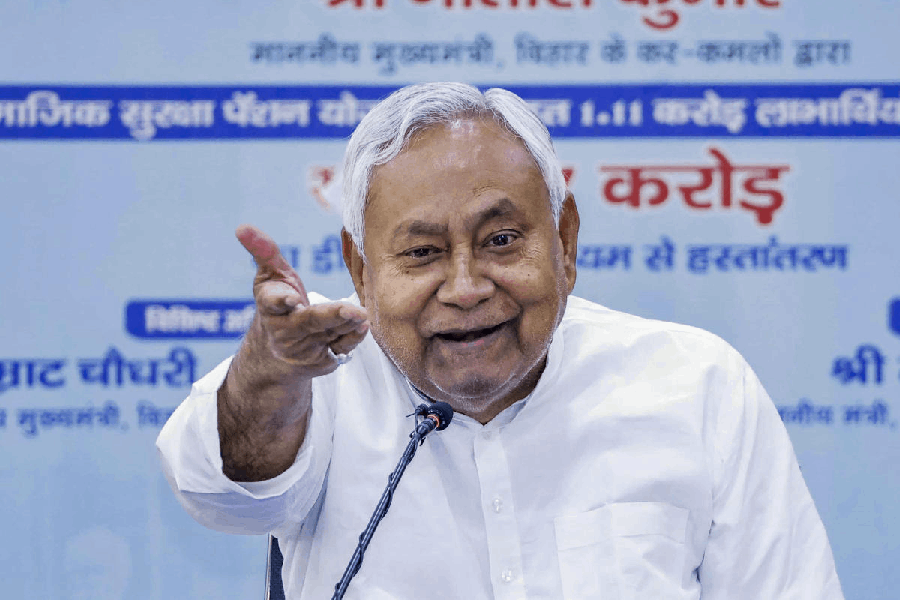
Nitish Kumar’s decision to vacate the chief ministerial chair of Bihar in favour of a seat in the House of elders — the Rajya Sabha — needs to be seen for what it is: Bihar’s longest-serving chief minister is being eased out of the saddle of political relevance with more than a little nudge from the Bharatiya Janata Party, the ally of Mr Kumar’s party, the Janata Dal (United). The writing, in fact, had been on the wall for a while. Whispers of Mr Kumar’s health infirmities had led to speculation whether he would, in fact, be crowned chief minister after the last assembly election in which the BJP emerged as the principal architect of the National Democratic Alliance’s stupendous triumph, dwarfing the JD(U) in the process. The BJP kept its word and Mr Kumar kept his job — only for about four months. With Mr Kumar now set to be ‘demoted’ to Delhi, the JD(U) has been left seemingly rudderless. There are whispers that Nitish Kumar’s son is on course for political significance. But he neither has his father’s experience, nor his heft or goodwill, elements that saw Mr Kumar hang on to the kursi no matter which party came to power in Bihar. The greater concern for the JD(U) will be the BJP’s attempts to wean away the former’s core support base, especially the marginalised and women. Maharashtra has shown how the BJP is a master when it comes to first aligning with and, then, bleeding allies. The BJP may not, in fact, be the only ally that the JD(U) will have to be mindful of. Mr Kumar’s political insignificance may usher in factionalism — the bane of regional parties reliant on individual leaders. Chirag Paswan’s ambitions are not to be ignored either. However, Mr Kumar’s ‘ouster’ is a moment that will be cherished by the BJP — in private of course. Despite being a partner in the ruling coalition, the BJP will have its chief minister in Bihar for the very first time.
Mr Kumar’s political eclipse signifies the waning of a specific chapter in Indian politics; that of the socialist and the revolutionary wave in Bihar. Along with several other leaders, Lalu Prasad among them, Mr Kumar had borne the mantle of socialist politics in the early stages of his political career. But Mr Kumar was dexterous enough to be nimble with his ideological stripes: that perhaps explains his political longevity.