Curious choice
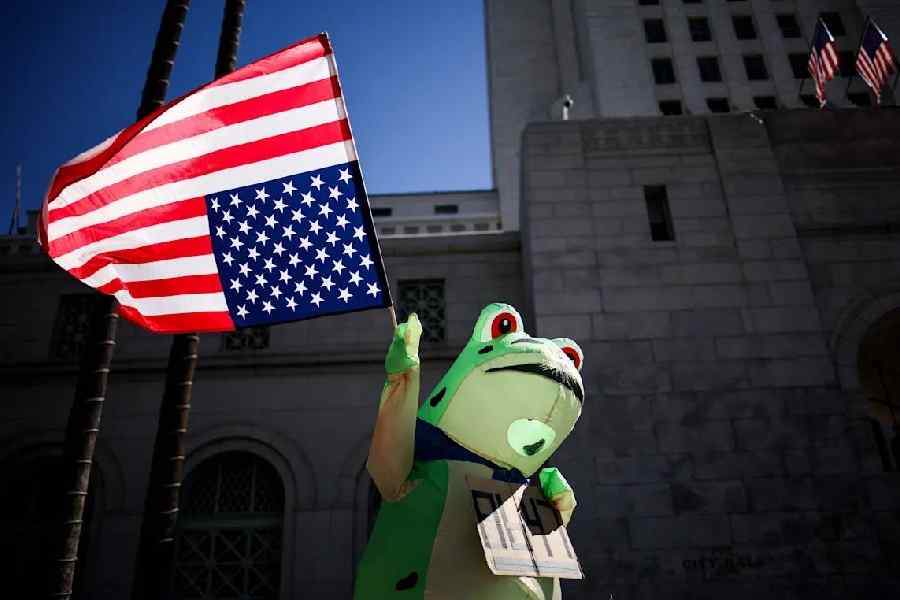
Sir — Protesters against the Donald Trump administration in America have adopted an unusual symbol: the frog. Protests have often had people dressed in inflatable frog costumes, a trend inspired by footage that showed a man in a frog suit confronting agents during an immigration raid. But the frog has not always been a symbol of dissent. Pepe the Frog — a cartoon figure — was appropriated by Trump’s 2016 campaign. The amphibian’s curious political arc is, however, fitting. Amphibians are good indicators of change — whether they are environmental or political.
Abhishek Dey,
Arizona, US
Energy crisis
Sir — A submarine belonging to the United States of America sank an Iranian warship in the Indian Ocean on Wednesday (“US torpedoes Iran ship near Lanka”, Mar 5). This incident is a warning for the entire region. When major powers turn strategic waters near South Asia into battlegrounds, neutrality becomes an illusion. The Indian Ocean is meant to be a lifeline for trade, energy and livelihoods, not a testing ground for military dominance.
The action is expected to escalate tensions far beyond the immediate conflict, risking supply-chain disruptions and economic shocks. If international waters continue to be treated as chessboards for strategic dominance, it would destabilise regions and trade networks.
Aditya Kamble,
Kalaburagi, Karnataka
Sir — The rising tensions in West Asia have placed India’s energy security under considerable strain. Around half of India’s total oil imports transit the Strait of Hormuz, a narrow waterway off Iran’s southern coast, which now stands effectively closed. The Centre’s assurance of adequate fuel stocks offers some comfort but the evolving situation demands close monitoring and careful planning. Russia’s willingness to supply energy at discounted prices deserves serious consideration.
While diversified sourcing provides some cushion, prolonged disruptions could push up global energy prices and domestic fuel costs. The government must increase Russian crude imports, restrict exports of petrol and diesel if necessary, and introduce demand-management steps like LPG rationing.
Bhagwan Thadani,
Mumbai
Sir — With the escalation of military conflict in West Asia, the suspension of traffic through the Strait of Hormuz has raised serious concerns about disruptions in global oil and natural gas supplies. Oil and gas prices have surged since the conflict started. India is particularly vulnerable to such disruptions as more than 40% of India’s crude imports passes through the Strait of Hormuz. If the crisis persists, fuel prices are likely to rise further, adding to inflationary pressures and burdening consumers.
Dattaprasad Shirodkar,
Mumbai
Sir — Apart from depleting fuel stocks and triggering sharp spikes in global oil prices, the conflict between US-Israel and Iran has also disrupted aviation. Airspace restrictions have led to widespread flight cancellations across Indian metros while evacuations and trade uncertainties are adding to the economic strain. Authorities must prioritise aviation safety, expedite alternative routes, and coordinate with international partners to minimise disruptions for passengers and cargo.
T.S. Karthik,
Chennai
Excluded lot
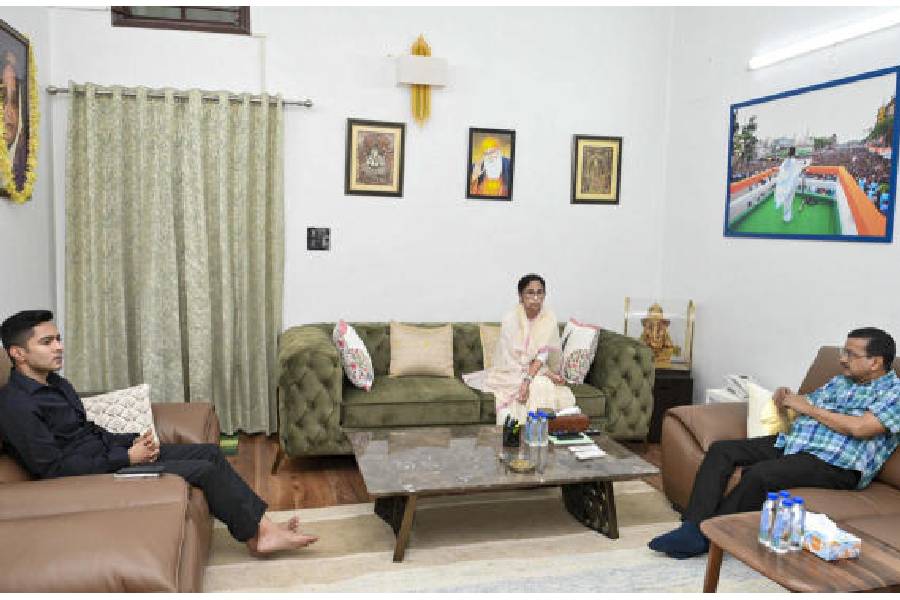
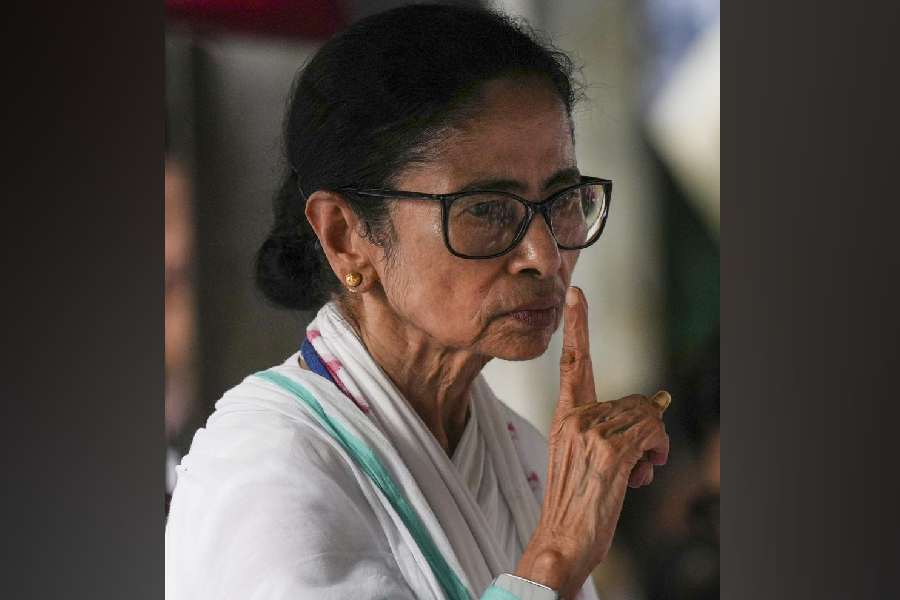
Sir — The chief minister of West Bengal, Mamata Banerjee, has alleged that a nexus between the Election Commission of India and the Bharatiya Janata Party was behind the deletion of 63.66 lakh names from the state’s electoral rolls following the Special Intensive Revision (“Gloomy data”, Mar 3). She claimed the exercise was aimed at benefiting the BJP ahead of the 2026 assembly elections. Areas dominated by Matuas, a scheduled caste community, witnessed large-scale deletions. Panic, anger and suspicion are spreading through the Matua-dominated areas, pushing the BJP into a defensive mode. For the Trinamool Congress, the churn offers a chance to reclaim refugee votes.
S.S. Paul,
Nadia
Sir — Mamata Banerjee’s claim of the deletion of over 60 lakh voters of West Bengal in the post-SIR voter rolls has raised concerns about mass disenfranchisement. The right to vote is fundamental to the functioning of a vibrant democracy. The disproportionate deletion of voters belonging to vulnerable groups as a result of the SIR is deeply troubling. This not only runs contrary to the principles of inclusive democracy but may have serious implications for the polls.
Prasun Kumar Dutta,
West Midnapore
Sir — Mamata Banerjee’s decision to organise a dharna in Calcutta against the arbitrary and the exclusionary SIR was imprudent. The politicisation of the issue risks undermining the credibility of the revision process. Banerjee has argued that the exclusion of more than 60 lakh voters could hamper the elections. Yet critics suggest that her opposition stems from concerns over the erosion of her support base.
Jayanta Datta,
Hooghly