Misdirected energy
Sir — The controversy surrounding the CBSE on-screen marking system, triggered by digital glitches, threw students’ examination results into disarray. The CBSE’s damage control exercise was, astoundingly, a social media endeavour. The board circulated a toolkit among school principals, directing teachers to create Instagram reels in defence of the OSM and post them online. In fact, the teachers are required to follow the script provided by the CBSE and parrot its line. If the authorities had spent half as much energy acknowledging and solving the problem as it did trying to get teachers to master social media trends, they might have avoided the evaluation fiasco completely. You cannot simply lip-sync your way out of a massive logistical meltdown.
Antara Singh,
Jaipur
Fragile peace
Sir — The ongoing war between Iran on one side and the United States of America and Israel on the other has caused immense loss of life, widespread destruction of infrastructure, and an energy shock that has affected the global economy (“Bad news”, Jun 9). Following the US’s strikes on Iranian nuclear sites and the blockade of the Strait of Hormuz, global crude prices have experienced significant hikes, sparking worldwide inflation. Despite a cessation of hostilities for two weeks in April, airstrikes and retaliatory attacks have resumed across multiple fronts. Ending the war requires a combination of international diplomacy, long-term geopolitical compromise, and the active participation of regional powers.
P. Victor Selvaraj,
Tirunelveli, Tamil Nadu
Sir — Despite efforts at ceasefire and diplomatic
interventions, missile strikes and political tensions persist in West Asia. History teaches us that military achievements alone rarely guarantee lasting peace. Sustainable stability can emerge only through dialogue, compromise, and a genuine commitment to addressing the underlying causes of conflict. As long as leaders remain focused on claiming victory, the prospect of a secure and prosperous West Asia will remain elusive.
Bal Govind,
Noida
Sir — The war in West Asia continues unabated, denting hopes for peace. Israel bombed Beirut. Iran then launched ballistic missiles towards northern Israel, thereby continuing the fire and the fury and inflicting endless human suffering across the region. Lebanon, Saudi Arabia, Jordan, and Yemen, as well as the militant groups, Hezbollah and the Houthis, remain besieged.
Both Israel and Iran have totally disregarded the call for peace by President Donald Trump, underscoring how difficult it is to achieve peace in such a volatile environment. While Iran’s nuclear capabilities may have been curtailed, the conflict has left the region more unstable than ever.
Salil Karmakar,
Barrackpore
Sir — Israel must be held accountable for actions that have resulted in civilian suffering in the occupied territories in Gaza and for the continuing deprivation faced by Palestinians. A couple of days ago, the Israel Defense Forces opened fire on an approaching car in the West Bank, killing a seven-month-old baby and seriously injuring the parents. It is a matter of shame that Palestinians cannot move about freely in their own homeland and must be wary of the whims of the IDF.
S. Kamat,
Mysuru
Sir — The latest strikes between Israel and Iran have cast a doubt on the effectiveness of a ceasefire. Each side has accused the other of violating the truce. But neither appears willing to abandon negotiations altogether. The US is likely to redirect Iranian assets to Gulf states for rebuilding and repairing the damage caused by Iran. The greatest danger today is not a deliberate decision by Washington or Tehran to return to war. It is the survival of the ceasefire that is increasingly tied to developments across the region, making it more fragile.
Gregory Fernandes,
Mumbai
Defiant voices
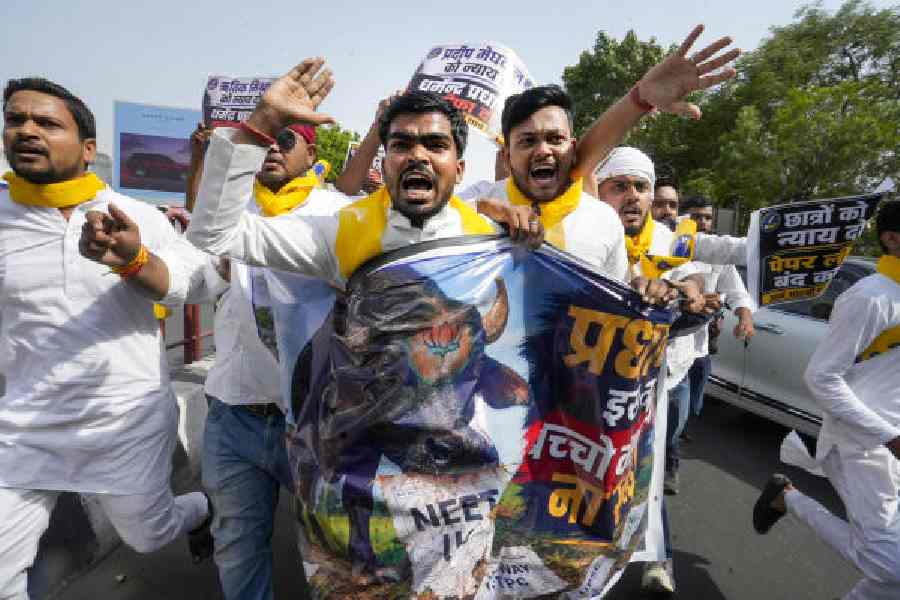
Sir — The Cockroach Janta Party’s recent protest at Jantar Mantar carries a significance far greater than the modest crowd that it drew. It transformed an insult aimed at jobless youth into a critique of the flawed examinations, the fragile education system, and empty degrees (“Hear them”, Jun 8).
India has an estimated 371 million people aged between 15-29 years. Our demographic advantage risks becoming a liability when one in three young people is neither in education, employment, nor training. Rapid shifts in technology leave many behind, especially those with inadequate resources. Youth suicides have climbed to alarming levels. Measuring the CJP in terms of its crowd size would be a mistake. The real question is why it exists at all. Indifference to such dissenting voices will deepen anger whereas listening to them is a policy imperative.
Babu Krishna,
Bengaluru
Sir — The founder of the CJP, Abhijeet Dipke, declared that the movement against alleged irregularities in examinations and recruitment tests would intensify until the Union education minister, Dharmendra Pradhan, resigns. The protest was successful, drawing support from prominent activists and political leaders. A day after the major protest in Delhi, Dipke said that the youth-led campaign is planning a larger mobilisation.
Bhagwan Thadani,
Mumbai
Sir — The Centre’s claims about India’s growing economy and development ring hollow. The reality is that joblessness stood at 5.1% in March. Most countries are grappling with an ageing population. Our youth can be a big game-changer. If the government does not attend to their concerns or address the stagnancy of a fertile economy, joblessness, and a corrupt educational system, this powerful generation will force a change.
Tapomoy Ghosh,
West Burdwan