Calcutta’s Brigade Parade Ground has been a witness, over the decades, to several watershed moments in Bengal and national politics. Another such occasion will take place today with the swearing-in ceremony of the Bharatiya Janata Party’s first-ever government in Bengal. That the BJP has chosen Rabindranath Tagore’s birth date to usher in its dispensation may be an indication, the cynic would say, of the party’s continuing attempt to assimilate itself within Bengal’s cultural ethos. But there can be no doubting the fact that the BJP’s political assimilation in this state is now complete. The pace of that absorption has been striking. From bagging three seats in the state election of 2016, the BJP has, a decade later, won over 200 in this year’s assembly polls.
The long shadow of deletions of voters on account of the controversial Special Intensive Revision of electoral rolls cannot eclipse the fact that Bengal has given the BJP a decisive mandate. This mandate for change is indicative of a long wish list that the people of Bengal have demanded of the party. It would be pertinent to point out — in brief — the principal demands of the people in this context. Bengal’s economic stagnation would, quite naturally, rank high on this list. Reindustrialisation, employment generation, disbursal of private investment along with the unleashing of an entrepreneurial force that complements Bengal’s core competencies would fall under this category. An economic and industrial renaissance must be accompanied by a transformation of public infrastructure. The Calcutta airport needs to be modernised; the city’s port apparatus — its economic potential has been relegated to the margins — must be revived. Revolutionising transport, housing, electricity, water works while securing environmental prerogatives — a gigantic task — must preoccupy the government. This transition must not be limited to Calcutta and its urban hinterland: rural Bengal must keep pace too. Another area of attention would be Bengal’s geographical location that has deep implications for neighbourhood diplomacy. The currents of political change in Bengal would be felt in Bangladesh, for instance. The new government must be mindful of this diplomatic mantle. Greater synergy between the state and Centre would be the key in resolving such prickly issues as illegal infiltration and river water-sharing with that country. There is also the challenge of maintaining the state’s inclusive social compact that is under strain — ironically on account of the BJP’s polarising agenda. Social amity is central to stirring investors’ confidence.
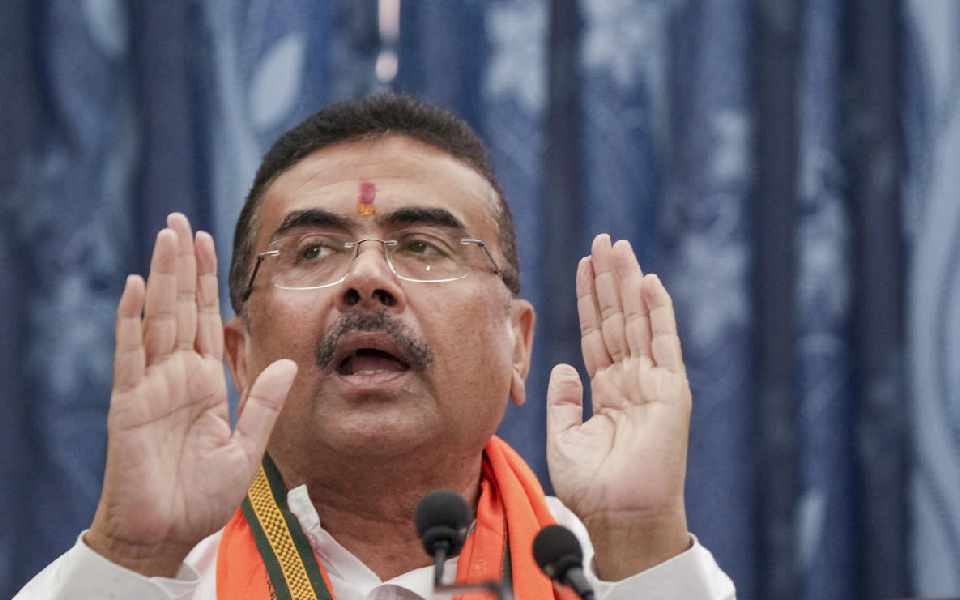
The Opposition in Bengal is, at the moment, in disarray. It can therefore be argued that the BJP’s principal opponent in the state is its own chequered legacy. The handsome mandate notwithstanding, the party is still being perceived with circumspection by segments of the collective. The wary ones do not belong to the minorities alone. Their watchfulness can be attributed to the BJP’s penchant for engaging in division — both in word and deed. In fact, some of the remarks of Bengal’s newly-minted chief minister, Suvendu Adhikari, after the BJP’s electoral triumph have remained exclusionary. As the party in power, the BJP has the responsibility of being a government for all of Bengal, including its opponents. The nature of its governance will not merely be an administrative test: it will also be an examination of its commitment to the Constitution’s lofty vision of pluralism. Can the Bengal BJP, unlike its national unit, bring about vikas that is indeed for all?