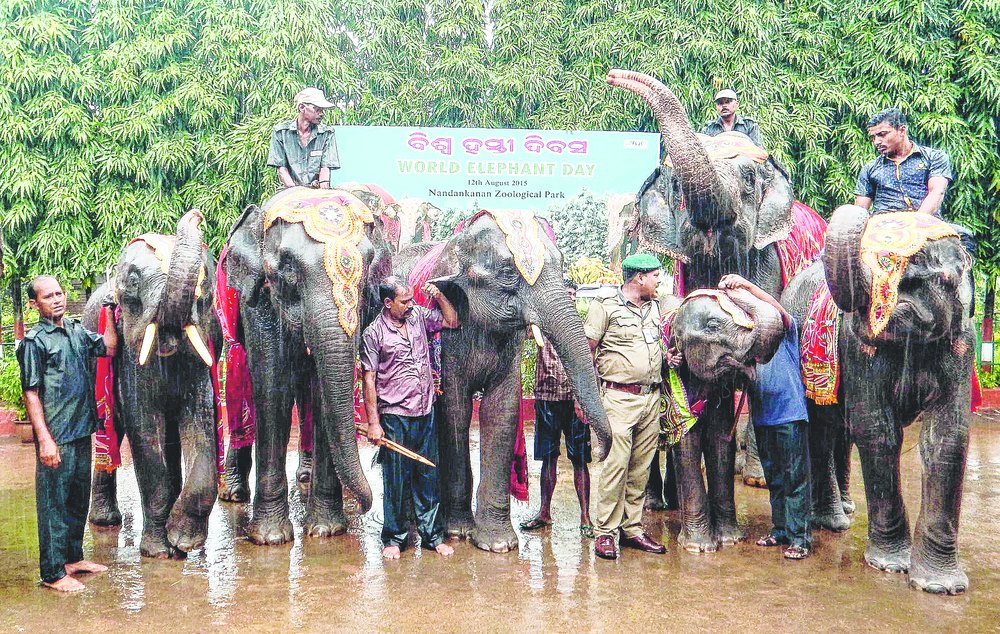

Bhubaneswar, Aug. 12: As many as 50 students from 10 schools from nearby areas around the Nandankanan Zoological Park today celebrated the World Elephant Day by offering the jumbos a variety of fruits.
The event was dubbed as a tribute to the huge mammal - which has helped human beings in clearing forests, logging and transportation apart from conducting forest safaris. The reel story of Hati Mere Sathi was re-enacted on the zoo premises braving incessant rain as Nandankanan celebrated its first international day for the elephants.
Eight elephants of the biological park today came out with decorated robes and mingled with the crowd, including the guests and the invited students. Later, the students gave away coconut, banana, watermelon and sugarcane sticks to the elephants. The students also took part in a painting and quiz competitions and three participants were awarded from each contest.
For the past 10 years during the wildlife week celebration (first week of October), the elephants were given annual treats. However, this year, the state government decided that the International Elephant Day, which is celebrated worldwide on August 12, Nandankanan would also follow the practice.
Development commissioner-cum-forest secretary U.N. Behera said: "There are 14 traditional elephant corridors in the state - which are threatened by industries, railway tracks and big irrigation canals. We are going to take measures to have more plantation of fodder plant species and underpasses below the railway tracks to minimise man-elephant conflicts."
According to the 2014-15 elephant census, Odisha has 1,954 animals compared to 1,930 in 2012. The highest number of 337 elephants was reported from the Similipal Tiger Reserve.
Principal chief conservator of forests (wildlife) S.S. Srvastava said: "For the elephant management, we are spending around Rs 10 crore a year from the state and central grants. We are also sourcing money from various heads to manage the situation, which is improving with timely interventions."
While 51 elephants died during 2009-10, 83 died during 2010-11, 68 during 2011-12, 82 during 2012-13, 70 during 2013-14 and 54 during 2014-15.
Srivastava also said that apart from adding fodder plant species liked by the elephant herds, emphasis had also been on creation of grasslands, improvement of habitat, formation of anti-poaching and anti-depredation squads among forest staff members and involving volunteers from forest dwellers. The forest department is also involving dedicated people in the teams towards quicker disbursal of compensation in co-ordination with the revenue officials. "Quicker redress for man-elephant conflicts will always result in better management of retaliatory killings of the elephants by the victims," said a forest official.