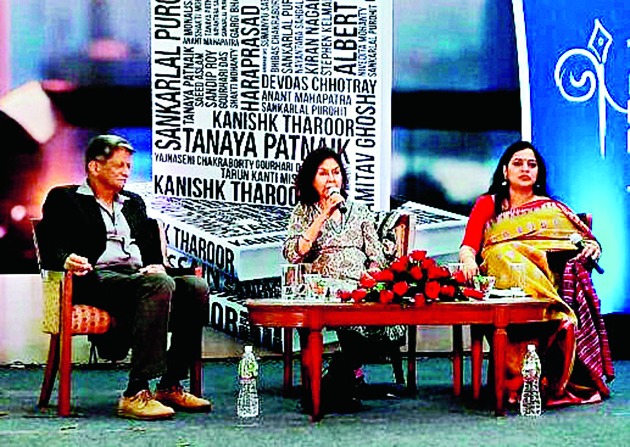

Bhubaneswar, Jan. 20: Odia writers at a literary meet in the city deliberated on the need to create interest for regional classics among the present generation.
A veteran writer said a classic literature could be a person's guide to understand life better. "Classic novels help a reader understand things that are not visible to the eyes. They help to focus on things that we often tend to ignore," said writer Ramakant Rath while speaking at the Tata Steel Bhubaneswar Literary Meet that began today.
He said the generation these classic writers addressed could be different, but the problems they faced in life were prevalent even today.
Citing the example of Sarala Mahabharat by 15th century poet Sarala Das, Ramakant said: "Bhim is the most heroic character in the adaptation, which is divergent from the original plot. He had his own disciplines in life. There are many aspects in life which can be understood through classics."
Writer Sitakanta Mohapatra listed three Odia literary works to the readers that he considered classics - Srimad Bhagabat dating back to the 16th century, Fakir Mohan Senapati's novel Chha Mana Atha Guntha and Gopinath Mohanty's Paraja. The veteran writer said a classic writing could not be measured in terms of being a bestseller. "They have something to do in terms of quality and is not limited to money or the numbers of readers it has reached out to," Sitakanta said.
Veteran writer Haraprasad Das defines a classic as any form of writhing that enlightens or informs. "A classic helps to gain knowledge, understand human behaviour and inspires. It also survives the test of time," he said.
Emphasising on the need to read Odia literature, he said: "These days people do not prefer to read classics in regional languages. But, Orissa has produced writers which the upcoming generation must know and read about."
A number of prominent writers, including Nayantara Sahgal and Kiran Nagarkar, have documented how the country evolved in the last seventy years.
Writer Susmita Bagchi's book Beneath a Rougher Sea was also released on the occasion. An Odia interpretation of William Shakespeare's play King Lear was staged as a part of the festival.