|
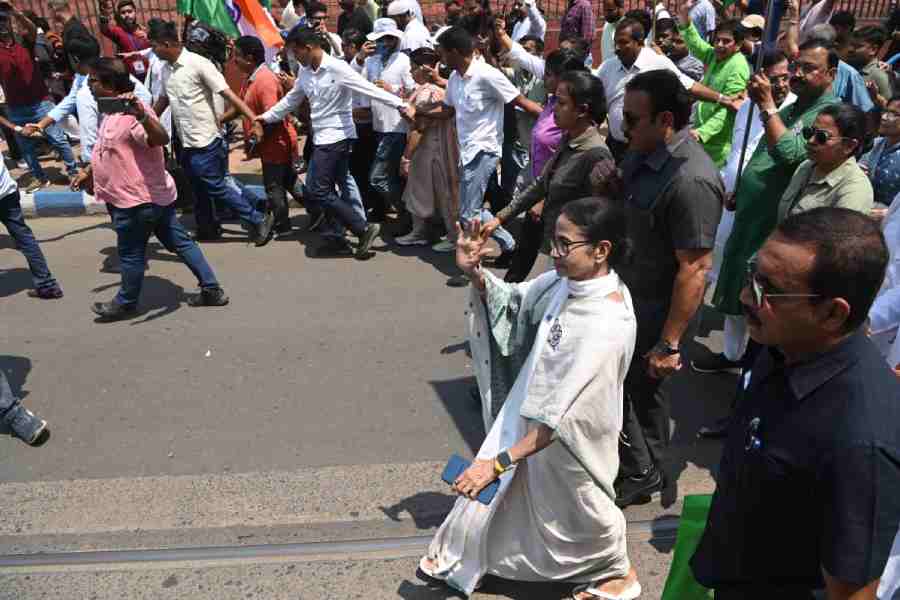
| Even though it is November, temperatures are still high in Bhubaneswar. Picture by Sanjib Mukherjee |
Bhubaneswar, Nov. 15: Though it’s the middle of November, the winter chill is yet to set in the capital. City residents have not felt the need to take their woollens out of the cupboard.
While the maximum temperature in the city in November last year was 33.6 degree Celsius, this year it is 34.8 degree Celsius.
“It is the middle of November, but it’s still hot. We are eagerly waiting for winter to give us some respite from heat,” said Anusuya Rath, a college student.
The sale of woollen clothing is yet to pick up. Tibetans merchants, who visit the city every year to sell sweaters and pullovers, have not arrived. “The winter sale is yet to take off. Previously, customers used to buy winter garments at the beginning of November, but this year our business has been hampered,” said Manoranjan Bhuiyan, a vendor at Unit-II market.
Director of the Meteorological Centre, Bhubaneswar, S.C. Sahu, said the rather warm winter was mainly because of cloud formation delaying the arrival of northwestern wind, which makes the weather cold.
“Rapid urbanisation and climate change have also played a part,” said Sahu, adding that temperature may dip next week.
The impact of urbanisation is that concrete structures release the absorbed heat much slower compared to soil or water. This results in hot weather. Retired professor of geology, Utkal University, N.K. Mohalik also blamed urbanisation for the vagaries in the weather. “Previously, we used to have a number of small water bodies, but with urbanisation, the wetlands have disappeared, resulting in erratic climate,” he said.
Bhubaneswar’s water bodies started drying up after the influential began encroaching space to build their bungalows, violating rules.
Aided by corrupt officials, they have succeeded in wiping out almost all the water bodies, with disastrous consequences for the city. Unfortunately, the government has not paid heed to the environmentalists’ concerns.
To make things worse, a lot of trees have also been felled in Bhubaneswar to pave the way for expansion of roads.
“The city had lost much of its green cover during the supercyclone of 1999. Now, things have become worse,” said an environmental activist, adding that unless the authorities woke up to the need of protecting the environment, not only Bhubaneswar but also its environs would continue to feel the impact of climate change.