With a unique cultural heritage exemplified by its intricately carved temples and historical structures, Bhubaneswar attracts nearly 90 lakh domestic tourists every year. On World Tourism Day, The Telegraph did a recce of major tourist destinations in the city to find out how friendly they were to the visitors on a scale of 1 to 10 — 1 being least tourist friendly. This is how they fared on the tourist meter
Lingaraj Temple
 |
The 11th century temple dedicated to Lord Shiv is the face of old Bhubaneswar and illustrates the Odishan temple architecture. With over 100 shrines in its compound, the 180-feet towering structure is accessible only to Hindus
Approach road: Good but the passage adjacent to the temple entrance should be widened and shops removed
Parking: No designated space, grossly inadequate during festive occasions
Drinking water: Kiosks on temple premises and bang opposite temple
Toilet: Community toilet, located at a distance, in terrible shape
Trained guides: Not available
Ramps: None
Medical facilities: Municipal corporation hospital behind temple
Boards/signage on importance of the place: Prominently placed
Police station/outpost: Within 100 metres
Food joints: Dhabas, but prasad (Abhada) available near Ananta Vasudev temple
TT rating: 5/10
Khandagiri-Udayagiri caves
 |
A major historical monument dating back to the 1st century BC. The caves were carved and tunnelled to fashion living space for Jain monks. Odishan ruler Kharavela is credited with the work
Approach road: Good
Parking: Inadequate. Two-wheelers parked on road passing through twin hills
Drinking water: No kiosks
Toilet: Located at a distance
Trained guides: Not available
Ramps: Udayagiri has natural ramp built 1,000 years ago, but Khandagiri lacks one
Medical facilities: Private nursing home nearly 750 metres away, medical college 2km from site
Boards/signage on importance of the place: Not enough
Police station/outpost: Within 500 metres
Food joints: One at Panthika near twin hills, there are a few others too
TT rating: 6/10
International Peace Pagoda, Dhauligiri
 |
A hillside situated on banks of the Daya river draws tourists for its Shanti Stupa or Peace Pagoda built by the Japan Buddha Sangha and the Kalinga Nippon Buddha Sangha in 1972. The hill space is believed to the battleground of Kalinga War and home to various rock edicts. Ruler Asoka wrote 'welfare of the whole world' in Kalinga Edict VI, depicting his concern about mankind. Rock-cut elephant above the edicts is considered to be one of the oldest Buddhist sculptures in the state
Approach road: Good
Parking: Not sufficient
Drinking water: Water points near pagoda lie broken
Toilet: Far away, near bus parking area
Trained guides: Guides not professional
Ramps: None
Medical facilities: Municipality hospital 6km away
Boards/signage on importance of the place: Signage present near the NH-203 leading to Puri, but no information boards
Police station/outpost: Under construction on foothills
Food joints: Panthika serves Odia cuisine, private shops sell dry fruits and beverages
TT rating: 4/10
Nandankanan Zoological Park
 |
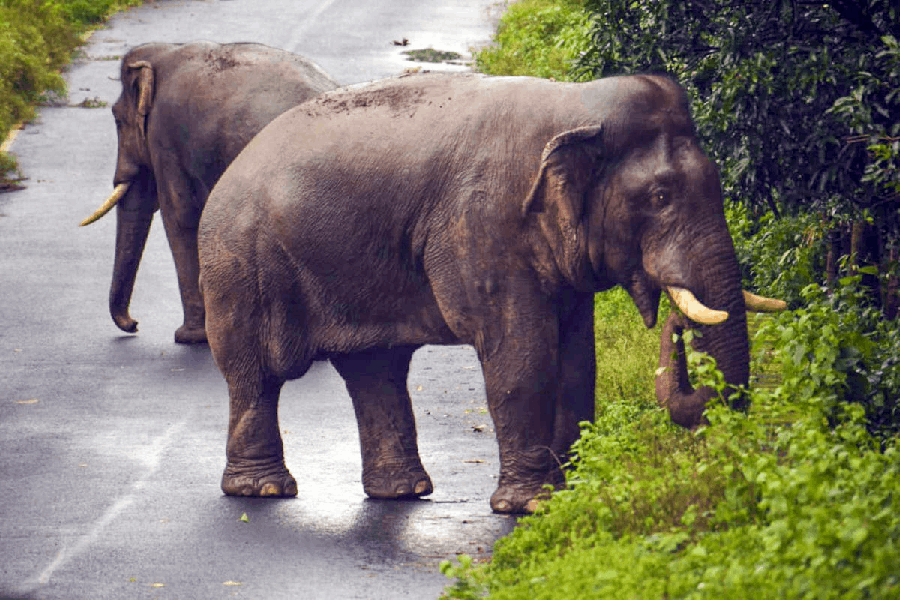
One of best-managed zoos in the country, Nandankanan is known for its natural setting, scenic appeal and white tiger population. One can enjoy the adventures of elephant rides, aerial ropeway, toy train, boating, lion and white tiger safari, deer park, water bird aviary, aquatic animals and many more. Open on all days except Mondays and public holidays
Approach road: Good
Parking: Satisfactory
Drinking water: Some kiosks inside zoo need facelift
Toilet: Of eight, five are modern with facility for physically challenged
Trained guides: Professional guides available on payment
Ramps: Available. One can also ask for free wheelchair facility near entrance
Medical facilities: First-aid facility available at three places
Boards/signage on importance of the place: Well-designed boards put up
Police station/outpost: 50 to 100 metres from main gate
Food joints: Restaurant and snack kiosk in park, souvenir shops sell dry foods
TT rating: 8/10
Chausathi Yogini temple
 |
A 9th century structure at Hirapur on city outskirts has images of 64 yoginis standing in various postures. An image of the 10-armed presiding deity of the shrine, Mahamaya, is largest. Kedarnath Mohapatra of the Odisha State Museum discovered it in 1953
Approach road: Pathetic. Government yet to facilitate concrete path
Parking: Open space. New lot under construction
Drinking water: Not available
Toilet: Under construction
Trained guides: Not available as the place, barely 10km from the heart of the city, yet to be developed
Ramps: Not available.
Medical facilities: Not available, nearest facility at Balianta, 2km away
Boards/signage on importance of the place: Boards put up from the Uttara Square-end, but none from Shirdi Sai temple side
Police station/outpost: Balianta, 2km away
Food joint: None available
TT rating: 3/10
Odisha State Museum
 |
Established in 1948, it exhibits an invaluable collection of objects related to archaeology, art and craft, natural history. Bronze Age tools and stone sculptures, also famed for huge collection of palm-leaf manuscripts, including one on 12th century Gita Govinda. Open on all days except Mondays and public holidays
Approach road: NH-203, wide and well maintained. NH-203 connecting Puri
Parking: Adequate
Drinking water: Available but not enough points
Toilet: Adequate, modern with facility for physically challenged
Trained guides: None available
Ramps: Available
Medical facilities: Capital Hospital, 2km away
Boards/signage on importance of the exhibits: Detailed information on many exhibits needed
Police station/outpost: Capital police station 1.5km away
Food joint: None inside museum
TT rating: 5/10
Text: Bibhuti Barik, Pictures: Ashwinee Pati