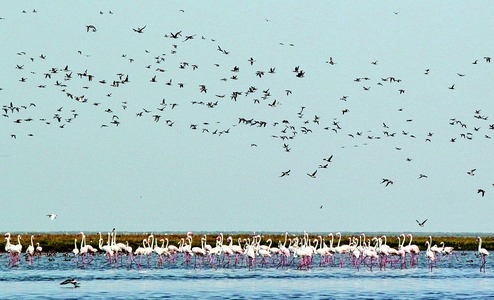

Bhubaneswar, July 26: The Bombay Natural History Society, a wildlife research organisation, has recommended to the authorities to identify and develop another island in the Chilika lake, like Nalabana, to provide more roosting and foraging space for migratory bird species.
The society, which conducted a survey on the migratory birds between 2001 and 2002 and 2014 and 2015, also recommended undertaking habitat improvement or restoration for the winged species.
Last week, the society had submitted a detailed report to the state government, stating that the Nalabana island, spread over 15.2sqkm, was too small for the entire population of birds to forage daily.
"Decline in bird counts over the years probably indicates that food resources and the area may not be sufficient to meet the biomass requirements for return migration. Hence, it is recommended to explore the possibility of creating another island for the birds," said the report.
The society also said that breeding of birds had faced several disturbances at Panchakudi, Mangalajodi and nearby areas. "Fishermen use this area for drying their nets in which ground-nesting birds and chicks get entangled. Egg poaching by local people is a part of their livelihoods, although over the years this has reduced significantly as many poachers have turned into tourist guides," said the report.
The World Bank-funded research reveals that increased fishing activities and the presence of prawn dykes have reduced food availability for fish-consuming birds and movement of mechanised boats at Mangalajodi as a major hindrance for feeding and breeding of birds. The organisation has also proposed to undertake an investigation to ascertain the reason behind proliferation of grasses at the island.
"The complete abandonment of the nesting colonies of a few species also leads to the speculation that it may be due to the changes in the grass growth and the soil texture," said the report.
Chilika Development Authority's additional chief executive Sasmita Lenka said they had removed encroachment from 3,000 acres near the sanctuary area. "A 100-metre radius of the sanctuary has been declared as buffer zone and fishing there has been banned," said Lenka.