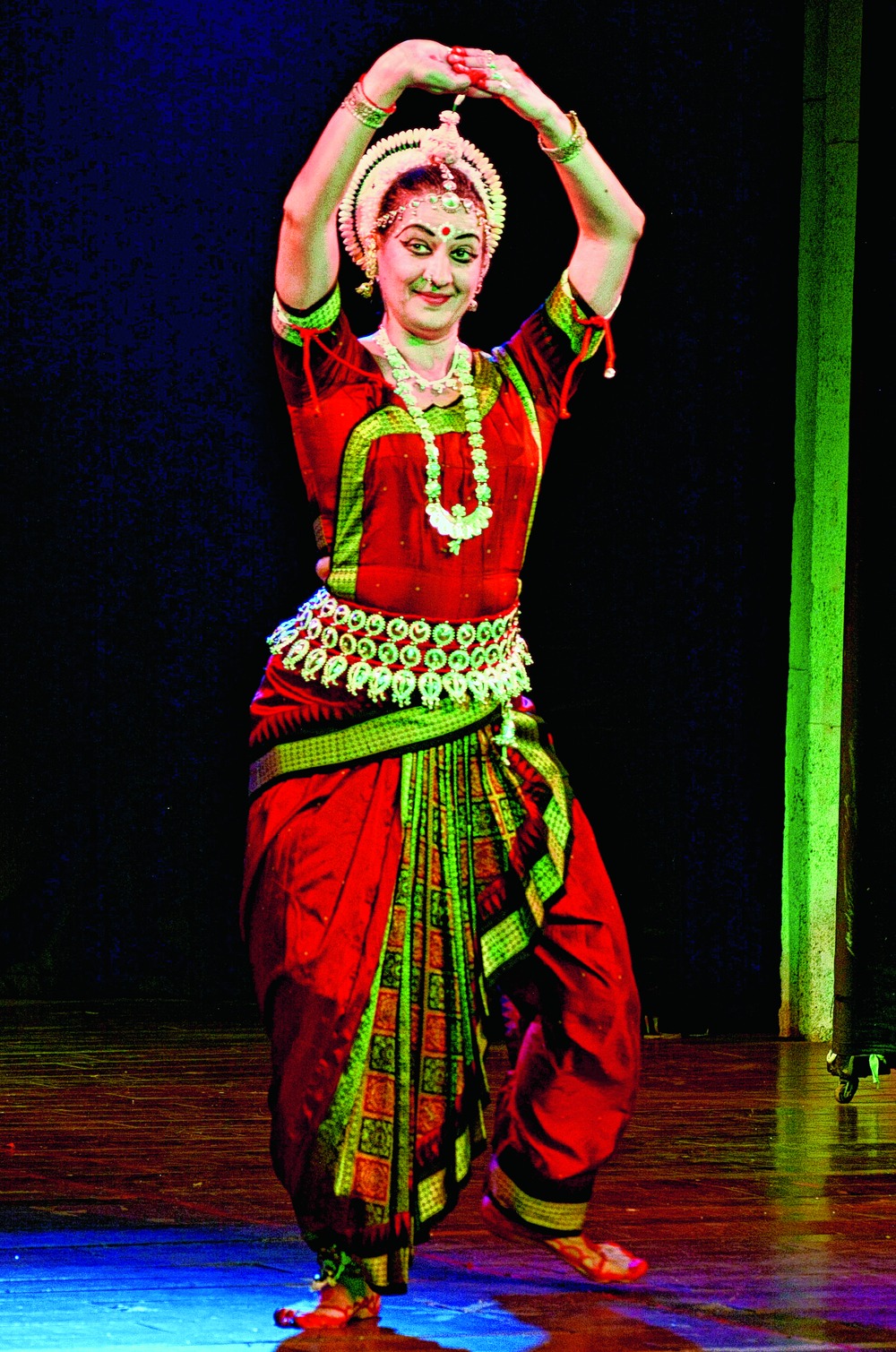

Vitalina Lobac, an Odissi dancer based in Moscow, started training in the dance form in 1988. For the 52-year-old, Odissi is a form of expressing her innermost feelings. In 1990, she received a scholarship from ICCR and had trained under Madhavi Mudgal for five years. Back in Moscow, her sole aim in life has been to popularise the dance form in her country.
The dancer is in Bhubaneswar to perform at Odissi International, an annual gathering of Odissi dancers from across the world, which is under way at Bhanja Kala Mandap. The five-day event is in its seventh edition and organised by Samskritiki
• How did your interest in Odissi come about?
When I started working, the first thing that I bought with my salary was a Nataraj idol. Thereafter, I went to university and was introduced to Bharatnatyam.
I had trained in the dance form for two years. In the meantime, I chanced upon Swarnalata Parida, an Odissi dancer. I was very enthused by her performance and she became my first teacher. Then I came to India to learn more about Odissi.
• What place does Odissi have in your life?
I was in Delhi recently for a lecture demonstration. During the programme, a lady came up to me and said she was struggling with depression. She wanted to know if dance could help and my reply was negative.
I feel dance brings out the innermost feelings of a person and if you are sad, that is what will come out. It is a way to pray to God. No wonder, because it originated in temples.
• How difficult was it to understand the dance form?
I make sure the scripts are translated line by line and then infer meaning. It helps me bring out the expressions and movements well. But, beat and rhythm also help.
• Tell us a bit about your teacher, Madhavi Mudgal.
I connect to her in many ways. Once she decides to do something she never backs out and I am like that, too.
• How popular is Odissi in Russia?
In Russia, Indian dance means Bollywood. Once I performed at a very big festival there and they connected my dance to a Hindi song Jimmy Jimmy, Aaja Aaja.
But, at the end of the performance people often come to ask about my dance form, attires, the meaning. Dancers like me are trying to disseminate knowledge with every performance. More people are trying to understand it.
• Where do you see Odissi 10 years from now?
I want the new generation to continue with what I am teaching. They should carry forward the legacy. It is important to feel the dance while performing and once that connection is built, Odissi becomes a way of life.
• How do you manage to keep yourself updated with the latest happenings in the field of Odissi?
I keep in touch with my guru and students.
Also, I watch a lot of YouTube videos to check out the latest performances of my guru and other performers of the dance form.