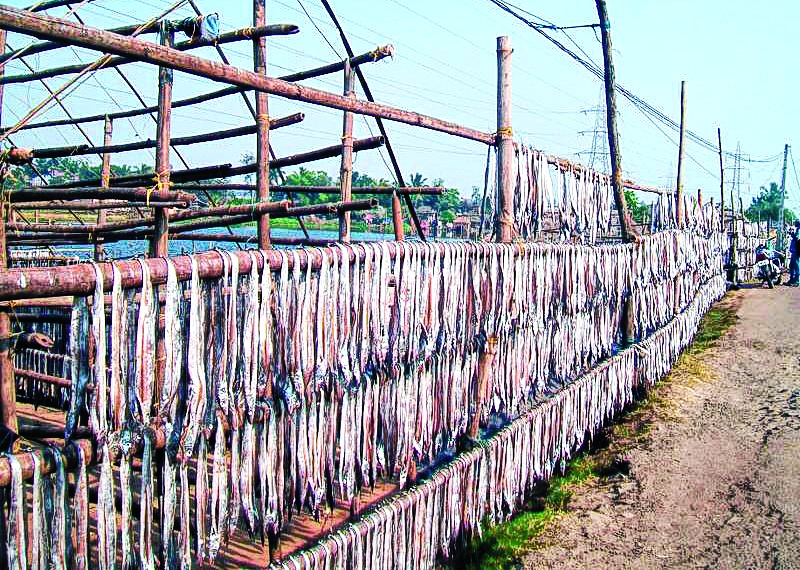

Paradip, Sept. 10: Dry fish manufacturing at the Paradip fishing harbour, the largest fishing hub of the state, has been stopped as the harbour has failed to meet European Union's mandatory hygiene and sanitation guidelines.
An estimated 3,500 metric tonnes of high-grade shrimps are exported mainly to European countries every year from this fishing hub. The annual shrimp export turnover from the harbour is to the tune of Rs 150 crore. That accounts for over 40 per cent of the total annual shrimp export from the state.
The fisheries department imposed the ban because dry-fish making at the harbour had been adversely affecting the port's hygiene and sanitation standards. The manudacturing units were filling the harbour with filth. Pungent smell from the units was a constant source of air pollution.
The ban has come into force since September 1. The dry fish unit owners have shut down their units. Initially, they were reluctant to close down the units. However, they agreed to shut down as officials managed to convince them. They agreed to protect the larger interests of the marine fishing sector as absence of sanitation would have led to exporters refusing to buy produce from Paradip, said manager of Paradip fishing harbour Bharat Bhusan Sahu.

The fishing harbour, commissioned in 1996, has earned the distinction of being state's largest exporter of marine produces, especially sea fish. "Our objective is to put Paradip fishing hub on international map. We are intent on maintaining the hygiene standards specified by European Union as EU member-countries are major buyers sea fish from Paradip. However, the polluting dry fish units were posing a problem in maintaining sanitation standards in the harbour," Sahu said.
Apart from export-related issues, the ban had to be enforced to put to an end the use of toxic chemical substances for preserving the produce. The process of dry fish production in such an unauthorised manner has emerged as a health hazard.
"As exporters had expressed concern over the operation of the units, we have voluntarily closed down the dry fish processing units. Dip in sea fish export will affect the livelihood of everybody associated with sea fishing sector, from trawl operators to the crew," said dry fish manufacturer D. Venkatram.
Dry fish manufacturing is a flourishing trade in Paradip. However, its growth continues to remain haphazard and unscientific. It had been found in the past that dry fish makers used toxic preservatives that are injurious to human health. Health experts found that consumption of chemical-processed dry fish would have severe adverse effects on human health.
The fishing harbour also caters to the needs of nearly 700 deep-sea fishing trawlers and 2,000 medium size vessels. "The closure of dry fish units from the harbour areas is a positive step towards the growth of Paradip harbour. Those running dry fish units could shift their base elsewhere," said Srikant Parida, president of Odisha Trawl Operators' Association.