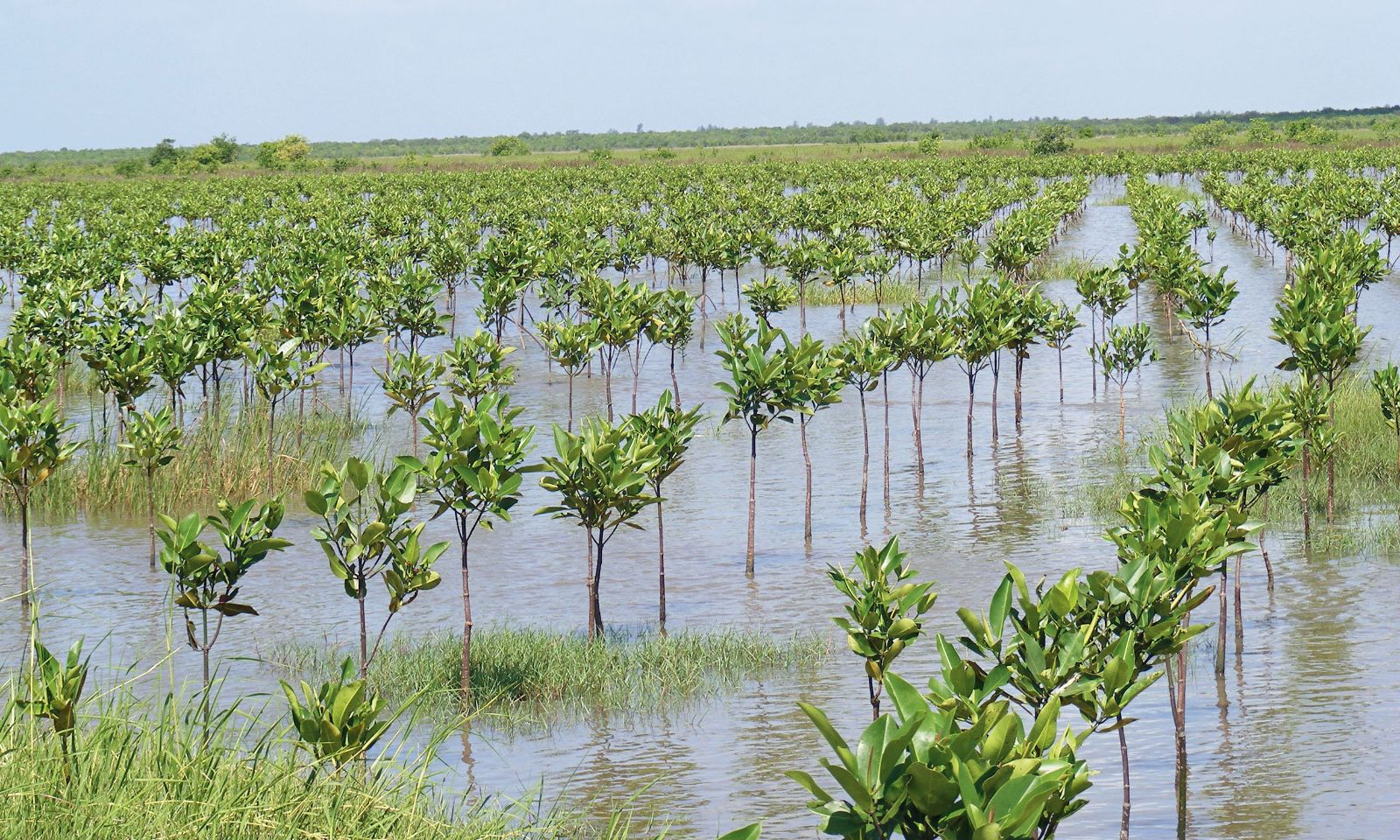

Kendrapara: The forest department has moved to regenerate mangrove species in degraded forest patches of Bhitarkanika National Park and the Mahanadi deltaic region.
It has undertaken a plantation drive in swampy wetlands that were earlier used illegally for prawn cultivation. The land, which comes under the Coastal Regulation Zone (CRZ) category, was recently reclaimed from squatters in a joint drive by forest, revenue and tehsil officials.
Now, the forest department have decided to use the reclaimed plots for mangrove regeneration programme so that prawn farmers cannot reoccupy the areas.
"The reclaimed areas are conducive for mangrove regeneration as there is regular inflow of tidal waters," Rajnagar Mangrove (wildlife) forest division officer Bimal Prasanna Acharya.
The degraded patches in Rajnagar and Mahakalpada tehsil have been earmarked for the regeneration programme with funds allocated for the project. The plantation programme, which has got underway, will be conducted in phases, said Acharya.
Besides plantations in reclaimed plots, the department will regenerate the species in Bhitarkanika National Park, swampy patches of the Debi-Kadua river mouth, besides the Mahanadi deltaic region. This would help reclaim mangrove-friendly wetlands, said a forest official.
While Rs 71.99 lakh has been earmarked for plantations in Bhitarkanika, which, at 190sqkm, has the largest concentration of mangrove cover, Rs 81.66 lakh has been allocated for mangrove regeneration on 60 hectares along the Mahanadi deltaic region.
Similarly, 10 acres of the Devi-Kadua river mouth will be used for mangrove regeneration for Rs 32.83 lakh.
Odisha, with a mangrove cover of 231sqkm, stands second only to the Sundarbans in Bengal. Kendrapara, Balasore, Bhadrak, Jagatsinghpur and Puri districts are home to mangroves, otherwise known as coastal woodland. Nearly 82sqkm of the mangrove cover is categorised as densely mangrove-infested while 95sqkm has moderate cover and 54sqkm is sparsely covered.
The places where there is regular ingression of tidal water for plantations to withstand the vagaries of nature will be regenerated by the forest department.