 |
Bhubaneswar, April 11: The tiger has almost given up on his penchant for red meat, while the deer is getting high on coconut water. The mercury level has hit the roof and the animals at Nandankanan zoo are finding it hard to beat the heat.
In a bid to alleviate the woes of the animals, the zoo authorities have been forced to take special measures to protect them from the sweltering heat.
From erecting thatched structures for some of the animals to providing special diet to counter the hot and humid conditions, the zoo authorities are doing everything to provide relief to the animals.
“The animals are vulnerable to extreme heat wave conditions. We have to make special arrangements so that the animals are least affected,” said deputy director of the zoo C.R. Mishra.
The authorities have installed fans and thatches for the big cats since the beginning of April. The animal enclosures are being sprinkled with water on a daily basis. The authorities have also removed the sheets used to cover the enclosures during the last winter.
Herbivorous animals such as sambar and deer are served with watermelons and green coconut water, while the bears are given watermelon and cane juice to beat the heat.
The authorities have also decreased the amount of meat served to lions and tigers to ensure better metabolism.
For carnivorous animals such as tigers, the zoo authorities have ensured 24x7 water supply so that the water in the polls inside the enclosures does not become warm.
The animals are also licking ice blocks to control body temperature.
Zoo officials said anti-depressants mixed with water are being given to the animals. “We are also serving glucose and oral rehydartion salts (ORS) to the animals. Veterinary doctors are keeping a constant tab on the health of the animals,” said a senior zoo official.
The city has been reeling from heat wave conditions since the beginning of this month.
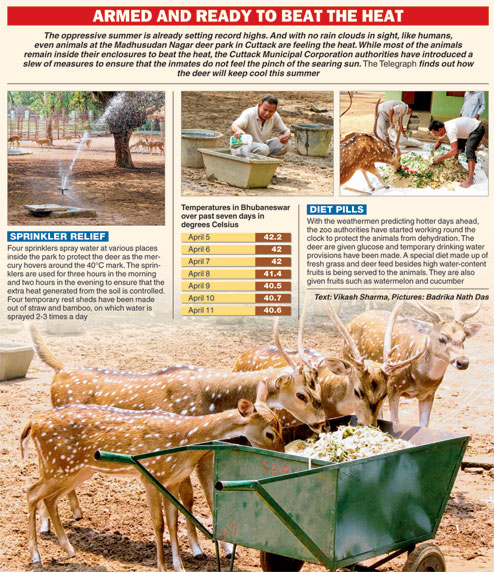
With the mercury still hovering above 40 degrees Celsius, the city recorded a maximum temperature of 42.2 degrees Celsius on April 5, which was also the highest temperature so far this year.
Sources in the zoo said that none of the animals had died so far of heat stroke.