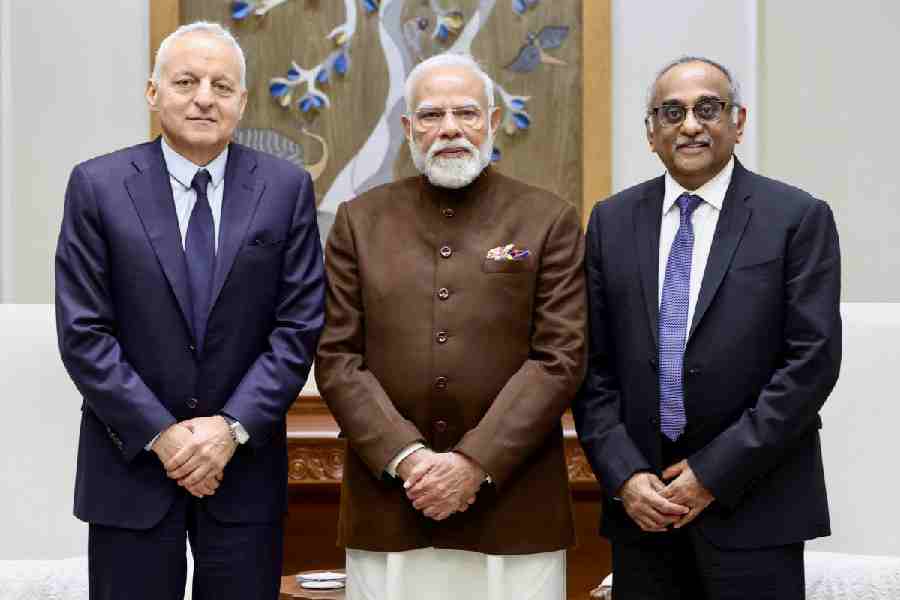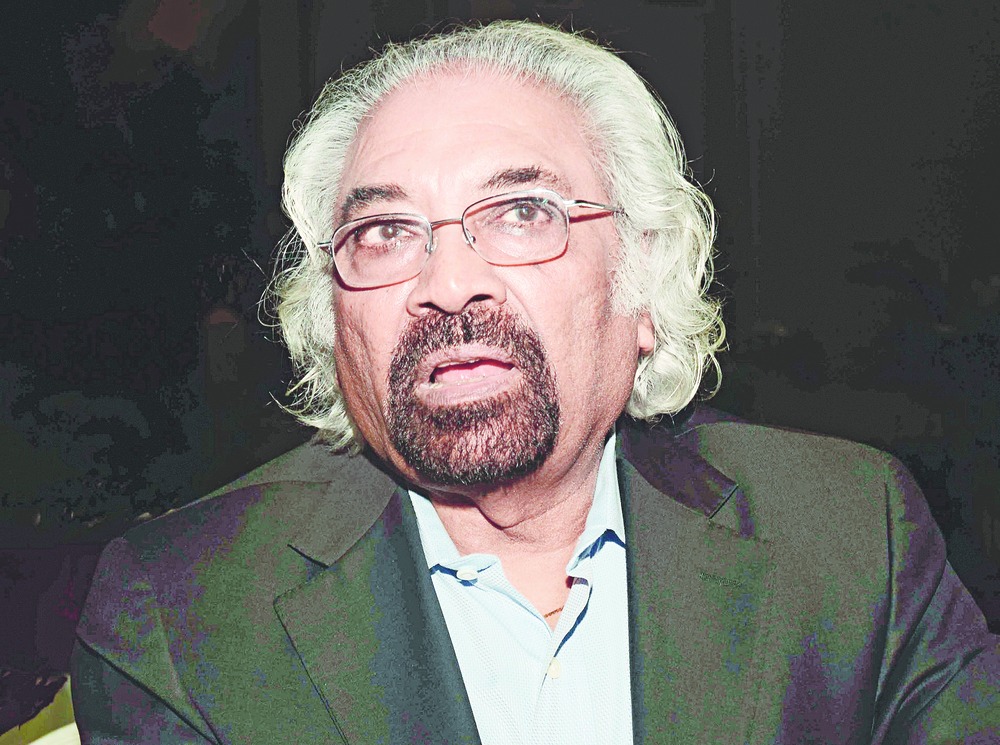

Telecom wizard and policy-maker Sam Pitroda, who has recently been appointed as technical advisor to the state government, was in the city on Wednesday to meet chief minister Naveen Patnaik, his ministerial colleagues and senior bureaucrats. Pitroda set the process for preparation of the Vision 2036 document for the state on motion. He spoke to Subrat Das of The Telegraph about his vision for Odisha's future development
• The state government is preparing the Vision 2036 document with your help. What are the broad outlines of this vision document?
There are two ways to look at things. First, the impact of the technology and how to use it in the future growth of the state. There have been a lot of technological advancements in all spheres. All these things are having a huge impact on all of us. Longevity has increased and communication improved.
If we look at 15 to 20 years ahead, there will be a lot of technological developments. So, we have to plan how to use the technology for the overall development of the state with an eye on the future, especially when there is a large number of poor people in Odisha. Take for example, employment. By 2036, the idea of employment must have changed. With the advent of smart car, there will be no necessity of a driver. So, new jobs have to be created.
Besides, there will be a huge impact of technology on the individual as well as the state. So, I am looking at from the point of view of technological advancement.
• The state government has decided to roll out fibre optics down to the level of panchayats - which will work as an information super highway to connect various sectors. How it will be done?
We are thinking of using electricity towers to lay fibre optics across the state. That can be done faster and cheaper.
• How will information technology (IT) be used for the development of the state?
IT will be used for improvement of education, health, agriculture sectors and alleviation of poverty by digitally connecting these sectors.
• You had also headed the National Knowledge Commission between 2004 and 2009. How do you visualise improving knowledge related institutions in Odisha?
We have many good universities in Odisha. But, it needs to build more and better universities. We can also build knowledge cities around the universities.
• You were the Telecom Commission chairman during the Rajiv Gandhi regime. What changes were brought in the telecom sector at that time?
Thirty years ago, it was not possible to get direct STD connection. One had to wait for hours to get the telephone line after booking a call.
Now, one can dial to any nook and corner of the country and get connected instantly. Now, everybody has got a telephone. We have thus connected the entire country through the tele-communication network. Besides, we have generated a lot of software, worth around $ 140 billion.
• How far has Odisha changed over the years?
I get little time and scope to visit the countryside. Today, I had been busy all through the day in the city, and tomorrow I will fly to Goa.
• Do you have any plan to visit Titilagarh, where you were born and had spent the childhood?
I'd have loved to visit Titilagarh. But, I can't make it this time due to time constraint.