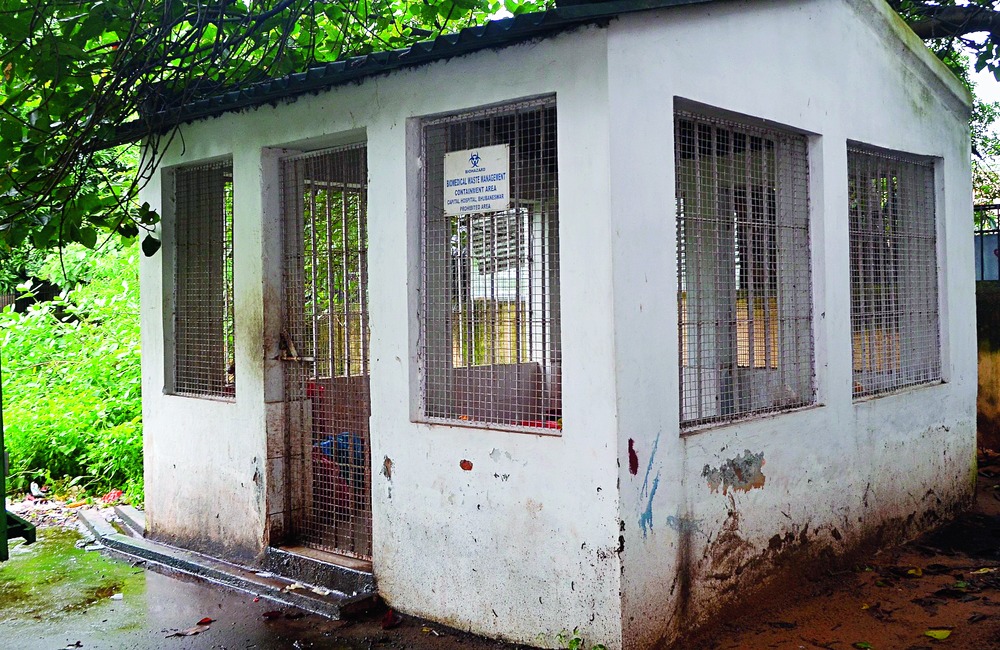

Bhubaneswar, Aug. 14: The Odisha State Pollution Control Board will prepare an inventory of the city's healthcare facilities and the bio-medical waste generated by them.
At present, the board has no mechanism to trace the amount of bio-medical waste generated by the healthcare institutions. Bhubaneswar has four major government healthcare institutions, about 12 dispensaries and several other private healthcare institutions.
The recent plan of the OSPCB came in view of the new Bio-Medical Waste Management Rules framed by the Union ministry of environment, forests and climate change in March.
The board is also in process of setting up a bio-medical waste processing plant in the vicinity of the state capital, sources said.
In 2013, the OSPCB had proposed to set in place a non-burn technology for scientific disposal of bio-medical waste in the city. However, that has remained a non-starter. The non-burn technology was introduced by the United Nations Industrial Development Organisation (Unido), which aimed to facilitate respective healthcare facilities to dispose of the waste on their premises.
However, OSPCB sources blamed the new rules framed by the Union ministry of environment for not being able to start the process.
According to the rules, no occupier shall establish on-site treatment and disposal facility if a service of common bio-medical waste treatment facility is available within a radius of 75 kilometres.
Environmental scientist Dilip Kumar Behera said that the OSPCB had already prepared an inventory for electronic waste and is now in the process of doing the same for the bio-medical waste in collaboration with the health and family welfare department. "Once the inventory is created, it would have been easier to track, manage, treat and dispose the hazardous bio-medical waste safely. The process will be completed after we get the data from the health department," said Behera.
The OSPCB has sought the support of the directorate of medical education and training to prepare the inventory.
Public health director Kailash Chandra Dash said that they were ready to support the OSPCB in their initiative.
"The inventory will ease the job and check the exact amount of bio-medical waste generated in the city. At present, there is no such mechanism in the city to track bio-medical waste," said Dash.
Now, government and private healthcare institutions collect and hand over biomedical waste to a private agency authorised by the OSPCB.