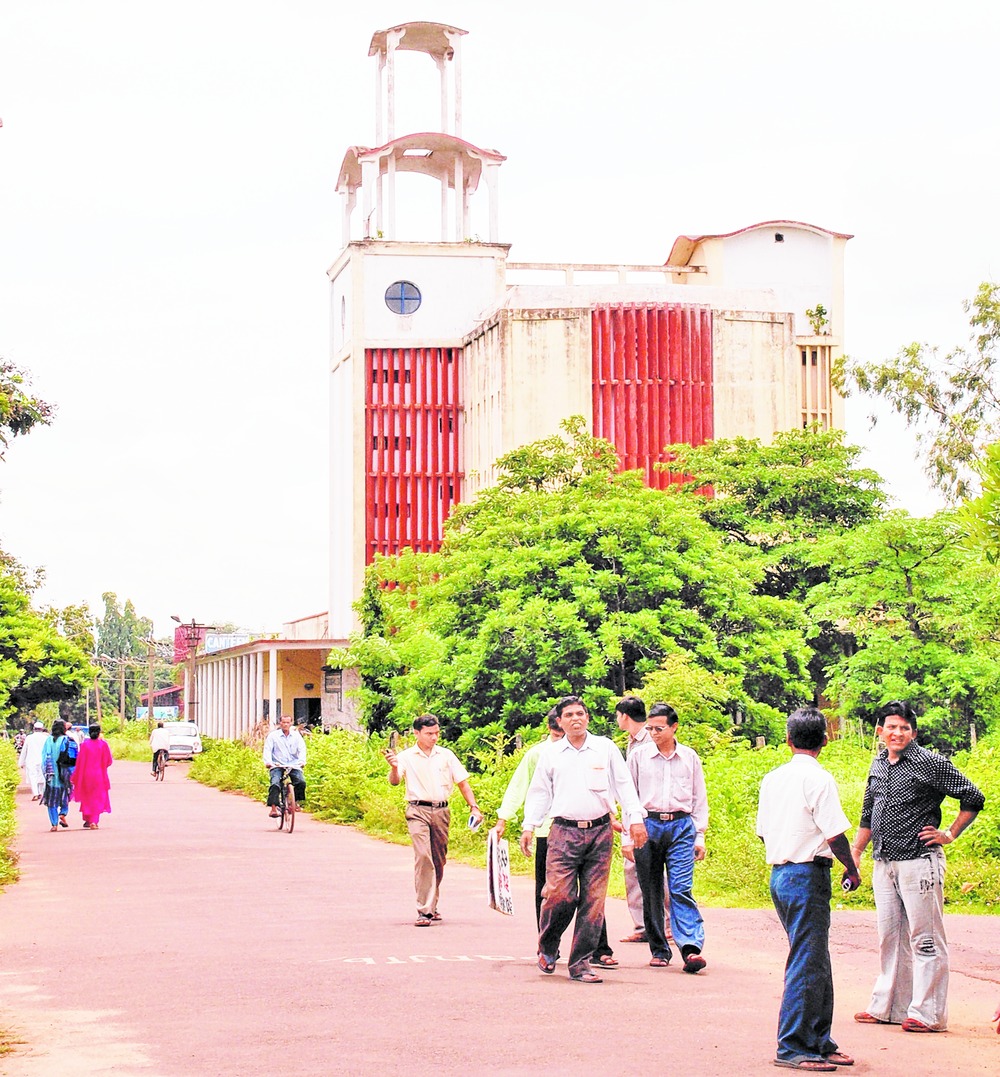

Bhubaneswar, March 11: Utkal University is turning into quite a female stronghold after a new report revealed that they outnumber their male counterparts in almost all the varsity programmes.
Utkal University released its Gender Audit Report for the period between 2014 and 2016 earlier this month. It highlights how institutes of higher learning are inching fast towards gender equality.
According to the report, out of the varsity's 2,167 students, 856 are boys and 1,311 girls. In the MPhil programme, 174 are boys and 248 girls out of 422 students. Similarly, in self-financing courses, the gender ratio is almost equal with 463 boys and 464 girls.
The report also shows the high number of female PhD scholars at the varsity with 471 boys and 656 girls out of 1,127 students.
Of the 869 students pursuing PhD without fellowship, 361 are boys and 508 girls. Again, among the 258 students doing their PhD with fellowship, 110 are boys and 148 are girls. Again, 21 boys and 26 girls are pursuing their UGC Staff Research Fellowship, while 40 boys and 47 girls are working as junior research fellows.
Under the Rajiv Gandhi National Fellowship Scheme, there are 19 boys and 32 girls out of 51 students. Similarly, out of the 169 students who avail scholarships such as Prerna, there are 74 boys and 95 girls.
"The report clearly suggests that the students' strength during this period has been dominated by girls," said the varsity's school of women's studies director Sabita Acharya, who carried out the survey with her six-member team.
However, when it comes to the faculty, the story is completely different. Of the 41 professors in the varsity, 31 are male while only 10 female. Similarly, of the total 53 readers, 37 are male and 16 female.
There are 46 male lecturers and 14 female lecturers. There is not a single female Group A category member that includes the vice-chancellor, registrar, controller of examination, comptroller of finance, research and development professor-in-charge, development officer and system manager, computer centre and so on.
Quoting from the report, Acharya said: "The ratio of females is equally poor in Group B and Group D categories, which constitute non-teaching staff members and hint at the gender bias that continues in recruitment and promotion."
"It's great news that the number of girls on the campus has seen a steady rise. This is particularly evident during students' union elections when the candidates do their best to garner female support. Also, many female students are doing good in studies if one takes into account the number of gold medals they take away during convocations," said varsity student Supriya Biswal.
"While many of my friends would celebrate the findings, it remains a fact that parents continue to hesitate to spend on girl child's education," said postgraduate student Prabha Mishra.
Social activist Tapasi Praharaj said: "Clearly, it is because general studies in government institutes are inexpensive and parents do not have to shell out money."
"Most parents still carry the mentality that spending for a girl's education is a bad investment with no returns. One should actually take up a survey in expensive private engineering or MBA colleges to see if actually the number of females in higher education is actually growing," she said.