|
 |
 |
 |
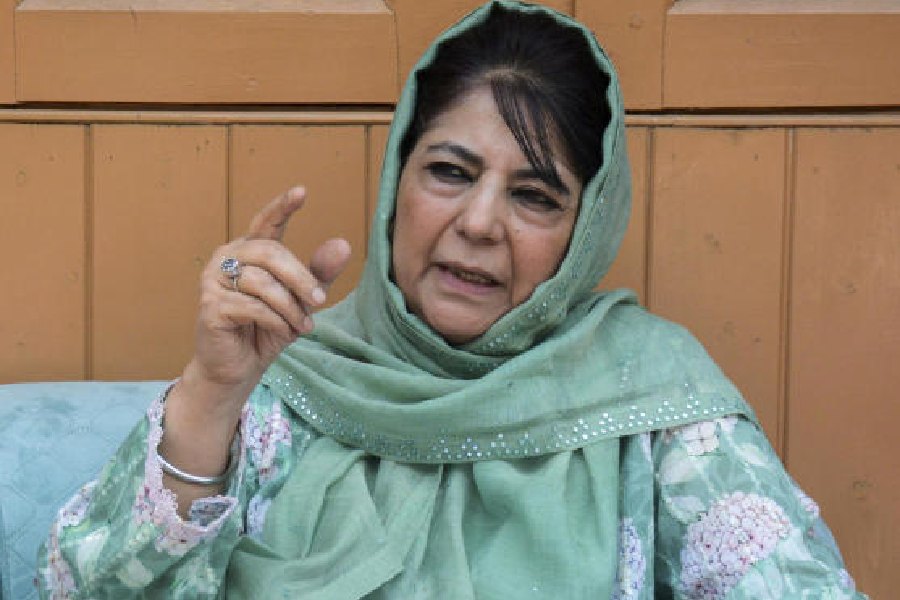
| (From top) A view of the Nikunjabihari temple from the mandap, statues on the temple wall that need urgent attention, temple wall damaged by British bombs and plants growing on twin statues at the entrance. Telegraph pictures |
Bhubaneswar, Aug. 2: The early 19th century Nikunjabihari Temple, on the way to Khurda Fort from the NH-5 near Khurda town, needs help from the state archaeology department.
Weeds and wild plants are growing everywhere on the temple compound. Grass is growing on small statues on the gate and most the statues (parsva devatas) have bird-droppings and cobwebs on them.
Nikunjabihari and Radhakantadev temples were built by the kings living in the Khurda Fort before venturing out to fight a battle or a trip to the forest to hunt wild animals. These rulers followed the tradition of worshipping the deities before going out on a mission.
Both the temples have Radha-Krishna as their main deities. However, the association of Nikunjabihari Temple with the freedom struggle narrates interesting tales as local residents remember another small temple in front of Nikunjabihari where a prominent goddess of the locality was present. At present, a small temple is being constructed to replace the old structure there.
“According to legend, the goddess was very powerful and she protected the Khurda Fort from attacks of foreign forces. During the early years of the freedom struggle, the British bombarded the small temple of the goddess and tried to demolish it but their first attempt was not successful. Later, a local resident named Dasarathi Patnaik of Olasingha village made a pact with the British and told them to destroy the goddess’ temple. While the British forces were able to destroy the temple of the goddess in due course of time, the Nikunjabihari Temple was also affected in the attack and you can still see the portion damaged by British shells,’’ said Bijay Samantray, a lecturer at a nearby college, who visits the temples frequently.
Situated 20km from the capital city, the historic temple, with Barunei Hills behind it, provides a beautiful experience to the visitor. But the premises of the temple needs to be cleaned. Also, a group of people have illegitimately occupied the area and are keeping the place untidy.
“Barunei Hills is also associated with the rich history of the freedom struggle of the state and especially Khurda, which was the last independent fort of the country. The fort, on the other hand, was at the helm of Orissan politics and remained a major fort from 1568 to 1803. The ruling British India Company was not able to take the total control of it till 1817,’’ said Samantray.
Authorities of the state archaeology department, however, said the two temples and the Khurda Fort were already on the radar with a detailed plan of conservation. “We are going to make the protected monuments cleaner and the weeds and wild plants would be removed,” added a senior official.
“With increasing population and people wanting to have tourist destinations within reachable distances from the state capital, the potential of Khurda, Barunei and adjacent areas such as Atri, where there is a hot spring, can make a good package for the tourists. So, the departments concerned should take up coordinated efforts in this regard,’’ said educationist and senior citizen of Khurda town Dinabandhu Biswal.