|
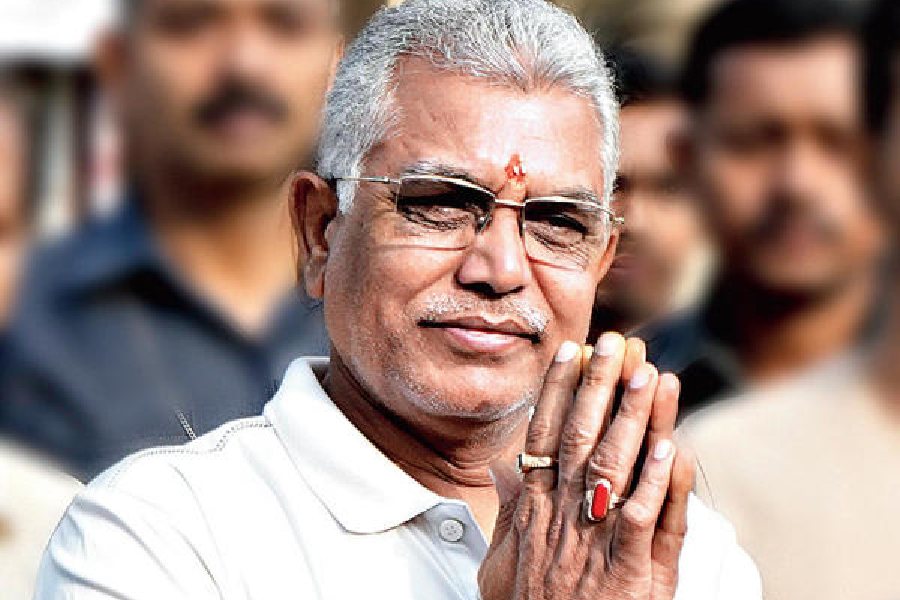
| Professor Xiangyi Li from China at the Regional Museum of Natural History in Bhubaneswar on Sunday. Picture by Ashwinee Pati |
Bhubaneswar, Sept. 14: Xiangyi Li, who was the first Chinese national to receive the Unesco-Kalinga Prize last year, was in the city to deliver a speech on popularisation of science at the regional museum of natural history.
Citing examples from his experience, the 78-year-old professor spoke on extensive use of the Internet as a major tool to popularise science and technology in rural areas.
“In China, we have created virtual museums so that the people staying in rural pockets can learn things easily over the Internet,” he said.
During his 30 years of experience, Li has created 252 science museums across China. India, on the other hand, has 100 science museums.
As both the nations are similar in their rural settings, Li also hinted at creating support base in India to popularise science and technology-based museums for betterment of scientific temperament and creation of more innovative minds.
The honorary president of China Association of Natural Science Museums, Li, visited the Regional Museum of Natural History (RMNH) today before delivering a speech on “Future belongs to those who can have a whole new mind.”
While visiting the RMNH, Li took interest in the displays, especially, the whole skeleton of a 47-feet 3-inch baleen whale, which was preserved by the taxidermist in 2010.
Emphasising the use of Internet, especially mobile Internet, the professor said: “We can develop more apps to generate interest among people about science and technology. As more and more people are using smartphones, pads and tablets, the mobile Internet is going to revolutionise science popularisation very soon,” he said.
An app is a software or tool to use an application on mobile phones.
To a question on the value-based use of the Internet and the deeper knowledge required to understand a subject, Li said that online sources could help in basic understanding, but deeper knowledge could be achieved through classroom teaching and libraries. “We have to strike a balance between these two,’’ he said.
“There should be a rhythm in life as nature can teach us many things. On the other hand, one should remain happy and use the ‘laughter’ medicine to keep his or her brain active,” he said.