
Bhubaneswar, Nov. 9: Padmalochan Bebarta, 68, a retired employee of the state secretariat suffering from acute asthma, today faced a problem while trying to buy an inhaler. The inhaler costs Rs 380 but the medicine retailer refused to accept a Rs 500 note from him.
The chemist argued that he had no change and he would not accept a 500-rupee note in any case as it has ceased to be a legal tender. After repeated persuasion, the chemist agreed to give him the inhaler on the condition that he would pay him in the next seven days. Bebarta was lucky as the chemist was known to him. However, the experience has left the elderly asthma patient rattled.
Bebarta said: "Though the Centre's move is aimed at curbing black money, it would have been better had the government taken precautionary steps to save people from such hassles."
Chief minister Naveen Patnaik also welcomed the decision of the Narendra Modi government to demonetise currency notes of the values of Rs 1,000 and Rs 500.
"I am happy that the Union government has shown the political will to implement it. This is a bold step by the Prime Minister," Naveen had said earlier in the day.
"As more than 80 per cent cash in circulation is withdrawn, the Union government should make all efforts for a smooth transition so that the common people, small traders, daily wage earners and those living in interior areas and not having access to banks do not suffer any hardship," he said, adding that three-day grace period for old currency to be accepted in hospitals was too short for critical and costly treatment.
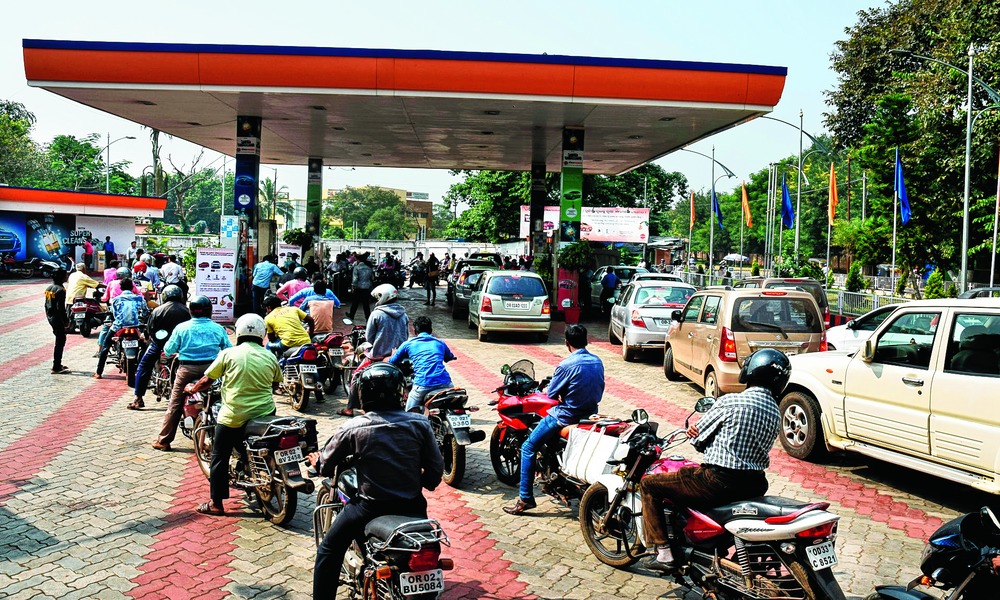
People are facing a lot of difficulty buying essential daily items, such as medicines, milk and vegetables. Long queues were seen today at petrol pumps where quarrels broke out every now and then with lots of people offering Rs 1,000 notes for petrol worth Rs 100. Tension was also witnessed at Pipili tollgate on the Bhubaneswar-Puri highway with toll employees collecting money despite a government ban on toll collection till November 11.

The suspension of Rs 500 and Rs 1,000 as legal tender forced the Bhubaneswar traffic police to suspend its drive against traffic violators. "We usually impose a fine of Rs 500. But as the currency is no more valid, we suspended the drive today. This may continue for another two days," said a senior traffic police officer.
Tourists faced a lot of problems in places such as Puri. "Local cabbies are not accepting Rs 500 notes and demanding Rs 100 notes. Even roadside eateries are demanding Rs 100 and notes of smaller denominations only," said tourist Rashmi Samal.
There were arguments at the Biju Patnaik Airport with staff refusing to accept Rs 500 notes from those trying to buy entry tickets to see off their relatives.
In Cuttack, people had a tough time buying grocery and vegetables. Even shopping malls refused to accept high-denomination currency notes. Some stores in Cuttack have put up notices clearly stating that they were not accepting Rs 500 and Rs 1,000 notes.
Secretary of the Cuttack Chamber of Commerce Prafulla Chatoi claimed that business at Malgodown, the largest wholesale market in the city, was hit badly today.
In Rourkela, students of Ispat Autonomous College had problems filling up their semester forms. The college did not accept Rs 500 and Rs 1,000 notes from them. College principal Bijaya N. Mohanty said: "We could not accept these notes as State Bank of India, our authorised bank, was closed."
The students were finally allowed to fill up the forms following administration's intervention and were asked to pay the money after November 10.