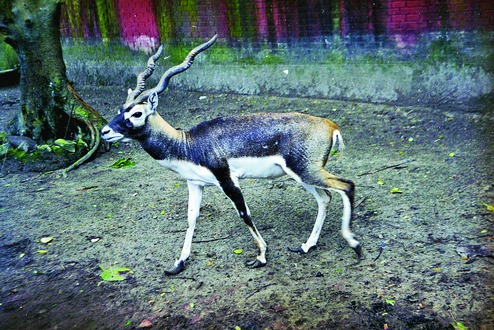

Bhubaneswar: Black bucks (antelope cervicapra) have found a safe sanctuary in the Betnai-Balipadar area of Ganjam district with their population growing at a fast pace.
During the last census in 2015 their number stood at 3,806, an increase of 1,625 compared to 2011. The growth rate for these ruminants has been around 20 per cent, according to divisional forest officer, Ghumsar South, Bijay Ketan Acharya.
One of the reasons for the phenomenal growth in the black buck population is that people in the Betnai-Belpadar belt consisting of around 14 villages, treat these animals, also known as the Indian antelope, almost reverentially.
"They are thought to bring good luck. Hence people love and respect them," said Samir Pradhan, a wildlife enthusiast from Aska.
Acharya said local people and forest officials had joined hands to save these antelopes, locally called 'krushna saar mruga'. Another important reason for their population rise was the absence of predators like tigers in the area.
The officer said that the growth in the black buck population has been so fast that it was causing management problems for forest officials. " Sometimes the animals destroy standing crops which could be a provocation for people to harm them. However, nothing of the kind has happened so far as the people consider them to be sacred," said a forest official adding that black bucks were now also migrating to other areas like Polsara and Bhanjanagar in Ganjam.
A source said that forest officials were likely to discuss issues of crop destruction with local communities involved in protection of these ruminants. "Local residents are enthusiastic about protection of these animals," said a forest official. He further said that these animals were gradually migrating to newer areas in search of agricultural crops.