
Borjhar, March 29: "A good river is nature's life work in song," American novelist Mark Helprin had said.
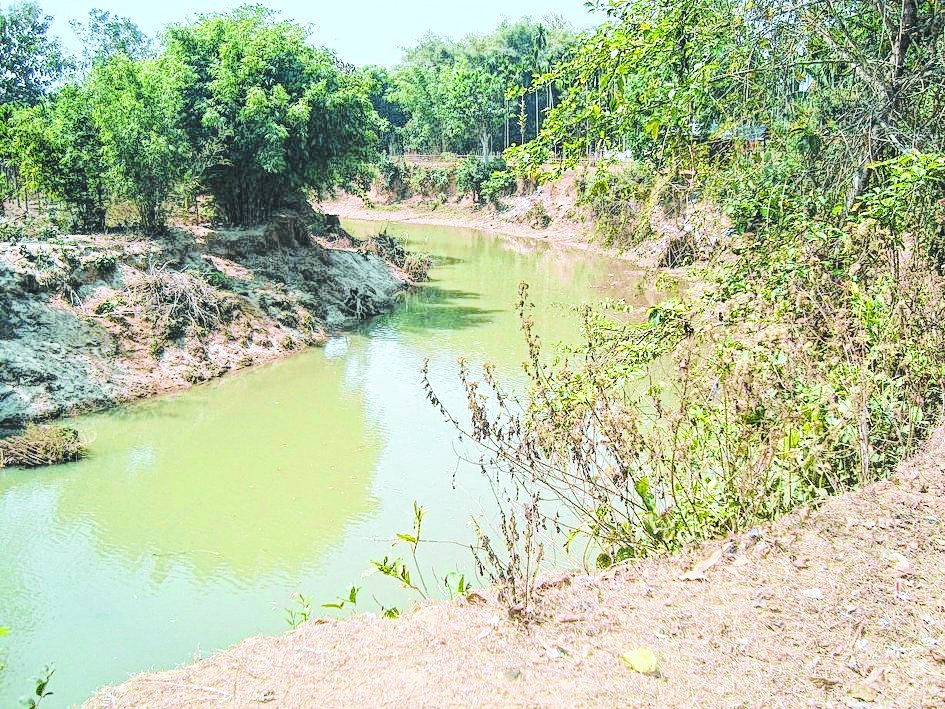
But illegal and indiscriminate sand mining by suction machines (sand extraction machines) is posing a serious threat to the existence of the Batha river in south Kamrup.
The Batha, a lifeline for lakhs of people in south Kamrup, is dying a slow death, thanks to the apathy of the state forest department.
The river originates in Meghalaya and flows 150km before joining the Kulshi at Kukurmara in Kamrup district.
The parched riverbed in the upper reaches of the river speaks volumes of a river that once was known for its flow.
Experts say the riverbed without sand deposits had led to the loss of water-holding capacity.
Residents allege that rampant extraction of river sand round the clock has lowered the riverbed by at least two to three metres along various stretches of the river.
Known for its construction-grade sand, Batha has four officially designated sand mahals such as Batha number 2, Batha number 4, Batha number 5 and Batha number 6.
The forest department has permitted the sand mahals under the provisions of the Assam Minor Mineral Concession Rules, 2013.
The mining area of all the mahals is over 17 hectares at separate stretches along the river.
The forest department has issued mining contracts in 2014 to dig sand measuring 49,000 cubic metres from all the designated mahals of the river for seven years.
But illegal practice of mining sand from other storage zones of the river is rampant under the nose of the Loharghat forest range. Deep gorges have been formed in the river with banks eroded at various stretches.
"We have already seized five suction machines this month which were illegally used in mining sand from the river. I have instructed the range officer to take concrete steps against sand mining by machines," B.C. Das, the divisional forest officer of Kamrup West forest division, said.
Residents allege there are two reasons of using suction machines. By machine, 20 cubic metres of sand can be mined in eight hours whereas if mining is done manually, then 10 cubic metres sand can be lifted during the period. Also, about 15 manual miners are needed to mine 20 cubic metres sand but five miners could do the job with suction machines.
Given the serious turn taken by erosion along the 1,000-metre stretch at Loharghat, Dispur had sanctioned Rs 4 crore anti-erosion scheme in 2014 to protect the Guwahati-Chandubi road. The road is a lifeline for hundreds of villages, including interstate border inhabitants.
Works of the scheme include boulder pitching along 900-metre of the riverbank.
A senior forest official said mechanised sand mining is prohibited in the river.
A few months back, heavy landslide along the 3km stretch of the river had buried a sand miner alive. Again, residents had torched a suction machine recently.