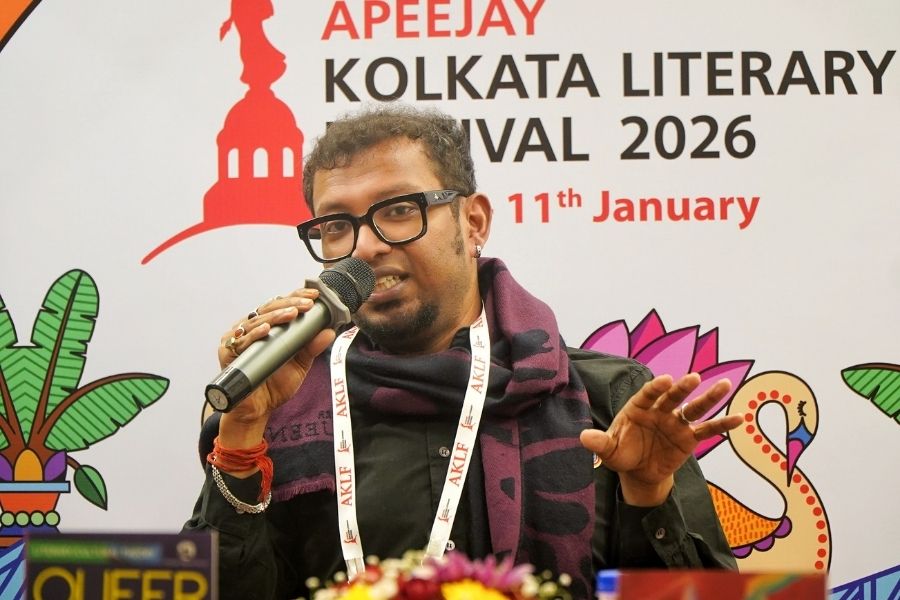
Queer movements across the world are facing renewed pressure from the rise of right-wing governments and an alarming growth of anti-trans sentiment, even within queer spaces, scholar Rohit K Dasgupta said at the Apeejay Kolkata Literary Festival 2026.
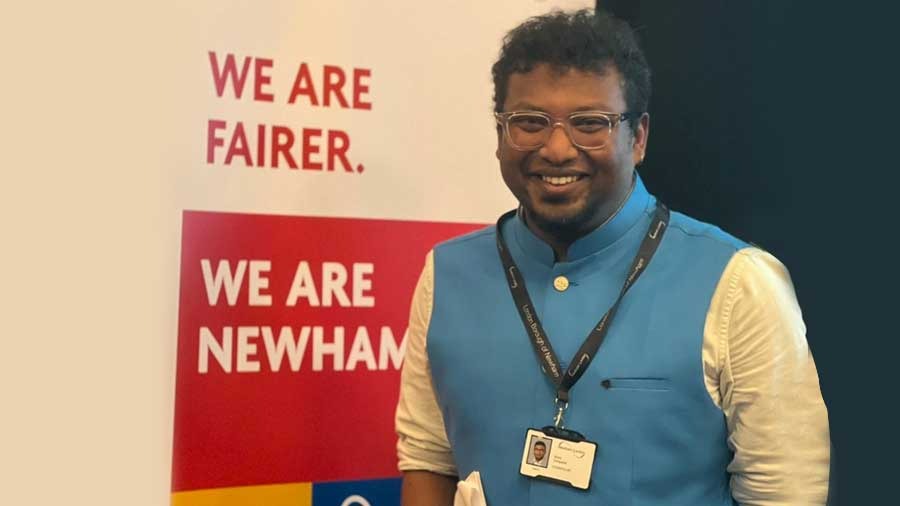
Speaking during a session titled ‘For the record: Documenting the queer experience’, Dasgupta said the idea of the West as a “queer utopia” has always been a myth.
“South Asians moving to Britain, particularly London, when they tried to look for community in places like Soho, have always been barred,” he said. “They’ve been barred because of the prevalence of whiteness in those spaces.”
Dasgupta traced how queer organising among South Asian communities in the UK once drew strength from the politics of “political blackness,” which brought non-white communities together to confront shared oppression.
“All of the marginalised groups who were facing oppression were coming together,” he said. “An injury to one was an injury to all.”
That solidarity, he argued, has steadily eroded. Global events such as 9/11 and the 2005 London bombings marked a sharp break. “You suddenly started to see how certain groups within the Indian subcontinent began to say, ‘I’m not Muslim’ or ‘I’m not this,’ as if that was going to save you from racism,” he said.
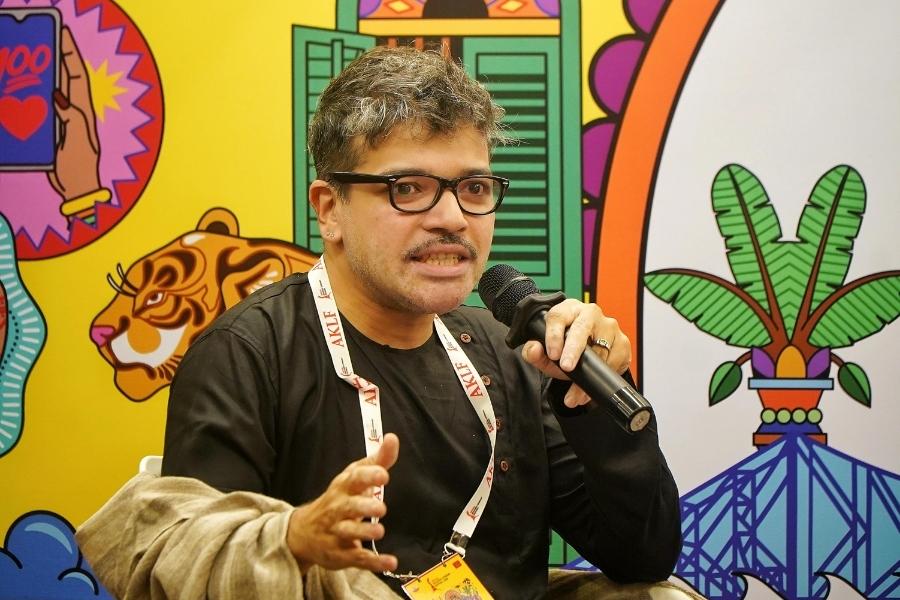
Journalist and scholar Debjyoti Ghosh pointed to the persistence of respectability politics and internal exclusion across queer communities worldwide
Journalist and scholar Debjyoti Ghosh said similar fault lines are visible across queer communities worldwide, including in South Africa and India. He pointed to the persistence of respectability politics and internal exclusion.
“We are supposed to be a community, right?” Ghosh said. “But even today, on queer dating platforms, you see ‘no fats, no femmes, no lesbians, no uncles’ — this kind of language is rampant.”
Ghosh added that trans people are increasingly bearing the brunt of this exclusion. “Some of us have found kinship in the community. Others are still outliers,” he said. “They’re told they’re too loud, overly proud, and occupying too much space.”
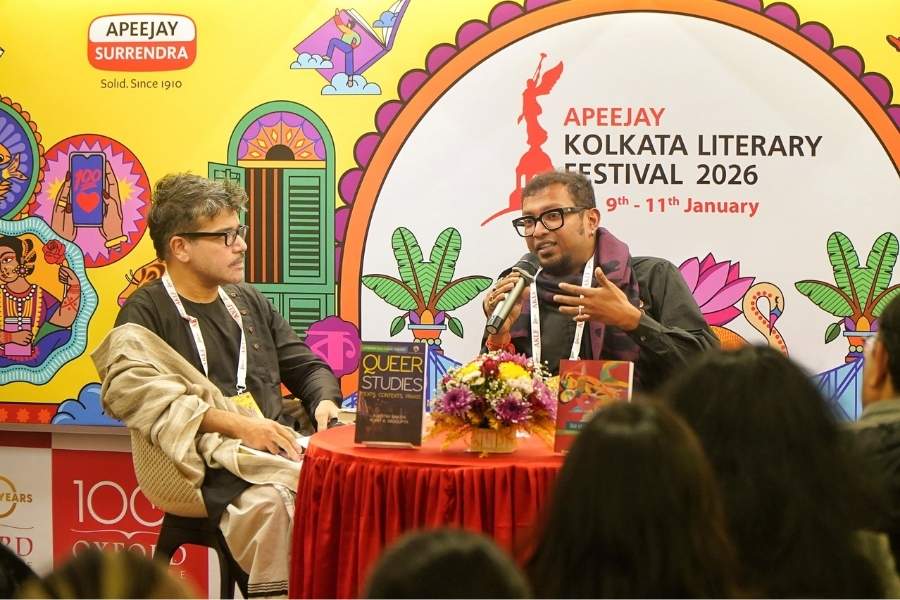
Despite the fragmentation, Dasgupta said queer histories show that collective resistance is possible
Dasgupta warned that anti-trans rhetoric has become “a commonplace, even within certain queer circles,” alongside a broader right-wing backlash against LGBTQIA+ rights. In response, he said, many activists are abandoning mainstream Pride marches, which he criticised as corporatised and politically compromised.
“There has always been a pushback against the way London Pride has functioned,” Dasgupta said, referring to alternative marches such as Trans Pride, Black Pride and Anti-Pride. “If you can’t change it, you go and create your own separate space.”
Despite the fragmentation, Dasgupta said queer histories show that collective resistance is possible. But he was blunt about the present moment: “The role of South Asians in queer activism has always been sidelined, and now, with right-wing politics and internal fractures, the challenges are even greater.”