Mahasweta Devi was a socialist at heart and was only concerned about the rights of people, rather than leaning towards a particular political party, said filmmaker Sudeshna Roy on Friday at a session celebrating the birth centenary of the author, in Kolkata.
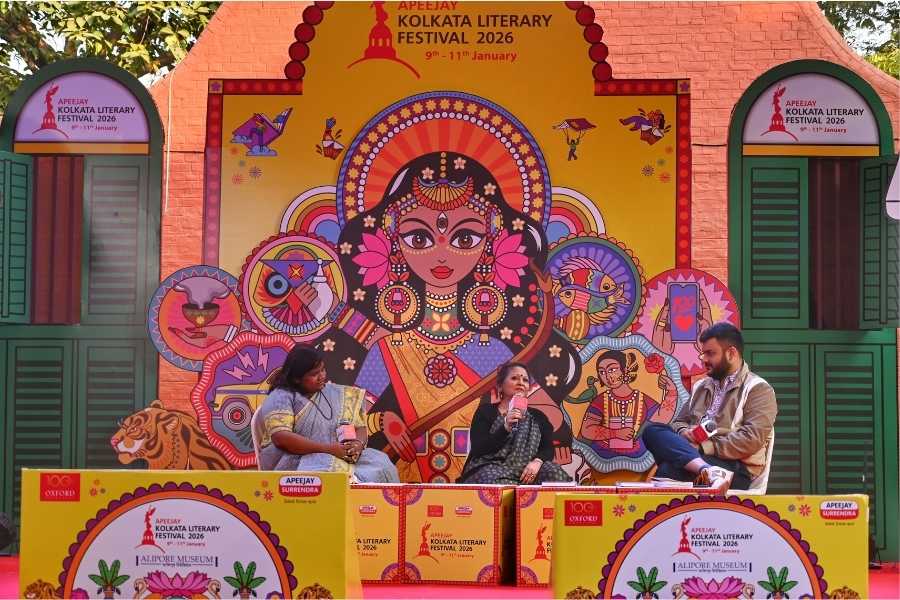
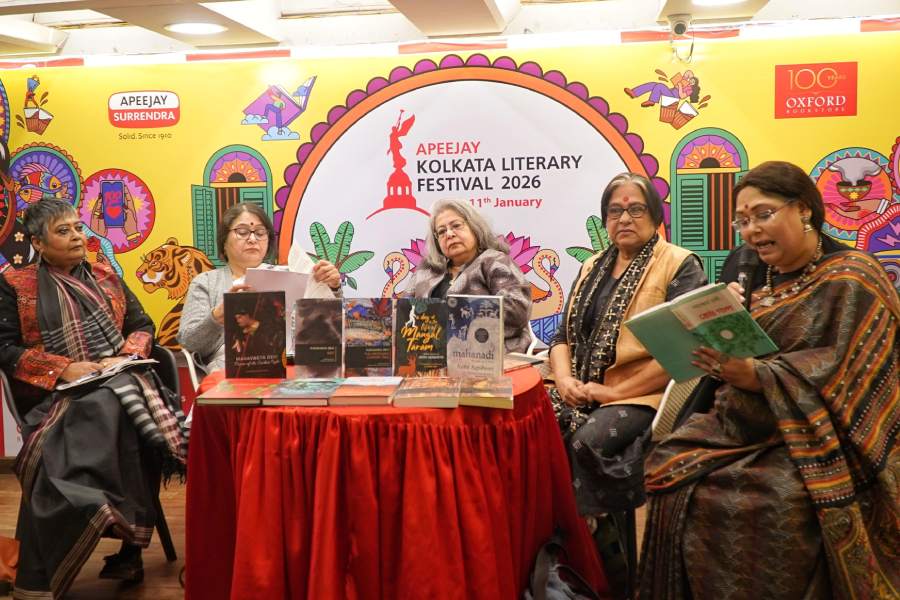
Sudeshna spoke as one of the panellists at a session titled ‘Mahasweta Devi, Living Legacy: A Centennial Tribute’, on Day 1 of the Apeejay Kolkata Literary Festival (AKLF) 2026 at Oxford Bookstore on Park Street.
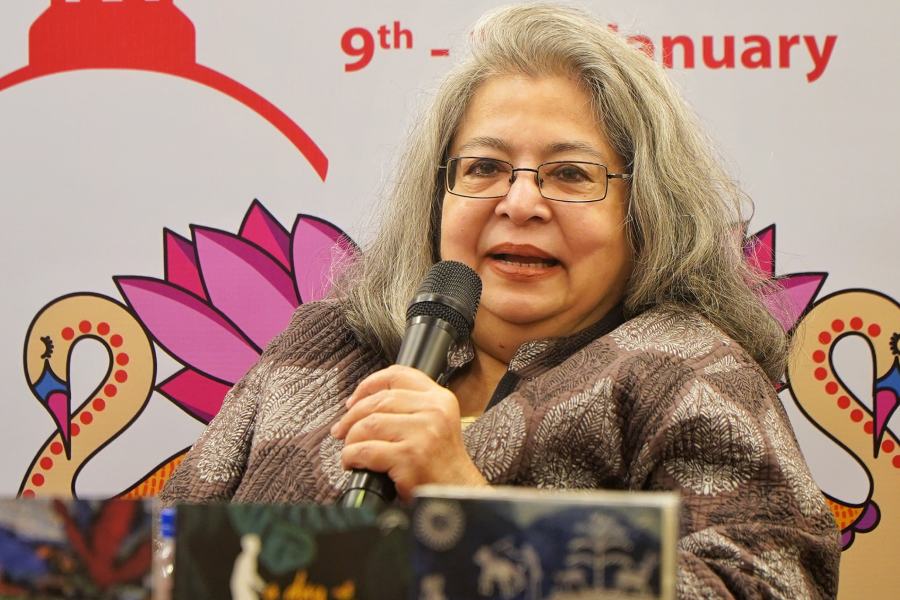
Anjum Katyal
Moderated by playwright and director of the literary festival, Anjum Katyal, the session was also attended by author-poet Anita Agnihotri, theatre personality Poulami Chatterjee, and mental health activist Ratnaboli Ray.
The panel engaged in an exchange of perceptions, introspections, and reflections on Mahasweta Devi, sharing anecdotes from personal encounters with the author and insights gained through studying her works.
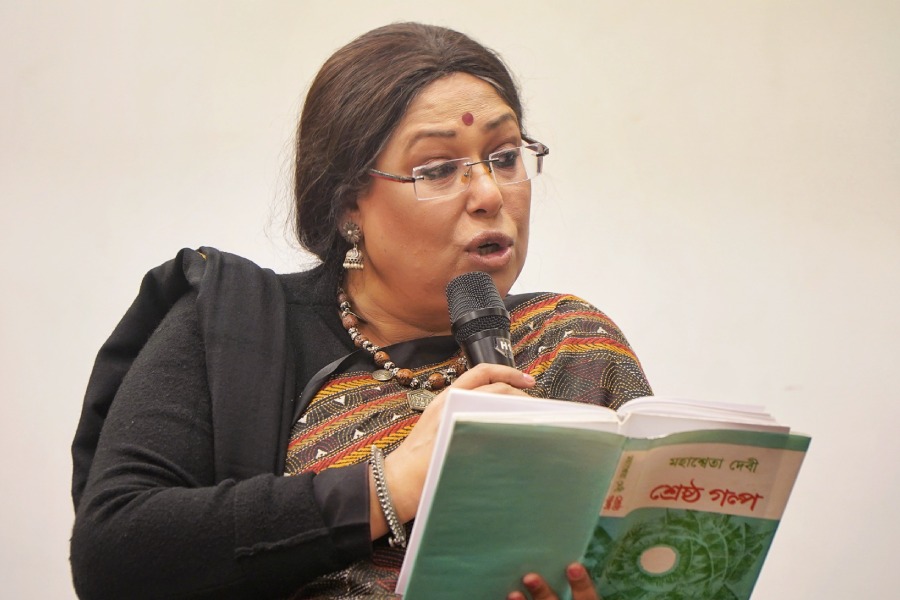
Poulami Chatterjee
The session began with a passage from Mahasweta Devi’s short story, Draupadi, delivered by Poulami Chatterjee.
Ratnaboli Ray talked about the importance of Mahasweta Devi’s take on madness as one of the themes in her writings — the hysteria that has been channelised through her fictional characters as their rational response to structural harm.
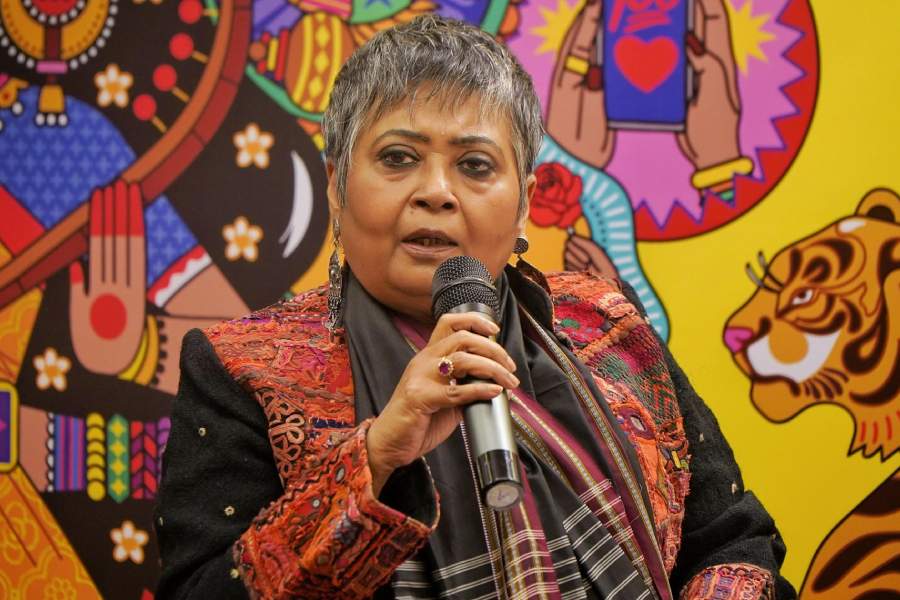
Ratnaboli Ray
“She looked at anger as political, as resistance, a collective rage against dispossession and how the community was going to be erased… Everybody is going through trauma, and we use it so easily. For her, trauma aligned with rage brings betterment in the society,” Ratnaboli said.
Anita Agnihotri, author of Mahanadi, Mahuldihar Din, and Labanakta, discussed the relevance of history — mostly local history — as a key element in Mahasweta Devi’s works. Anita, a former civil servant, said that Mahasweta’s exploration of society began well before her 1977 novel Aranyer Adhikar. From Jhansi Rani to Titu Mir, Mahasweta Devi re-explored history, constructing and reconstructing her imagination of the local stories to write her books, Anita said.
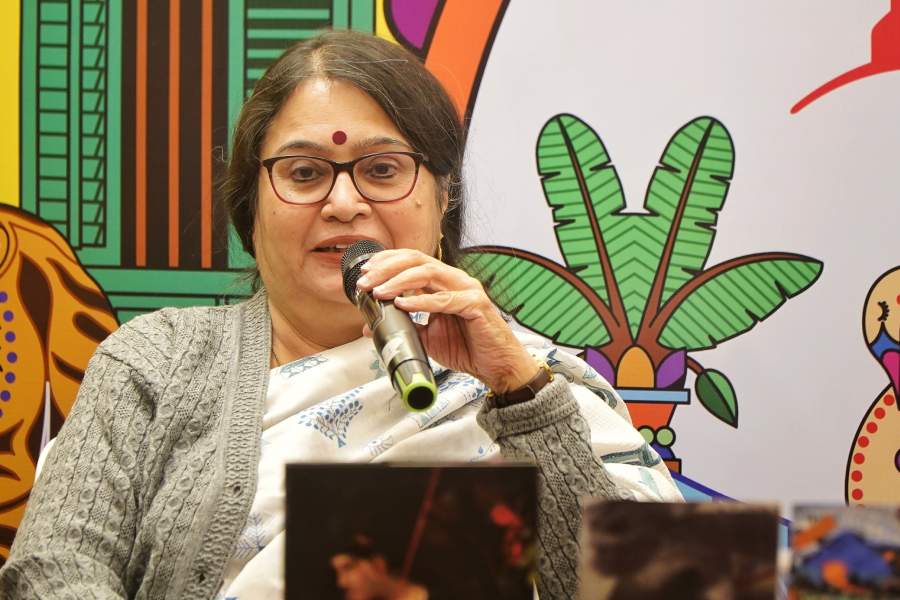
Anita Agnihotri
“The past had a very different connotation in Mahasweta’s mind. She said history is not a matter of the past. It is an ongoing process,” Anita said, emphasising the author’s importance in the contemporary era and modern-day literature.
Filmmaker Sudeshna Roy recounted her first meeting with Mahasweta Devi, which took place during an interview she conducted while working as a media professional. She said Mahasweta di lived among the people she wrote about and worked for, to understand not only their material poverty but also the deprivation that occupied their mental space.
“She was a feminist, but not a man hater,” Sudeshna said, while talking about Mahasweta’s impact as a voice for women, becoming the patron of the lower-marginal class, all while not siding with a political party.
From a filmmaker’s point of view, Sudeshna said that making a film based on the life of Mahasweta Devi is “extremely difficult”. “Apparently a film was made on her life, where Gargi Roy Chowdhury played the author and I think it’s called Mahananda. I would say that it’s difficult to bring out a woman like her on screen because she had so many facets,” Sudeshna said.
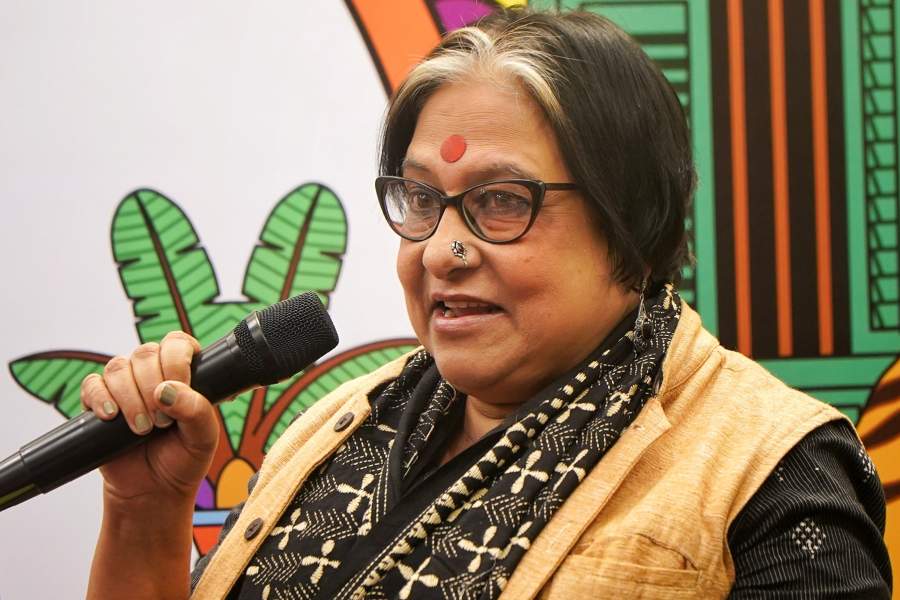
Sudeshna Roy
Asked whether films should be made by contemporary filmmakers based on her novels for the younger generation, Sudeshna said one must feel ‘strongly’ about the themes Mahasweta Devi has explored in her works, which are timeless.
“Draupadi is a story that I feel very strongly about. It’s a story that even today, though originally written in the ’70s, can be related to the present generation, since the same things are still happening. It’s very contemporary. Any story of hers can be made into films. She is beyond time,” Sudeshna said.
Ratnaboli Ray believed that in the times of ‘cancel culture’ where individuals are stuck in an echo chamber and are taking extreme political sides, Mahasweta Devi would have stood against the ‘woke culture’.
“She never followed mainstream narratives. If culture was mainstream, she created countercultures,” Ratnaboli said.