Writer and cultural practitioner Arundhati Ghosh on Saturday spoke about reimagining love and relationships beyond conventional frameworks, urging audiences to move past rigid hierarchies that privilege romantic partnerships over other forms of care and connection.
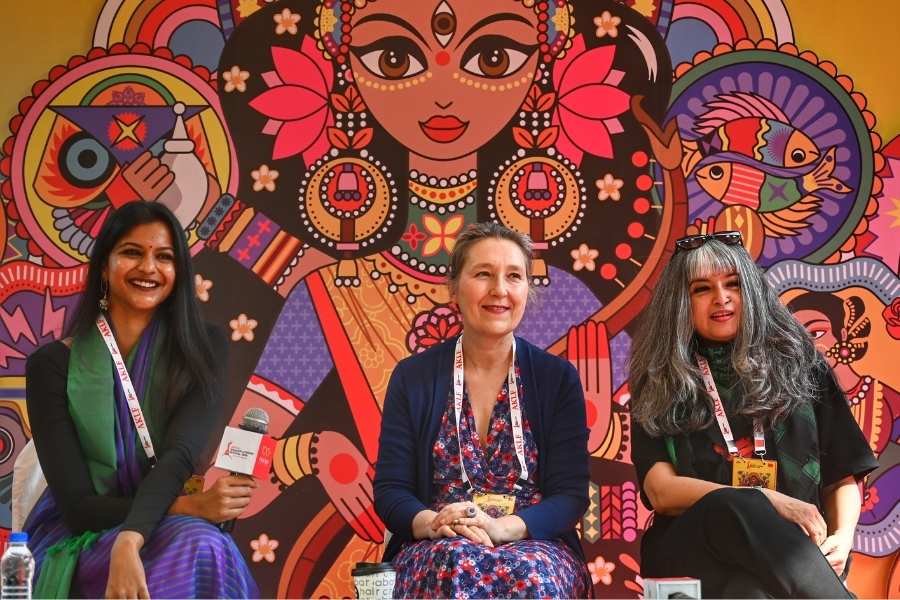
Speaking at a session during the Apeejay Kolkata Literary Festival 2026 at the Alipore Museum, Ghosh joined moderator Ahona Palchaudhuri and French author Marie Darrieussecq for a wide-ranging discussion on polyamory, friendship, ageing, jealousy and the ethics of love.
Opening the conversation, Palchaudhuri framed polyamory as an ontological and ethical challenge, asking how people can live alongside multiple ways of being without dismissing them as mere “opinions”.
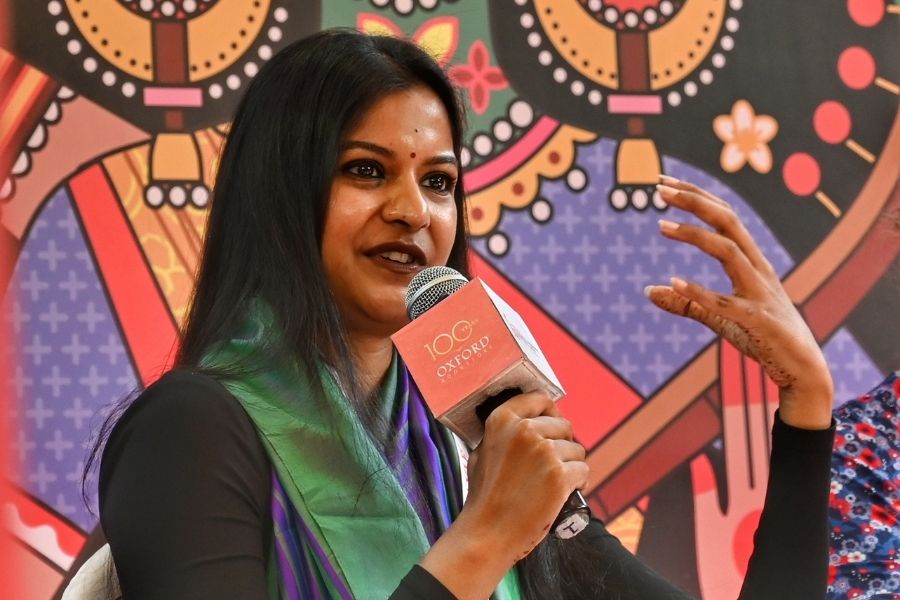
Ahona Palchaudhuri framed polyamory as an ontological and ethical challenge
Love, she suggested, is a singular lived experience that nevertheless exists across many worlds, accessed through dreams, art, fiction and everyday practice.
Defining polyamory, Ghosh described it as “the desire, ability and practice of loving more than one person at a time”, with or without sexual intimacy, and stressed that trust, rather than constant disclosure, lies at its core.
“Trust is at the heart of loving more than one person — not transparency as surveillance, but faith in the ethics we build together,” she said.
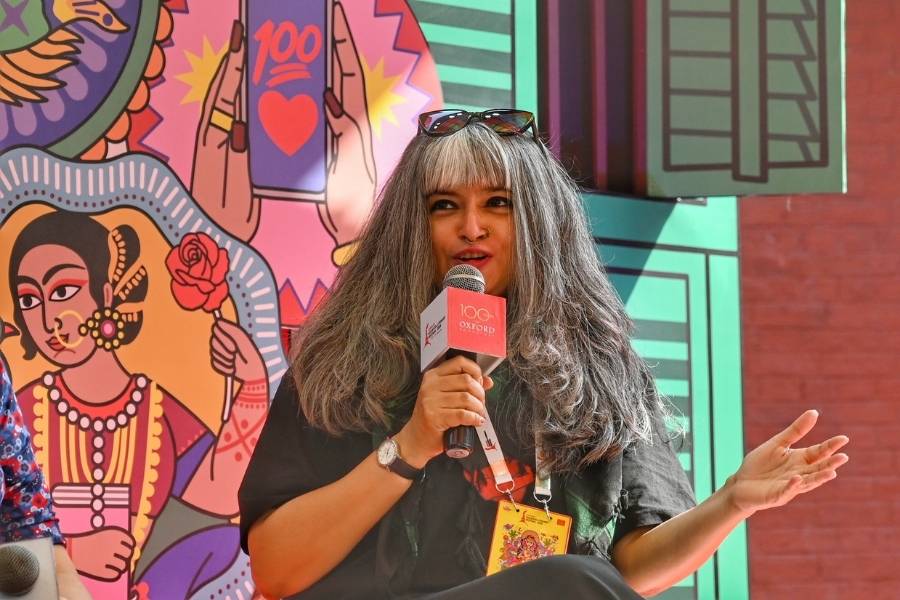
‘Trust is at the heart of loving more than one person,’ said Arundhati Ghosh
Both speakers pushed back against the tendency to reduce love to sexuality and questioned why romantic love is often placed above friendships, kinship and other forms of care. They also critiqued the scrutiny polyamorous people face over time management, noting that similar questions are rarely directed at parents or caregivers who balance multiple emotional responsibilities.
Darrieussecq reflected on ageing and long-term partnerships, highlighting the renewed political and emotional significance of friendships between women.
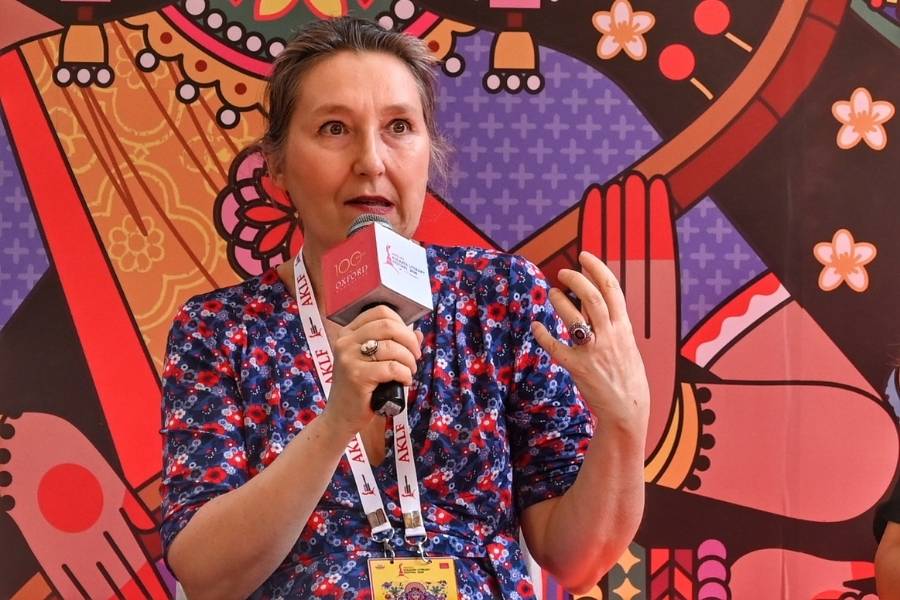
‘Nothing gives you the right to destroy or kill the person who leaves you. Love is not ownership,’ said Marie Darrieussecq
She also examined jealousy as a socially conditioned emotion linked to ideas of ownership, capitalism and fear of abandonment, rather than a marker of love. “Nothing — neither passion nor jealousy — gives you the right to destroy or kill the person who leaves you. Love is not ownership,” she said.
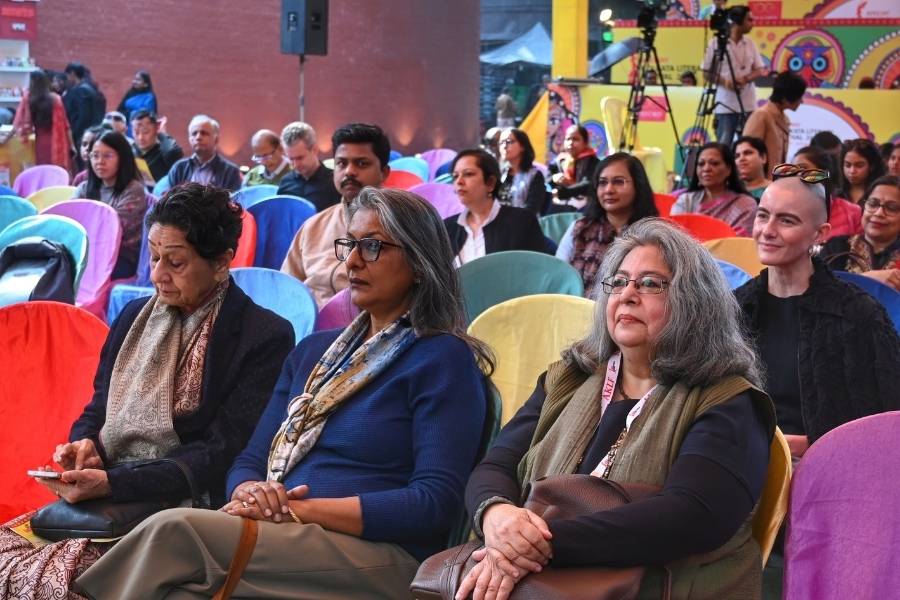
The session drew a packed audience
The session drew a packed audience and prompted sustained discussion on how love, in its many forms, can be practised more ethically and expansively in contemporary society.