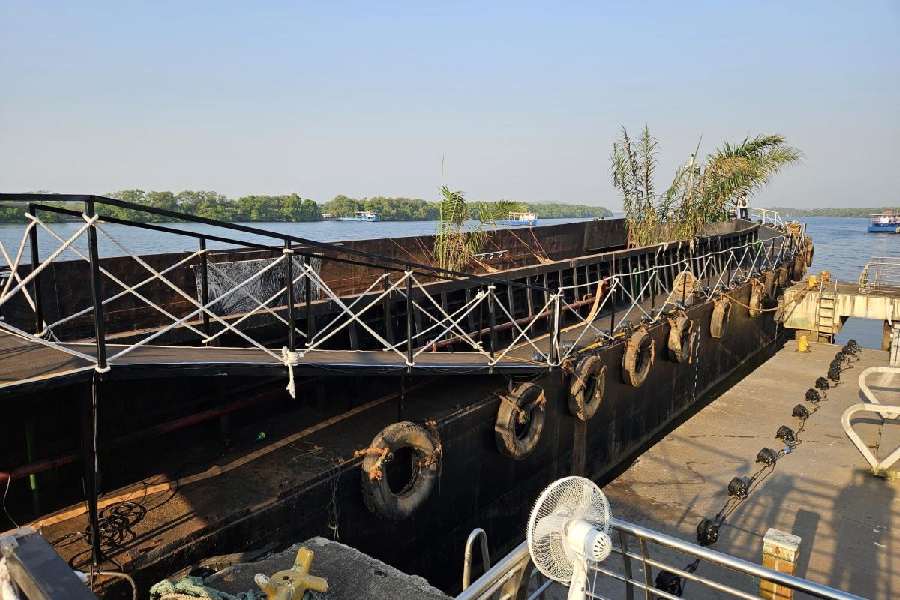
At the Captains of Ports Jetty in Old Goa, a 450-foot-long barge was anchored during the 10th edition of the Serendipity Arts Festival (SAF) from December 12 to 21. Stepping onto it, you could see hammocks strung across the hollowed-out cargo tank, all of it recalling a scene from Sergei Eisenstein’s Battleship Potemkin (1925). The barge was part of an installation by French artist Julien Segard.
As the afternoon dissolved into dusk, a strobe light aimed its uncompromising eye at the sky. This was part of Mumbai-based artist Prajakta Potnis’s work Elegy in Light. Taking inspiration from historian Ian Kumekawa’s 2025 book Empty Vessel: The Story of the Global Economy in One Barge, it aimed to dismantle “power and control” by “projecting the beam of light”. Said Potnis to me over the phone, “The light I’m using is similar to the one you can see from the casinos on the Mandovi. These are horrifying, extractive vessels.”
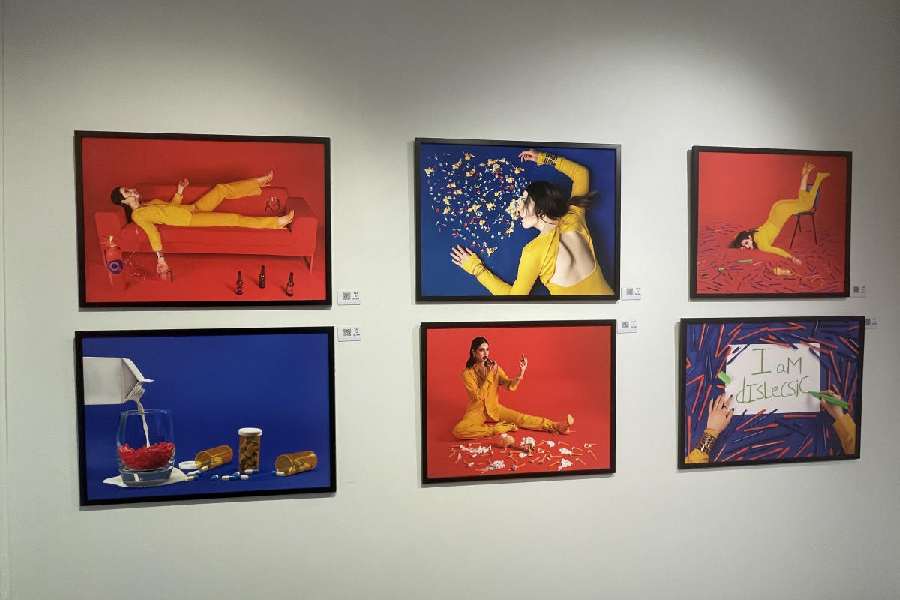
I am disLecsiC at the Old GMC
Segard’s work as well as Potnis’s, along with several others, were part of an exhibition titled The Barge, curated by artist and writer Veerangana Solanki. Her curatorial vision and the interventions of the participating artists had transformed the barge, often a symbol of extractive mining in Goa, into a space for dialogue about migration, conflict and other troubles roiling our world.
Since its first edition in 2016, the SAF has appointed some of India’s leading musicians, dancers, artists, theatre-makers and writers as curators. And in December 2025, celebrating its 10th year, it invited several of the curators from previous editions, as well as some new ones, taking the number past 40 — arguably the highest for any such event in the world.
The variety that such a vast team of curators brought to the festival could, at times, prove to be a little too much. “As first-time visitors, we were initially overwhelmed,” said Sajida Carr, director of operations and development at Creative Black Country, an arts and culture organisation in West Midlands, the UK. “We learned rapidly to be selective about our festival schedules,” she added.
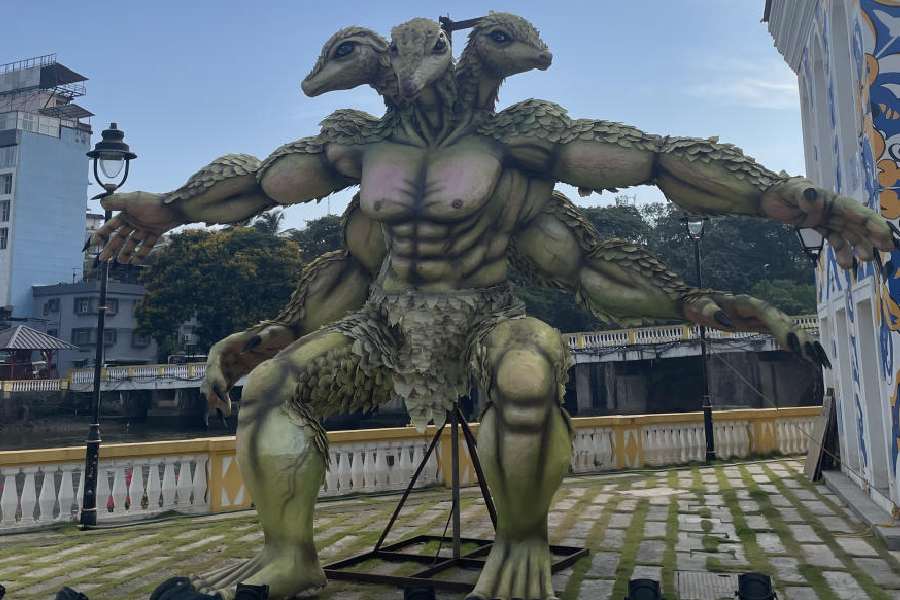
The Armoured Beast in Panjim
Carr was visiting the SAF along with Parminder Dosanjh, who is creative director at Creative Black Country. The events and exhibitions that she said she enjoyed the most were Goa is a Bebinca, The Legends of Khasak and There Are No Love Letters Here. While the first one, curated by chef Manu Chandra, combined culinary arts with theatre to explore Goa’s layered culture through the bebinca, a popular dessert, the second one, curated by Anuradha Kapur, was a theatrical adaptation of the eponymous magic-realist Malayalam novel by O.V. Vijayan. It was directed by Deepan Sivarman. There Are No Love Letters Here was a photography project through which artist Divya Cowasji explored her own family history. Curated by Prashant Panjiar and Tanvi Mishra, it was housed in several rooms on the first floor of the Old Goa Medical College and Hospital (Old GMC).
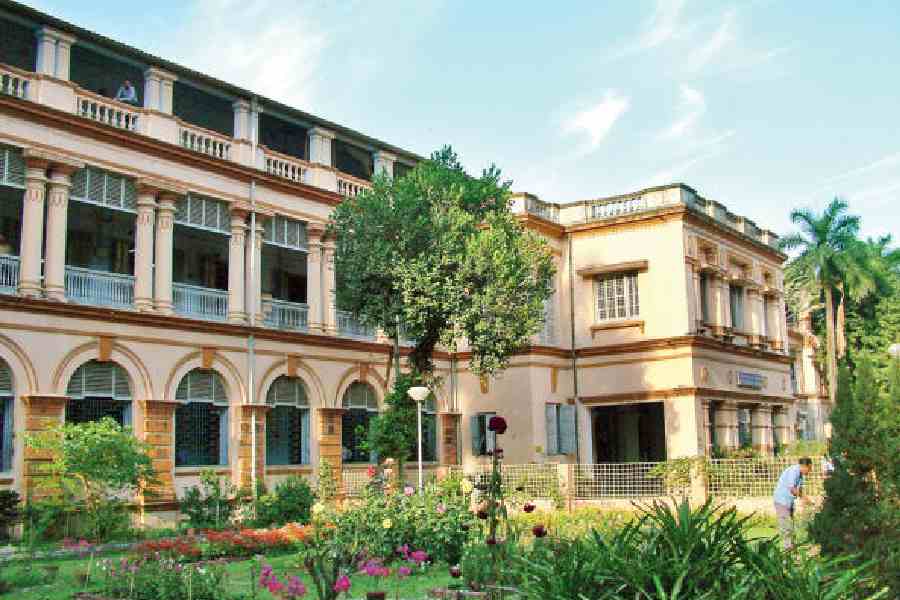
Like its previous editions, this year too the SAF used old colonial buildings across Panjim as art spaces — the Old PWD, the Directorate of Accounts and the Old GMC.
At the Directorate of Accounts building, in a room darkened by black drapes, there was the Renaissance Italian artist Caravaggio’s 1606 painting Mary Magdalen in Ecstasy.
Aesthetic transformation of space was not the only form of curation at the festival. Some of the curators were also engaging in political acts of inclusion. “The plays I chose this year had to be about gender, sexuality or caste,” said Mumbai-based playwright Mahesh Dattani.
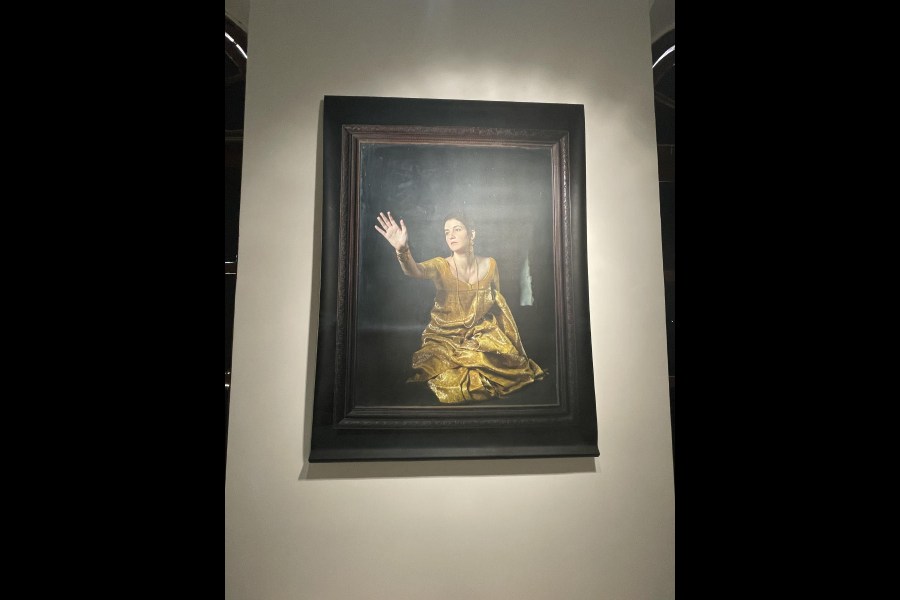
Photo exhibition at the Old GMC
Among the plays curated by him were Ottam and Kavan. Written and directed by Sapan Saran, Ottam: Born to Run tells the story of Akai Amaran, a Paraiyar girl from rural Tamil Nadu, who has to battle discrimination against her caste and transgender identity for athletic fame. Directed by Abhishek Majumdar, Kavan is an Ambedkarite opera that uses humour and music to cast a light on caste discrimination.
Hans Ulrich Obrist, arguably the most famous art curator in the world, once described his work as being “a catalyst”, “an enabler”, “a sparring partner”. In recent years, curators of festivals and museums have been seen as powerful interlocutors in the world of the arts, responsible for gatekeeping and at the same time, making art venues more accessible.
Goa-based poet and disability activist Salil Chaturvedi has been the accessibility curator for the SAF since its last edition in 2024. Besides ensuring that the venues of the SAF are made accessible for people with disabilities, Chaturvedi also curated projects by disabled artists and performers at the SAF’s 2025 edition.
One of the events he curated was Silent Rhythms, a performance of Indian Sign Language poems and Visual Vernacular (VV). Developed in the 1960s by deaf actor Bernard Bragg, VV uses expressive body language, facial expressions and iconic signs to tell cinematic stories. The performance at the SAF was led by Dr Alim Chandani, an activist for the deaf community and mission leader for the Hear a Million collective. Using a mix of humour and joie de vivre, the four performers managed to collapse the wall of silence between the deaf community and others, making the festival space more inclusive.