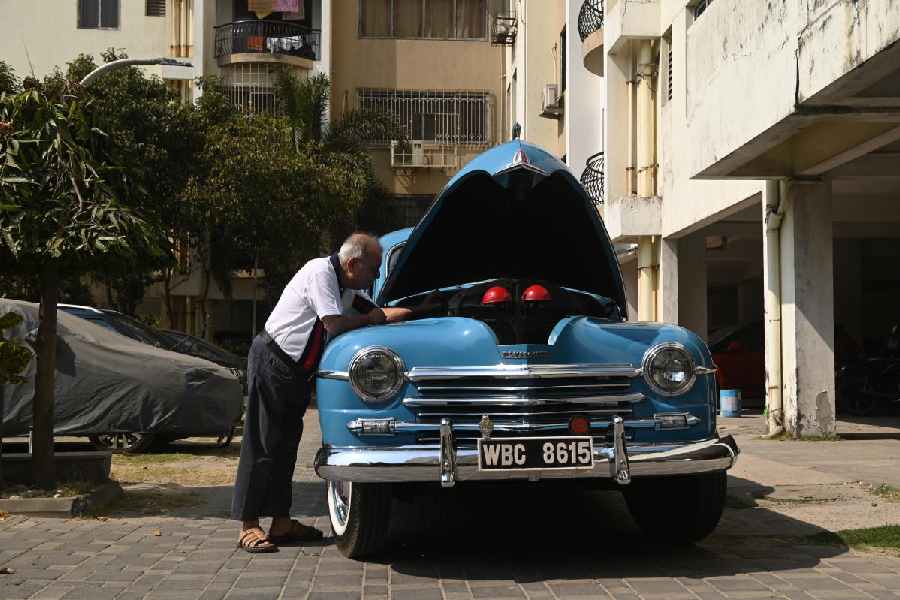
1948 Plymouth Special Deluxe aka Nilu
Bengal in the 1930s and 40s was the Mecca of top-end cars. Now most vintage cars are to be found in Mumbai, Chennai and Delhi. Suprabhat Chandra, Swapan Kumar Lahiri’s father, bought the Plymouth from singer Hemanta Mukhopadhyay in the 1970s. The marine blue car was a familiar sight in Calcutta of the times and old-timers will tell you that whenever people saw it approach, they knew a celebrity was out taking a spin.
Lahiri, a civil engineer by training, was away from the city for more than 30 years. “But I was always determined to maintain Nilu. I ensured Nilu was kept on jacks to protect the tyres from getting worn out.” Lahiri continues, “Every time I came home, I would top up the engine with a mix of 10W engine oil, kerosene and WD-40. I used to bring WD-40 from West Asia — it was not commonly available in India until the early 2000s.”
Upon return, in 2015, Lahiri got into the more rigorous routine maintenance. He says, “I wanted to maintain the original 6-volt electrical system, which is now outdated. The auto industry migrated to 12-volt systems a good while ago and even to source a simple bulb was a humongous task. I had to improvise some of the hardware with LED technology, import all rubber gaskets and seals, and I wrote to the GE headquarters for two OEM 6-volt sealed beam headlights. Because I said it was for a vintage car, GE didn’t charge me a paisa. I was able to source five brand new original nylon tyres. I restored the engine. I wanted my car to be running to the extent that I could ride in it but the battery was a constraint. Import of storage battery is not allowed and no local manufacturers were able to deliver a quality product.”
He continues, “I wrote to Exide for help but they had their own constraints given my minuscule demand and could not comply. Later, restorer Shrivardhan Kanoria, who is a vintage car owner himself, gave me one.”
Lahiri talks about the lengths he had to go to to maintain the original car colour. “I went through 21 shades of blue and checked them in different light conditions — dawn, dusk, in the shade, under neon light, in warm light, cool light... and only after all that was I satisfied with the outcome.”
Owned by Swapan Kumar Lahiri
1930 Rolls-Royce 20/25 HP
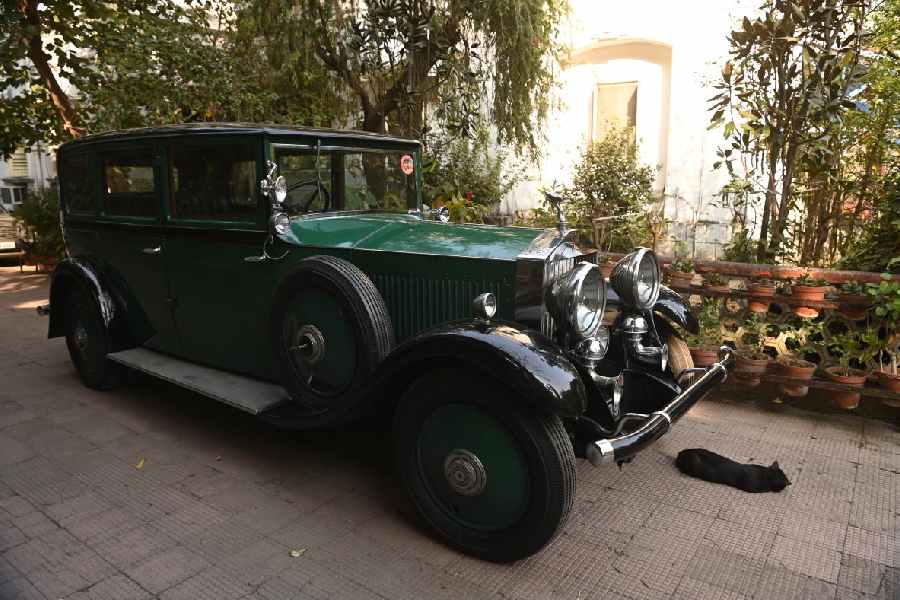
Records show it belonged to Sir John Anderson who was Governor of Bengal. This particular car has the rarest of rare RR insignia in red, which connoisseurs will recognise as code for being manufactured in a period when Charles Rolls and Henry Royce were both alive.
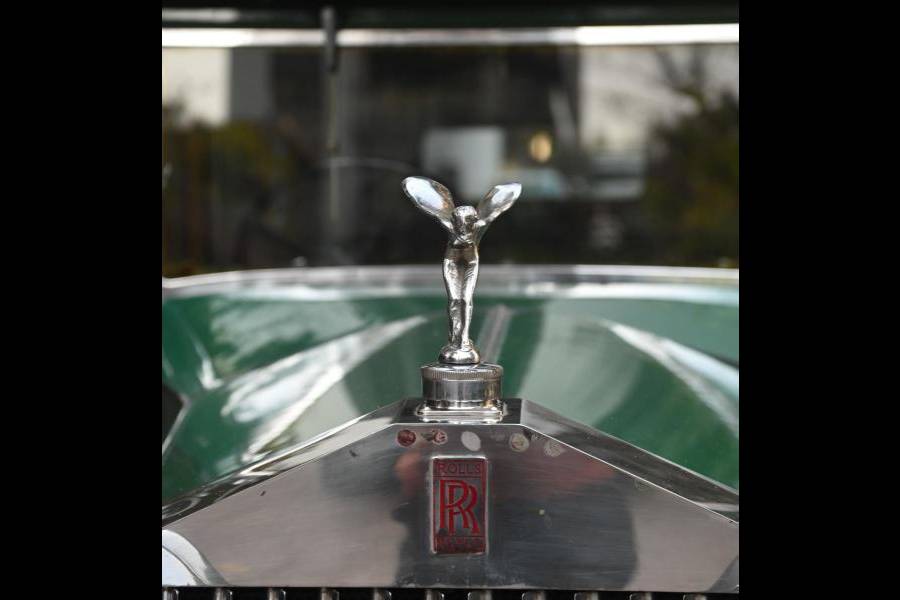
The silver figurine on the car is of Ecstasy designed by Charles Sykes in 1909. It had not been in use for 30 years, but purred into life with half crank and some fuel.
Owned by Billy Bose
1936 SS 1 (Jaguar)
This car was recovered from a factory. It had been caught in the crosshairs of a labour agitation and was set on fire by angry protestors. It took Partha Sadhan, current owner Billy Bose’s father, four years to restore it. He resorted to what was then a fledgling social media to source various parts. A man from South Africa sent the headlights and the grille.
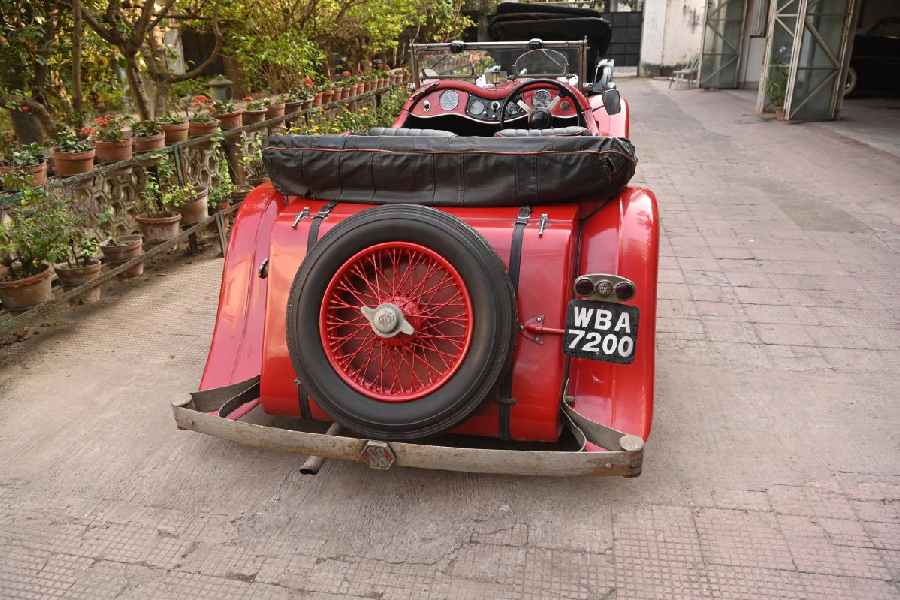
Bose, who was a student in the UK at the time, procured some of the mechanical and electrical parts. He adds, “But we had to construct the gearbox. It is entirely handmade.” The door locks are artistically done, shaped like the rays of the sun. The car also came with a map-reading facility and the option of a racing windshield.
Owned by Billy Bose
1929 Auburn 6-85 Phaeton Sedan
The Auburn was in the possession of Sovabazar Rajbari. Says Billy Bose, who is the present owner, “My father, Partha Sadhan, who is the man behind our vintage car collection, was interested in the car. But the rajbari did not want to sell the heirloom car for a price. They told my father to just come and take it away. But father too was unbudging. He refused to accept it for free. One fine day, he went over to the rajbari with a haanri of rabri and came back with the car.”
That was in 1995. The car arrived at Bose Niloy in Ballygunge in four instalments in four small trucks, Tata 407s to be accurate. Assembling it was like piecing a jigsaw puzzle. Partha Sadhan had written to the Auburn Cord Duesenberg Museum in Auburn, Indiana, US, to get original pictures of the car and other specifics.
When all was done by way of restoration work, the tyre rims of the car were still missing. “My father tried to fabricate the rim, but each one collapsed; the car was too heavy,” says Bose.
And then fate intervened. Partha Sadhan was talking to an employee Sadhan Deb who dabbled in astrology and in the course of the conversation it came up that the Debs had owned an Auburn in the 1930s. Sadhan Deb let slip that the car was long gone but the rim was still lying in the family garage. The last piece of the puzzle fell into place.
Bose has eight vintage cars and two bikes in his garage.
1917 Ford Model T
Henry Ford used to tell his management team, “Any customer can have a car painted any colour that he wants so long as it is black.” The black Ford in Billy Bose’s garage did not look quite so stunning when the Boses found it. “My father came upon the car in Chhatar in Bihar,” says Bose. “It was dumped in a paddy field.” Bose Sr knew a gem when he saw one. He spoke to the village sarpanch and he agreed to sell the car, but he refused to give up the engine.
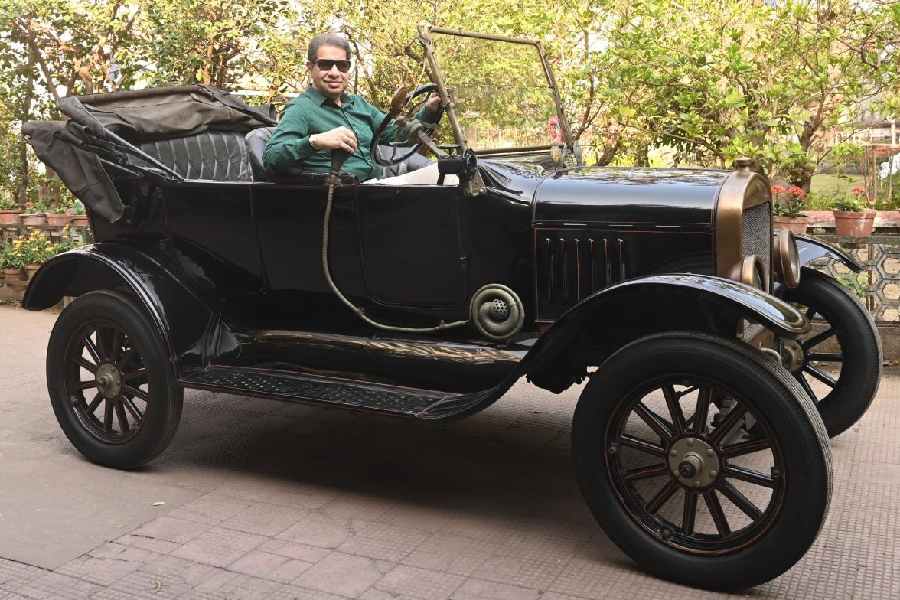
Bose Sr was gobsmacked. What would the village headman do with the engine? The sarpanch said, “We use it to draw water from the well.” Once Partha Sadhan understood the requirement, he had a pump bought and delivered to Chhatar. Says Bose, “The entire village went into celebration mode, I was told, and my father was feted for his gesture. He in turn brought the Ford home and in the next couple of years left no stone unturned to restore it. We have the same engine to date.”
1938 Austin Seven Ruby Tourer
The registered owner of the car is Kamala Sardar, Aninda Sardar’s grandmother. Says Sardar, “My grandmother bought the car for my uncle but he registered it in her name.” Although he bought other cars in the years that followed, he never sold this one and eventually gifted it to his nephew. The car has a design that was in vogue in the 1930s Art Deco period.
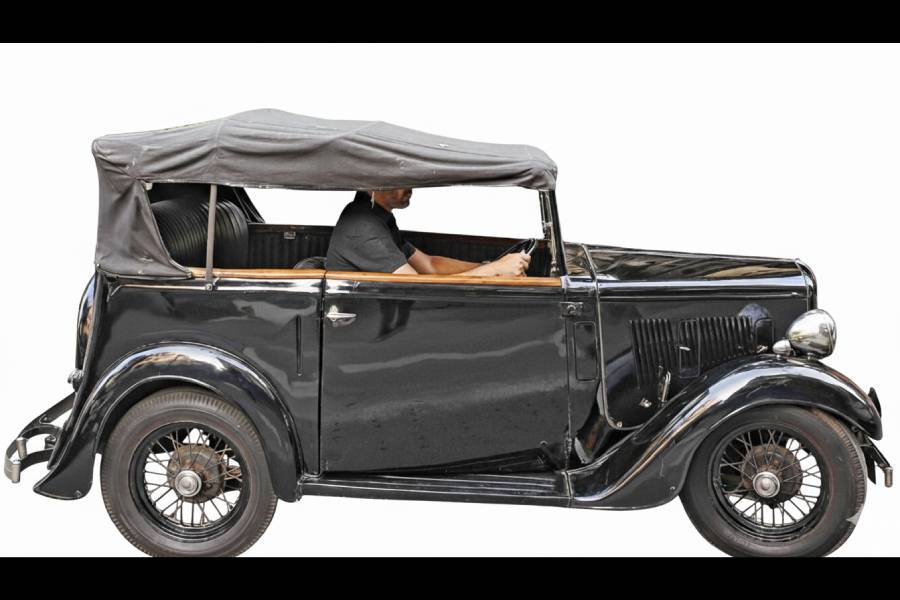
Sardar adds, “The car has been a regular at rallies since 1974. I started accompanying my uncle to these rallies since 1984. In 2024, on the occasion of my 40th rally and the Austin’s 50th, I decided to honour my jethu. I dressed up in his dhuti-panjabi and took him along with me for a part of the rally.”
Owned by Aninda Sardar
1928 Studebaker President 8 State Limousine
The Roys belong to the Cossimbazar Rajbari in Murshidabad. Pallab Roy has a workshop on the premises of his 125-year-old house in Bhowanipore. He has restored at least X cars from scrap. To achieve this, he has had to write letters to the original manufacturers, get hold of old pictures for reference, fabricate the exact look and even paint them in their traditional colours. He tells The Telegraph, “Maintaining a vintage car is difficult. Not just because of the costs involved, but because it is hard to find the right mechanic.”
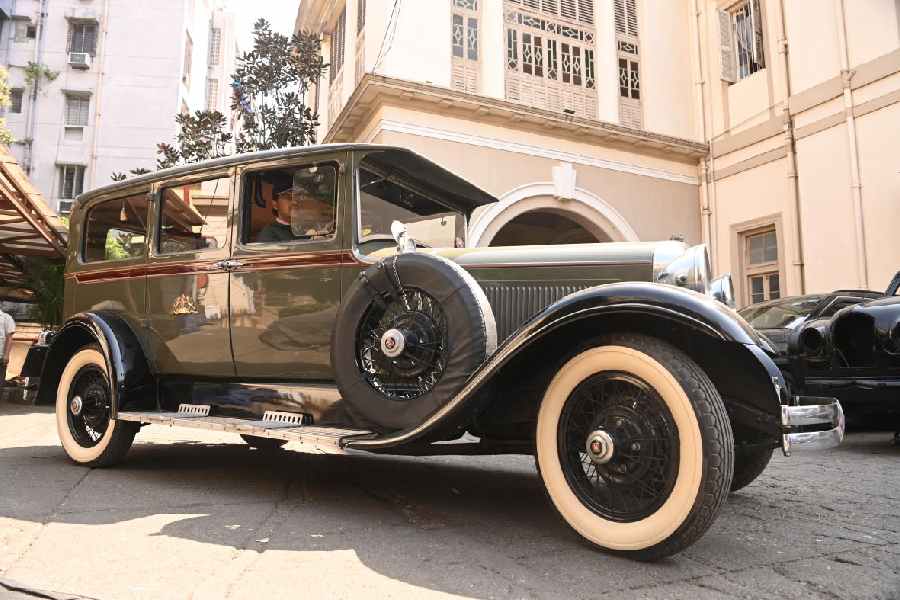
The grand patriarch Kamalaranjan Roy bought this particular Studebaker in 1928. Says Roy, “Two cars had been sent to Calcutta by Studebaker as exhibits. Those days, the British government did not allow American cars to be sold in India, but my grandfather was determined to have the car. In 19XX, when the WHICH train line started to function, the car was packed and sent over.” It travelled thousands of miles before reaching Calcutta, where it was reassembled. The second car was purchased by Subhas Bose. “But no one knows where it is now,” he says.
Roy narrates how his father Prashant Kumar went to fetch his bride in this car, and how as a 13-year-old, his mother Supriya used to go to school in this very behicle. The car is fitted with an intercom — those days, there used to be a glass partition between the chauffeur and the passengers. It also had a fan and a cigar lighter and came fitted with a Wilton weave carpet.
It took Roy six years to get the Studebaker road-ready. All this time was spent sourcing the spare parts.
Owned by Pallab Roy
1975 Land Rover Series 1
This car was imported by Unicef India and used for four decades for relief work in the Himalayan belt. When Unicef auctioned the car in the late 1990s, it was picked up by a Nepalese businessman. He used it as his personal car for the longest time and in 2014 when he could no longer drive it himself he put it up for sale. Says Mukerjee, “When we went to see the Land Rover in Darjeeling, it climbed Mt Sandakphu with ease. I knew right then that we had a fine piece of machinery on our hands.”
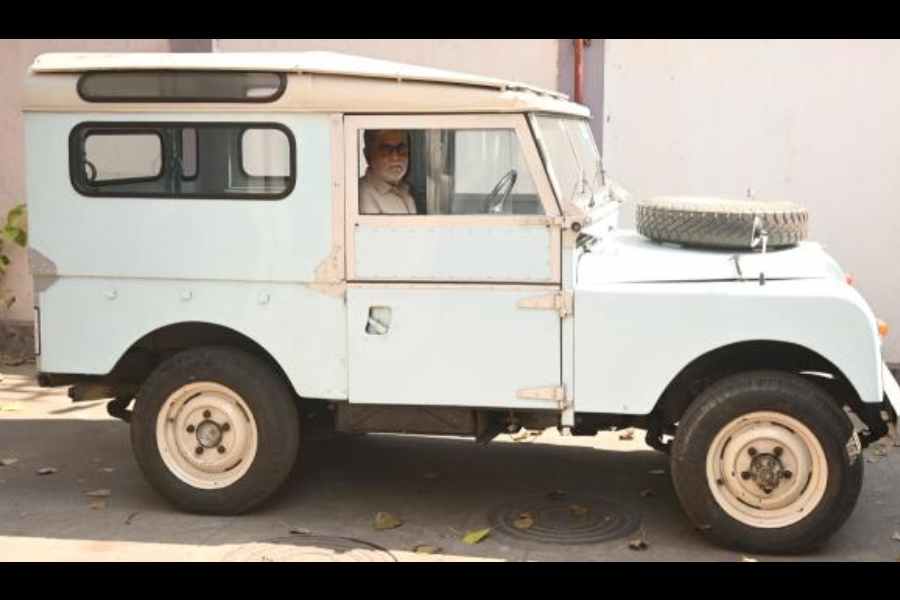
Though this is the first Land Rover model and much valued by collectors, the Mukerjees don’t use it as a collectible. “It is used to take the dogs out, lug home groceries and transport heavy material when required, just as it was intended to do,” says Mukerjee. The Land Rover is just back from a 1,200-kilometre tour that covered Madhupur, Hazaribagh, Netarhat, Ranchi and Ghatshila. Although not in the genre of SUVs, this car is actually the world’s first SUV. In the old days, it was advertised as a car that could do anything – be it in cities, farms, hills, highways and also places that had no roads. It was called the poor man’s Rolls-Royce.
Owned by Susanta Chandra Mukerjee
1948 Rover 75 Champion
“My brother and I came home from the hospital where we were born in this very car, says Sarojesh Mukerjee. That was in the 1960s. The car was refined and yet understated, perfectly suited to their father Sukhdeb Chandra, who was the owner.
A transitional model with a pre-World War II body, it had a post World War II engine and mechanicals.
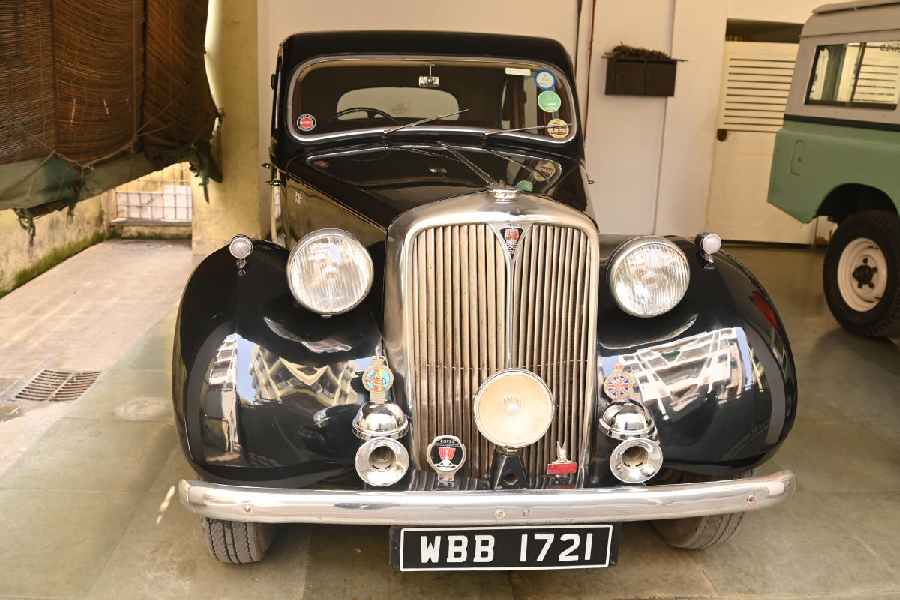
Keeping the Rover is not an expensive affair, says Mukerjee. “This car does not get on the road often, though in its heyday it made multiple trips to countless places, from Dhanbad to Ahmedabad. So you don’t need to repair it too often. It was manufactured to last a lifetime.” He continues, “This Rover has dedicated followers all over the world some of whom make aftermarket spare parts. My cousin Sushanta and I keep track of these people and buy parts when needed.”
As Mukerjee tells it, the Rover came to assume the status of a family elder. He says, “Before we left home for an exam or a test, my father used to tell us to take its blessings. I went to fetch my bride in this car.”
Mukerjee wrote a crime thriller last year titled Poor Man, Rich Man, Beggar Man, Thief and another one is due for release next year. Both books revolve around rivalries and crimes over vintage cars.
Owned by Sarojesh Mukerjee