Earth Metal Memory, presented at Galerie 88, brought together a group of sculptures by Latika Katt that foreground construction, excavation, and containment as sculptural methods. The exhibition was organised around stone blocks carved to receive cast metal forms, producing works that read both as autonomous objects and at times as sections cut from larger structures.
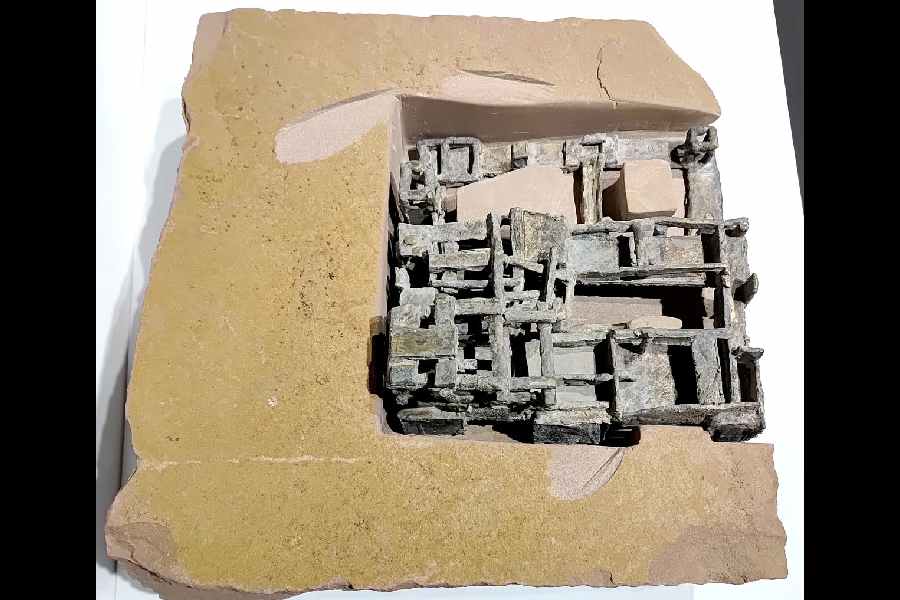
Several sculptures consist of rectangular stone slabs excavated to reveal compact metal frameworks embedded within, resembling architectural models — grids, stair-like planes, beams, and supports — compressed into confined cavities. The stone retains rough, uneven edges, making the act of removal visible and refusing the polish of monumentality. The metal appears constrained by the stone, functioning structurally, as if held under pressure rather than displayed.
A second group of works adopts a horizontal orientation. Shallow basins carved into stone contain metal inserts shaped like foundations or enclosed courtyards. Unlike conventional architecture — apprehended from the ground upward — these pieces are encountered from above, inviting a downward reading through excavation. The contrast between the granular stone and the oxidised metal is pronounced: stone absorbs mass and weight, while metal articulates order and internal organisation.
The suspended, vertical wooden sculptures introduce a different spatial condition. Elongated wooden elements, irregular branch-like, are bound with metal clamps and joints, producing structures that appear strained and precariously balanced. While non-figurative, these works suggest posture and alignment through bends, joints, and counterweights. The reference to the body is indirect.
Across the exhibition, Katt’s approach is marked by restraint. Tool marks remain visible, joints are exposed, and surfaces are allowed to weather. Sculpture here is not about finish but about how materials are held together and how form emerges through abstraction. The exhibition ultimately presented sculpture as an act of hollowing and embedding, where meaning is generated through constructional clarity. The works insist on being read through their making, offering a precise, unsentimental engagement with material and structure.