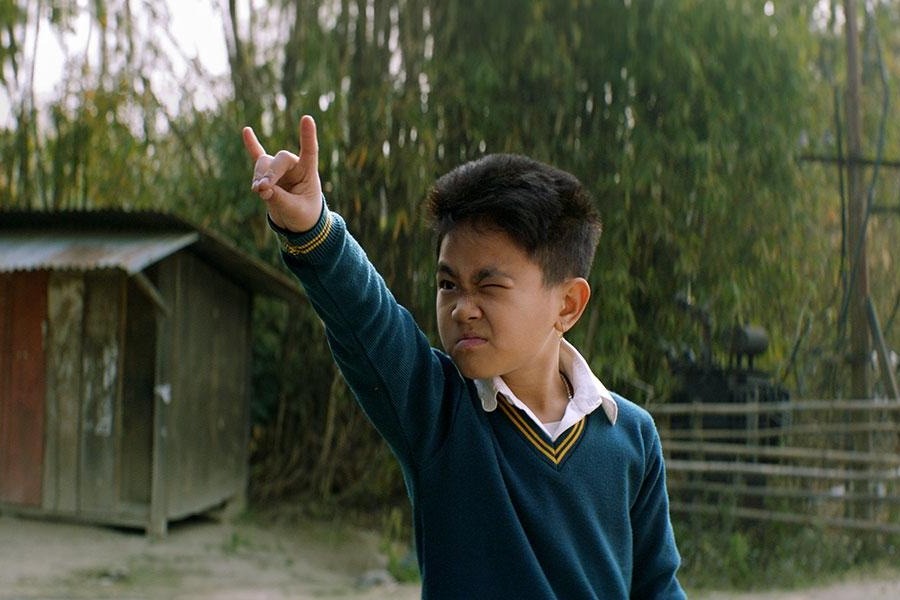
A powerful moment for Manipur unfolded on the global stage as the Manipuri film Boong, directed by Lakshmipriya Devi, won the Best Children's and Family Film award at the British Academy of Film and Television Arts (Bafta) Awards on Sunday.
The recognition has brought a much-needed ray of hope and attention to a region perceived to be low in the country’s priority list and in a part of India long battered by violence and unrest.
“I want to use this opportunity to pray for peace to return to Manipur,” Lakshmipriya Devi said in her acceptance speech, underscoring the deep wounds left by the ethnic tensions between the Meitei and Kuki-Zo communities that erupted in May 2023 and continue to this day.
The conflict has resulted in at least 250 deaths, widespread displacement and reports of sexual violence, keeping Manipur in a state of constant turmoil.
The persistent violence has been exacerbated since the 1980s by the imposition of the Armed Forces (Special Powers) Act, or Afspa, which grants sweeping powers and legal immunity to the army. According to a 2012 petition to the Supreme Court by the Extrajudicial Execution Victims Families’ Association and other NGOs, more than 1,500 civilians, including 98 children, have been allegedly killed by security forces in Manipur between 1979 and 2012.
The roots of dissent in the state can be traced back to 1949, when many allege Manipur was coerced into joining the Indian Union after Independence. Authorities maintain that Afspa is a necessary measure to counter insurgency. As of October 1, 2025, it has been extended for another six months.
While the Act has been lifted in select police jurisdictions, much of the state, especially its hill districts, remains under its grip, with the extension prompted by the resurgence of ethnic violence.
‘Summit of a mountain we never knew we were climbing’
Reflecting on her journey, Devi described walking up to the Bafta podium as “the last few steps to reach a summit of a mountain we never knew we were climbing in the first place.”
She emphasised that Boong was not just a film, but “a homage to my homeland”, which she described as “very troubled, very much ignored and very unrepresented in India.”
Boong tells the story of a schoolboy navigating racial divisions and political (border) challenges in Manipur, driven by resilience and the hope of reuniting a fractured family. Boong wants to gift his mother something precious, and he decides that the best gift for his mother would be to bring his absentee father back in their lives. Teaming up with Boong in his endeavour, is his close friend, a Marwari boy, a so-called outsider in the state.
“Beneath the film’s easy surface are hard hitting takes on gender politics, identity politics, and xenophobia that are hard to miss,” an IMDb review notes.
The cast features Gugun Kipgen, Bala Hijam Ningthoujam and Angom Sanamatum in prominent roles. Among the producers of the film is Farhan Akhtar.
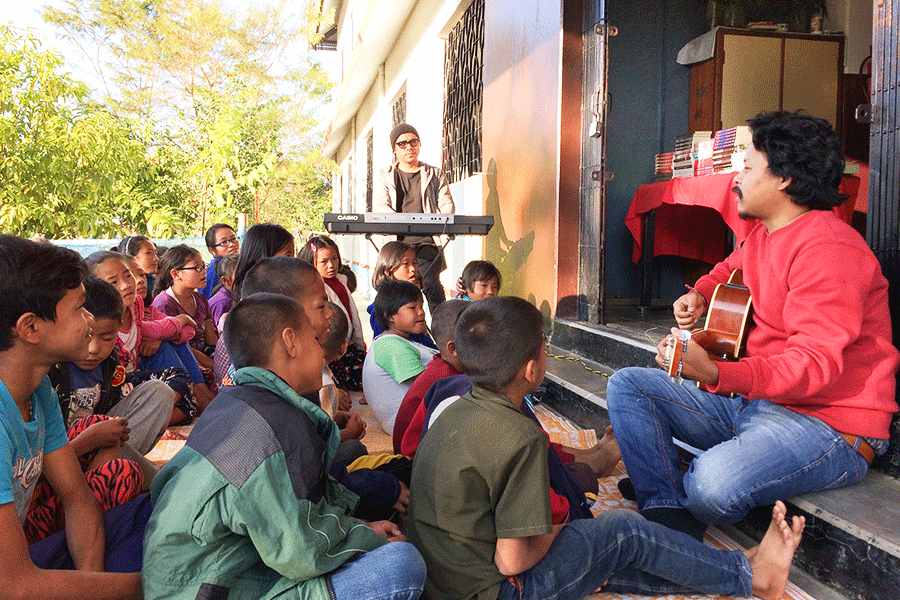
Songs by Zubin Balaporia and Imphal-based musician Ronid ‘Akhu’ Chingangbam feature in the film,
“It’s a proud moment for Manipur cinema but this film is not the first time that Manipuri cinema has made it big for India at the world stage,” Bachaspatimayum Sunzu, a three-time National Award-winning filmmaker and secretary of the Manipur State Film Development Society, told The Telegraph Online.
“This reinforces Manipuri cinema’s place on the world map.”
Sunzu lamented the decline of a cinema-watching culture in Manipur, including the fading away of theatres, a phenomenon accelerated both by global trends and local circumstances, the latter shaped by a September 2000 ban on Hindi films by underground groups seeking to promote regional cinema and curb what they saw as a cultural invasion.
The Revolutionary People’s Front, the political wing of the People’s Liberation Army in Manipur, imposed the ban and that still continues.
“But the ban is not effective on online platforms,” Sunzu said.
In August 2023, a Kuki-Zo student body screened the Hindi film Uri: The Surgical Strike in Churachandpur, with Kuch Kuch Hota Hai also lined up for screening.
A long legacy of quality cinema
Manipuri cinema’s legacy runs deep.
The 1981 classic Imagi Ningthem (My Son, My Precious), directed by Aribam Syam Sharma and written by M.K. Binodini Devi, is considered a milestone in Indian cinema.
It premiered at Usha Cinema in Paona Bazar in May 1981, later winning the Golden Montgolfiere at the Festival des 3 Continents in Nantes in 1982 and securing two honours at the 29th National Film Awards in India.
More recently, the 1991 film Ishanou – also from the Sharma-Devi combine – was recognised as a World Classic, making its world premiere at Cannes in May 2023, 32 years after its release.
As Boong turns the spotlight back to Manipur, it serves as a testament to the enduring spirit and creative resilience of a people pleading for peace and attention despite decades of upheaval.
For many, the film’s triumph is not just a cinematic victory, but a signal of hope that Manipur’s stories and struggles are finally being seen and heard beyond India's borders. Perhaps it will lead to genuine effort to put an end to the decades of conflict and, even, put in motion the process to bring some sort of closure to the region’s people.