
Sept. 29: Thursday morning's anti-terror operation along and near the Line of Control in Kashmir was a test case for the new standard operating procedures that national security adviser Ajit Doval wants to put in place for a long-term strategy to neutralise the menace of cross-border terrorism.
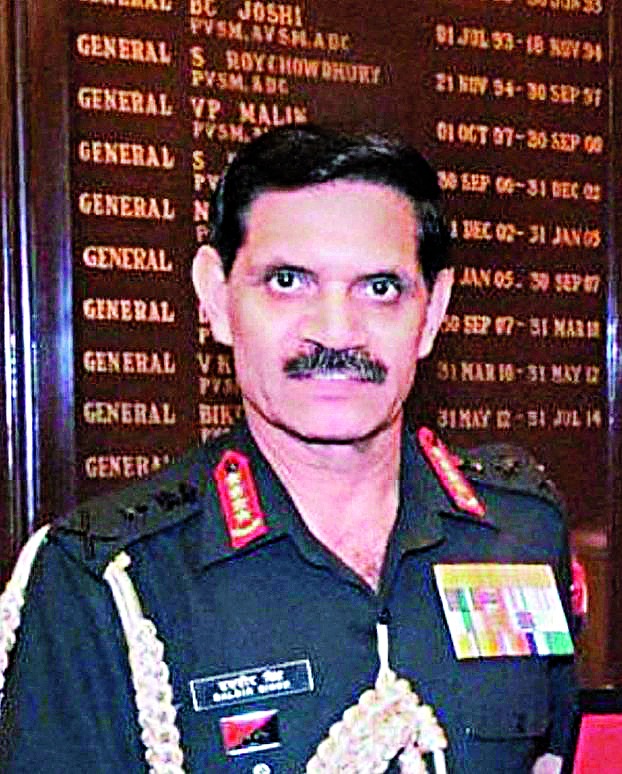
As part of the new standard operating procedures, defence minister Manohar Parrikar, the chief of the army staff, Gen. Dalbir Singh, and Doval micro-managed the entire operation from the "war room" in a part of South Block that houses the ministry of defence.
A source present in South Block said the trio arrived separately, so as not to arouse any suspicion, between 11pm and 11.30pm yesterday and stayed till almost dawn. The source described the atmosphere in the war room as akin to the night in the White House when Osama bin Laden was killed by US special forces.
The White House scene was immortalised by US secretary of state Hillary Clinton dropping her jaw and closing her mouth with one hand to suppress her gasp when Osama fell to American bullets.
Another source with access to the precise details of what was staged against Pakistan-backed terrorists said defence personnel preparing for the strike had grasped details of how US forces had attacked and dispersed Saddam Hussein's army that had occupied Kuwait in 1990 and was driven out in the war the following year. The results of early Thursday morning's operations were similar.
This source said that terrorists across the border were shredded to bits by RPO-A Shmel, Russian-manufactured flamethrowers that are like portable rocket-launchers. Many terrorists also fell to Carl Gustaf portable recoil-less rifles, produced ironically by Sweden's Bofors, now known as Saab Bofors Dynamics.
According to this source, who had access to the war room, the army first targeted terror training camps up to 20km deep inside Pakistan-occupied Kashmir with heavy artillery. The terrorists scattered under the surprise artillery fire.
Like Saddam's helpless invading soldiers in Kuwait, these stragglers were then tracked by drones until they took shelter in launching pads along the Line of Control, about a dozen terrorists at each launching pad.
Para commandos or Special Forces then crossed the Line of Control up to 2km and killed them.
The source said the casualties among the terrorists could be much higher than the 38 deaths being talked about. The occupancy of terror training camps is not tabulated like that of army camps.

When these occupants scrambled for safety, some were shredded as they ran and others were butchered after they sought refuge in the launching pads along the Line of Control. The actual number of casualties may never be known.
Privately, sources in South Block are putting the terrorist casualties at a minimum of 60. At least 10 Pakistani army personnel, rangers sent in truckloads to repulse the Special Forces who had crossed the Line of Control from the Indian side, were killed. There is no corroboration for these figures.
Shocking though it may sound, India did not have standard operating procedures for such operations or any major crisis until the dawn of the millennium. After an Indian Airlines plane was hijacked from Kathmandu to Amritsar and eventually to Kandahar, Brajesh Mishra, who was Doval's predecessor four times removed, put such procedures in place.
Realising that the episode of Indian Airlines flight 814 was a fiasco from start to finish, Mishra's standard operating procedures gave local personnel, including army commanders and paramilitary forces, the decisive say in handling crises.
The Manmohan Singh government's national security advisers continued with that practice. Doval has been trying to change them. But when he took decision-making away from local commanders during the Pathankot terror attack and brought in the National Security Guard to fight the terrorists, it was a disaster.
But he is not giving up. The standard operating procedures Doval has in mind will be micro-managed from New Delhi as in the case of Thursday's war room activities by Parrikar, Doval and General Singh. Doval believes that politics should be in command and crises should not be handled by rote by people who do it for a salary.
It would appear that the standard operating procedures for the raid into Pakistan have been a success, but sources said outcomes would always be determined by prevailing circumstances.
Loosely, Doval's strategy is a fallback to the pre-Atal Bihari Vajpayee government's efforts to deal with all crises through a "crisis management group" dominated by bureaucrats.