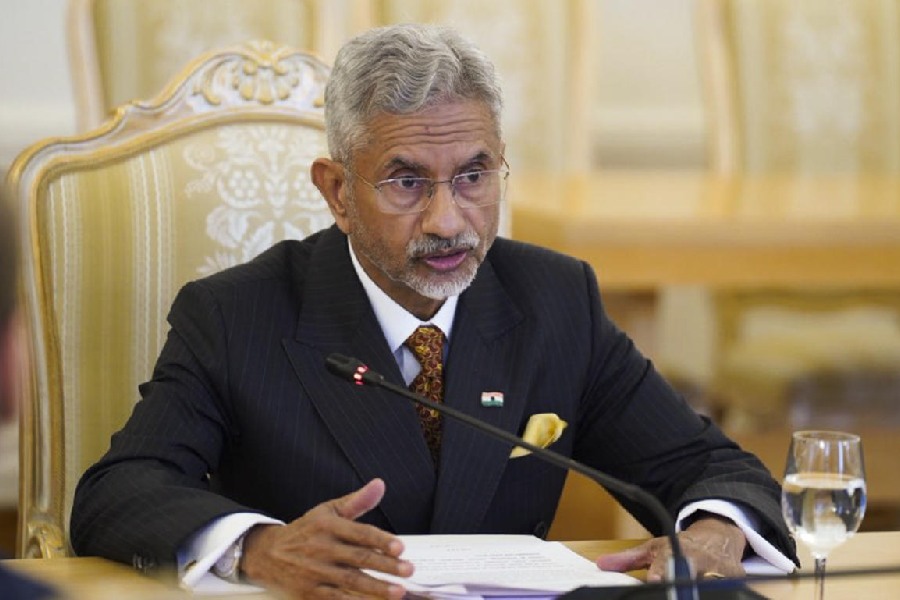
External Affairs Minister S Jaishankar says diplomacy, not warships, may be the most effective way to reopen the Strait of Hormuz after direct talks with Iran allowed two Indian gas tankers to pass safely through the crucial waterway.
“I am at the moment engaged in talking to them and my talking has yielded some results,” Jaishankar told the Financial Times in an interview. “This is ongoing. If it is yielding results for me, I would naturally continue to look at it.”
His remarks come as tensions rise over the Strait of Hormuz, the narrow channel between Iran and several Gulf countries through which roughly a fifth of the world’s oil and gas normally flows. Iran has largely closed the waterway amid the widening Middle East conflict, choking off tanker traffic and sending global energy prices sharply higher.
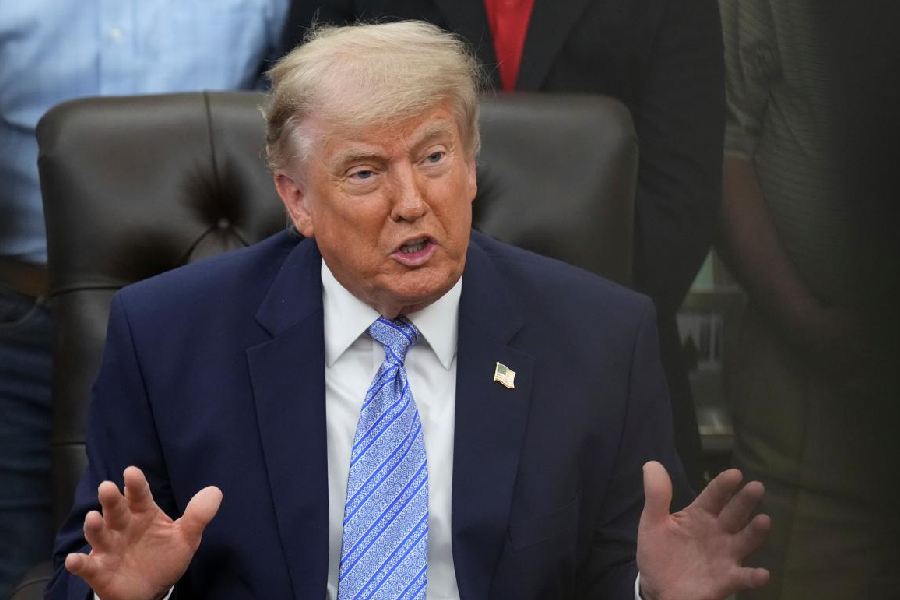
India’s diplomatic approach contrasts with calls by US President Donald Trump for countries including China, France and the UK to send “warships” in a “team effort” to the region to help the United States force open the strait.
Oil prices climbed above $100 a barrel last week for the first time since 2022, with analysts warning they could hit $150 or more if shipping remains blocked.
Iran’s foreign minister Abbas Araghchi said the waterway “is open” but closed to ships belonging to Iran’s “enemies”, referring specifically to the United States and Israel.
In practice, analysts say this means countries not directly aligned with the US-led military pressure may still be able to send ships through. However, passage will require coordination with Iran’s navy, according to Iranian officials.
For India, which imports around 85 per cent of its oil and gas, reopening the strait is critical for the economy.
Jaishankar suggested that quiet diplomacy may be more effective than military pressure.
“Certainly, from India’s perspective, it is better that we reason and we co-ordinate and we get a solution than we don’t,” he told the Financial Times. “So if that sort of allows other people to engage, I think the world is better off for it.”
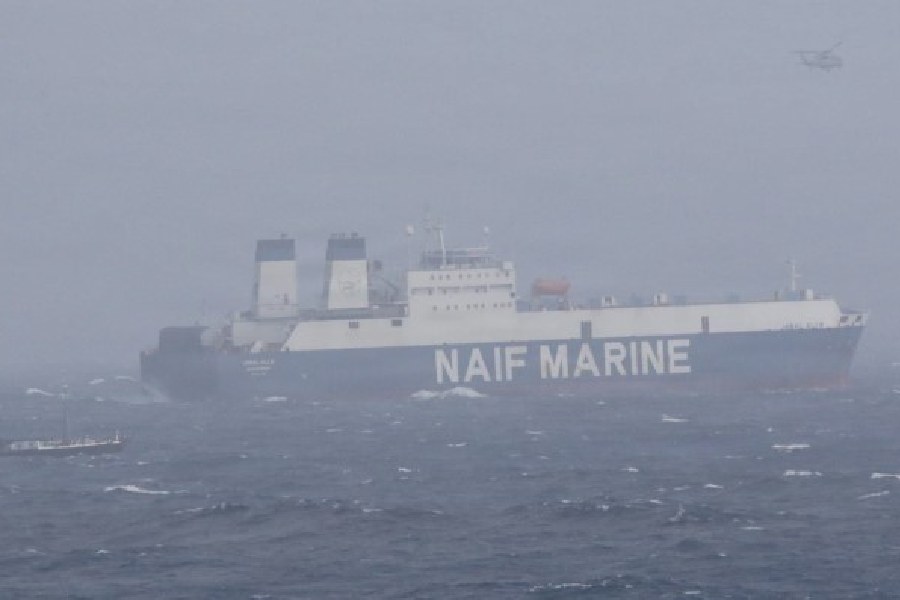
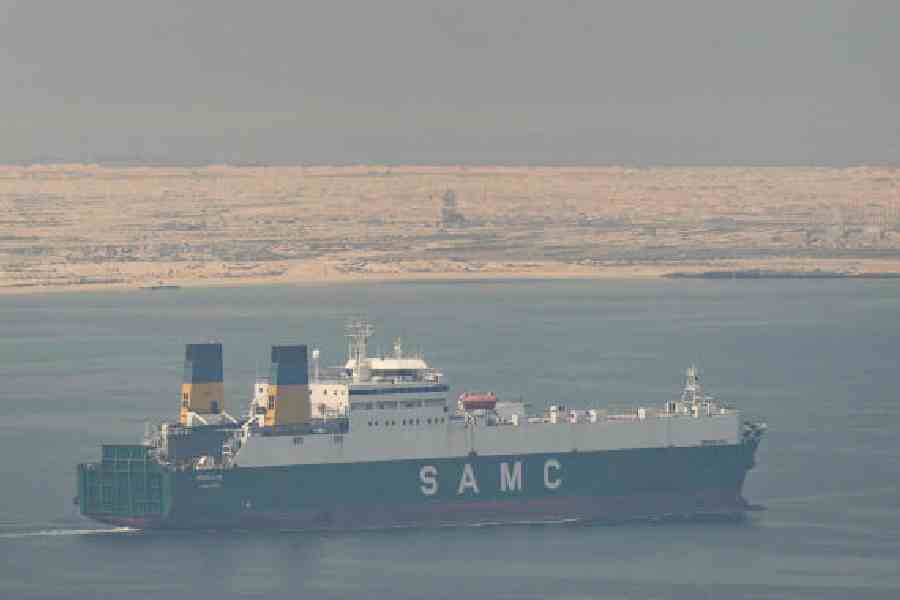
The two Indian-flagged gas carriers that transited the strait on Saturday did so after discussions between New Delhi and Tehran, a development that India says shows negotiation can work.
Jaishankar said India has struck no sweeping deal allowing Indian ships free passage.
“There is no blanket arrangement,” he said. “Every ship movement is an individual happening.”
Nor, he said, had India offered concessions in exchange.
“It’s not an exchange issue,” he said. “India and Iran have a relationship. And this is a conflict that we regard as something very unfortunate.”
Governments around the world are now weighing their options as the energy shock ripples through global markets. Some are considering joining military operations to reopen the route, while others are exploring diplomatic channels with Tehran.
European countries are among those testing the negotiation path. France and Italy have begun discussions with Iran about restoring tanker traffic.
Jaishankar was speaking ahead of a meeting of European Union foreign ministers in Brussels on Monday where the Hormuz shutdown is expected to dominate discussions.
Asked whether European countries might replicate India’s approach, Jaishankar said relationships with Iran differ from country to country.
“Each relationship frankly, in a way stands on its own merits,” he said. “So now it’s very hard for me to compare this with some other relationship which may or may not have these.”
Still, he said India was open to sharing its experience.
“I’d be happy to share with EU capitals what we are doing. I know many of them have had conversations with Tehran as well.”
For now, the safe passage of two ships is only an early sign that diplomacy might ease the crisis.
“These are still early days,” Jaishankar said. “We have many more ships there. So while this is a welcome development, there is continuing conversation because there is continued work on that.”
An Indian-flagged oil tanker escaped unscathed after a drone attack struck Fujairah port in the United Arab Emirates and has since set sail for India with a cargo of 80,800 tonnes of crude, the government said on Sunday.
Fujairah sits on the east coast facing the Gulf of Oman, while the other emirates lie on the Persian Gulf. This means oil tankers can load and store crude there without having to pass through the Strait of Hormuz. As a result, Fujairah has grown into an important backup export route for Gulf energy whenever tensions threaten shipping through Hormuz.
The developments came as the war between the United States, Israel and Iran escalated over the weekend with new missile strikes and mounting casualties. Iran launched fresh barrages of missiles at Israel and said it had targeted US bases in Iraq and Kuwait, while Israel said it had struck sites in Iran’s central Isfahan province.
Araghchi said Tehran was prepared for a long conflict and denied it had sought a ceasefire with Washington.
US President Donald Trump said Iranian officials had reached out about a possible deal, but that the terms “aren’t good enough yet”.
Separately, Union Minister Piyush Goyal said over the weekend that “on crude oil, on fuel, we are pretty well placed. We have good stocks in hand. There has been absolutely no disturbance of any sort on the crude or the fuel front, petrol, diesel, aviation fuel.”
India has resumed buying Russian oil after the US gave the go-ahead, easing pressure on its crude supplies.