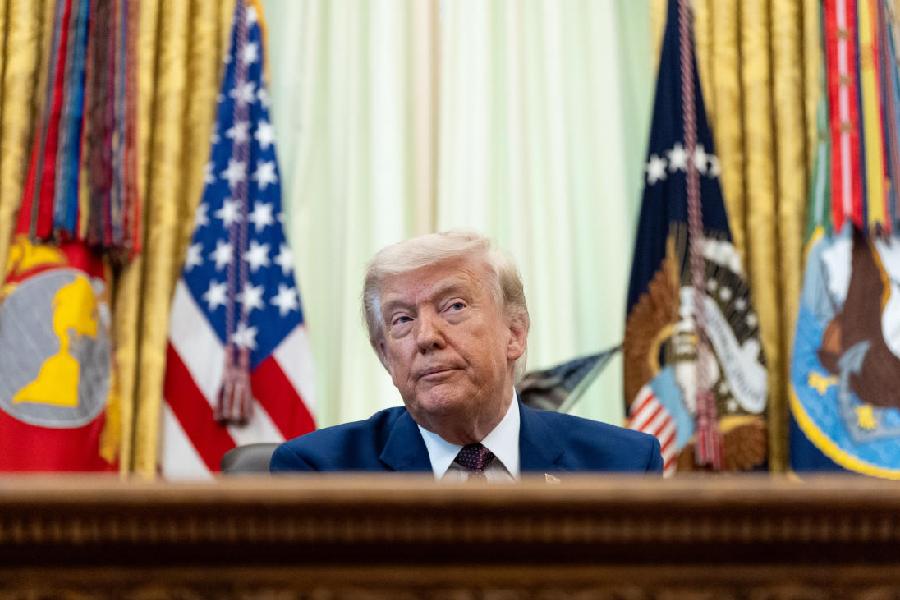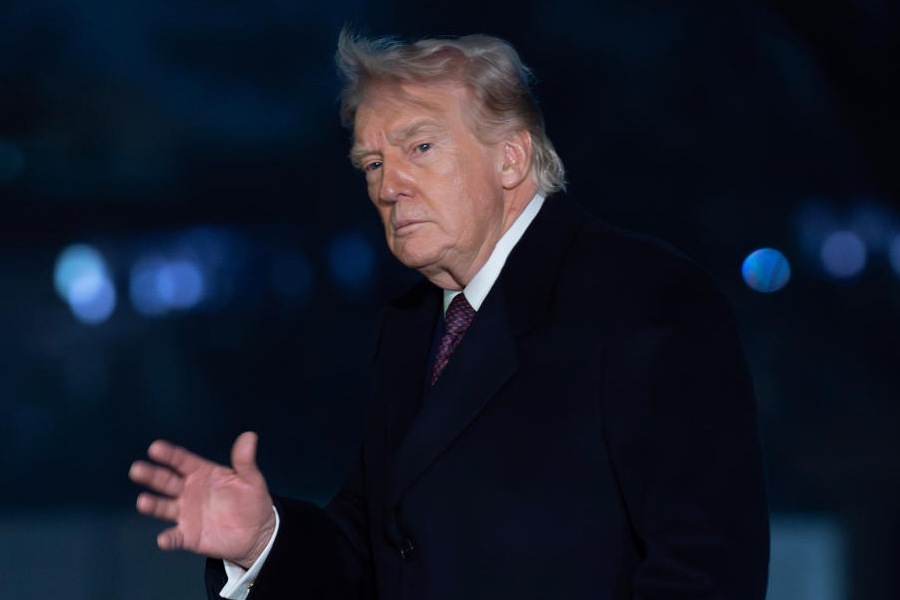
US President Donald Trump has warned European partners that Nato faces a “very bad” future if member states do not step in with warships to keep the strait open amid the ongoing US-Israeli conflict with Iran.
Most NATO countries, several of whom have been at the sharp end of criticism from Trump in recent months, are usually wary of angering the White House but are now signalling reluctance to become embroiled in the conflict with Tehran.
"What does (...) Donald Trump expect a handful or two handfuls of European frigates to do in the Strait of Hormuz that the powerful US navy cannot do?" German defence minister Boris Pistorius said in Berlin on Monday, as he downplayed threats by Trump that failing to come to Washington's aid could have consequences for the Nato alliance.
"This is not our war, we have not started it," he added.
The conflict has nothing to do with NATO and Germany has no plans to be drawn into it, government spokesperson Stefan Kornelius said.
"Neither the United States nor Israel consulted us before the war, and ... Washington explicitly stated at the outset of the war that European assistance was neither necessary nor desired," the spokesperson said.
Still, some allies signaled a cautious willingness to help.
EU foreign policy chief Kaja Kallas said the bloc is in talks with the United Nations about replicating a deal that allows for grain to be exported out of Ukraine during its war with Russia.
Over the weekend, Trump posted on social media that he hoped China, France, Japan, South Korea, Britain, and others would participate. He told the Financial Times that he expected China to help unblock the strait before his scheduled meeting with President Xi Jinping in Beijing at the end of this month and may postpone the trip if it does not.
“I think China should help too because China gets 90 per cent of its oil from the Straits,” Trump said. “We may delay," he added. China called on all sides to stop military operations in West Asia but did not commit to sending naval vessels.
British Prime Minister Keir Starmer spoke with Trump about reopening the strait and with Canadian Prime Minister Mark Carney.
"The UK might be considered the number one ally… and when I asked for them to come, they didn’t want to come," he said.
South Korea said it would review Trump’s request. Trump also criticised the UK after the discussion.
Japan and Australia said on Monday they would not send naval vessels to the Middle East. Japanese Prime Minister Sanae Takaichi, constrained by her country’s war-renouncing constitution, said Tokyo has no plans to dispatch ships.
"We have not made any decisions whatsoever about dispatching escort ships. We are continuing to examine what Japan can do independently and what can be done within the legal framework," Takaichi told Parliament.
Australia said it had not been asked and would not contribute ships either.
"We know how incredibly important that is, but that's not something that we've been asked or that we're contributing to," Catherine King, a member of Prime Minister Anthony Albanese's cabinet, told ABC.
Denmark said the EU should work to re-open the strait even if it didn't agree with the war.
"Even if we don't like what's going on, I think it's wise to keep an open mind on whether Europe ... in some way can contribute, but with a view towards de-escalation," Danish foreign minister Lars Lokke Rasmussen said.
Trump said seven countries were approached to send warships, but none have committed so far.
"I'm demanding that these countries come in and protect their own territory, because it is their own territory," he said. "It’s the place from which they get their energy."
Although a few vessels have passed through the strait, it has been effectively closed to most tanker traffic since US and Israeli attacks on Iran on February 28.