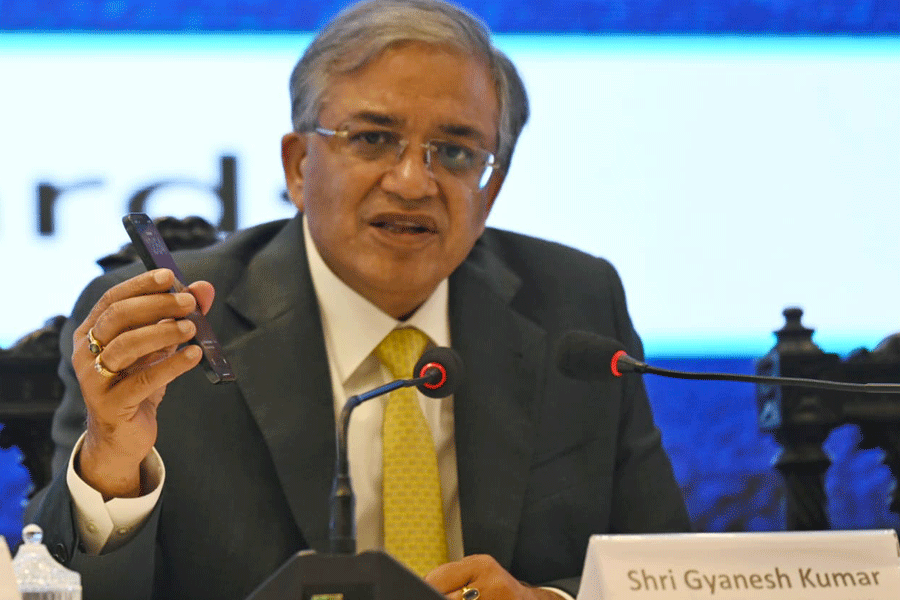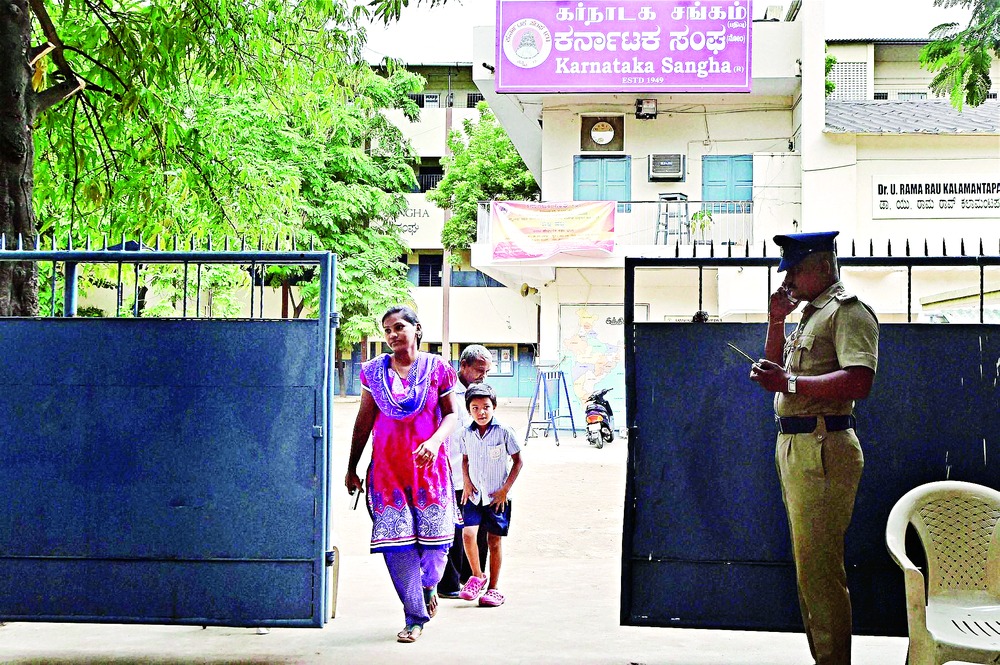

on Monday. (PTI)
Chennai, Sept. 12: Just say "Cauvery", and you could end up hitting a raw nerve in both Karnataka and Tamil Nadu.
The two states have been fighting for centuries for their share of water from the river, which feeds the rice bowls of both.
While less water has been flowing down the river - for both climatic and man-made reasons - the size of the area it irrigates has been increasing in both states, particularly in Karnataka.
A tribunal award in 2007 that instructed Karnataka to release 192 thousand million cubic feet (tmcft) of water to Tamil Nadu in a normal year has aggravated the dispute (it's not yet settled how much the release should be in distress years).
When Karnataka has a poor southwest monsoon, like this year, things turn especially tricky as the water stored in its reservoirs is just enough for drinking and not for irrigation.
So when the Supreme Court on September 5 directed the state to release 15,000 cusec water every day till September 15 to Tamil Nadu (about 1.3tmcft per day), furious farmers and pro-Kannada outfits in Karnataka directed their anger against the rulers of both states. Today, the top court revised the award to 12,000 cusec a day till September 20.
In Tamil Nadu, every small legal victory on the Cauvery (or Mullaperiyar, in the case of Kerala) is flaunted by the ruling AIADMK as yet another feather in Amma's cap.
This further provokes the pro-Kannada groups in Karnataka, who see their government as the loser in the duel in spite of controlling all the dams that store the Cauvery's waters.
So the easy targets of their anger are vehicles from Tamil Nadu, Tamil films, eateries with distinct Tamil names and the Tamils living in large numbers in Bangalore and Kolar district.
As interstate road transport grinds to a halt, trade and the movement of people are hit. While the arrival of tomatoes and onions in Tamil Nadu dwindle, the farmers growing them in Karnataka stare at losses because of the consequent glut.
Similarly, milk and eggs from Tamil Nadu stop moving to Karnataka, the tensions thus hitting both states economically.
In Tamil Nadu, the Cauvery dispute feeds into the rivalry between the two Dravidian parties to prove which of them is the greater protector of Tamil interests.
So the verbal duel between the DMK and the AIADMK grows to its shrillest, with each accusing the other of not doing enough to get Tamil Nadu its share of the water.
The two parties often send separate delegations to Delhi to fight the state's case, in contrast to the unity displayed by Karnataka parties.
It is in this context that fringe Tamil groups try to grab their brief moments of fame by attacking vehicles from Karnataka or businesses run by Kannadigas.
Although they claim that their attacks are aimed at deterring violence against Tamilians, such incidents in these days of 24-hour television news have exactly the opposite effect.
"It was only after New Woodlands (a hotel owned by a family with Karnataka roots) was attacked in Chennai early today that the Adayar Ananda Bhavan in Bangalore (part of a chain of restaurants with Chennai-based owners) got vandalised," a senior police officer said.
Even when the monsoon is not playing truant, the Cauvery remains a sore spot as Karnataka wants to build one more dam at Mekadattu, 110km from Bangalore, to feed its capital's growing drinking water needs.
Tamil Nadu sees it as another plea to deprive it of its tribunal-stipulated share of water.
One solution mooted to decrease the two states' dependence on the Cauvery is to link the peninsular rivers starting from Mahanadi in Odisha down to the Vaigai in southern Tamil Nadu.
With Tamil Nadu already locked in water wars with three neighbouring states - including Andhra Pradesh -however, that proposal may never take off.
Farmers in the Cauvery delta have been slowly resorting to alternative crops that need less water compared with rice. This could create another kind of dependence on other states - for rice - by lowering rice production in Tamil Nadu.
"Even in a good year, the water flow along the Cauvery in Tamil Nadu is hampered by the huge pits created on the riverbed by reckless sand mining. The irrigation channels are not desilted, either, to take the water to the tail-end areas," an agricultural scientist said.
"We should address these issues with greater sincerity, too, while we demand our share of the water."