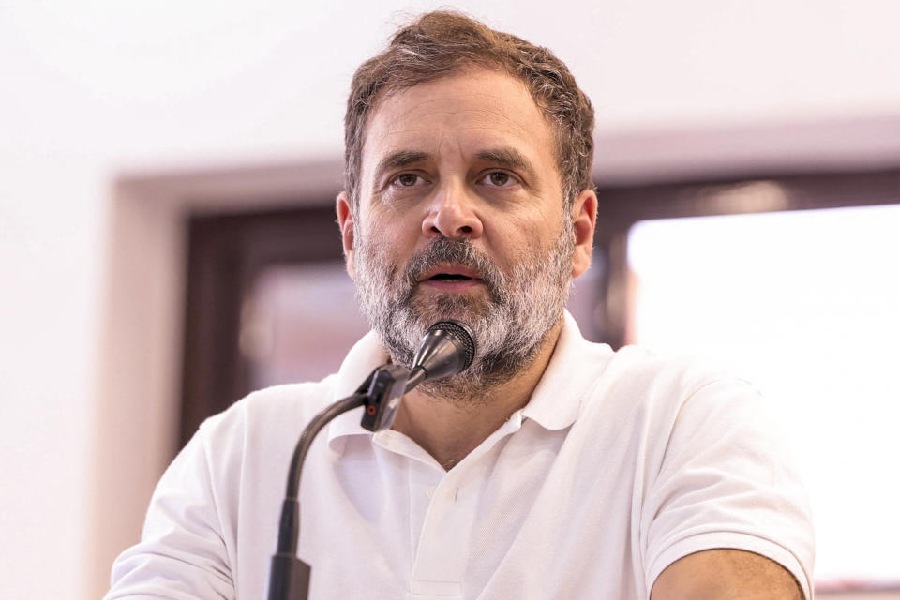
Lok Sabha Opposition leader Rahul Gandhi on Saturday asked Union finance minister Nirmala Sitharaman to fund a failing health scheme for defence veterans and their families and scrap the new income tax on disability pension for ex-service personnel.
The Ex-Servicemen Contributory Health Scheme (ECHS) has been plagued with non- payment of dues to hospitals, resulting in the withdrawal of cashless treatment by several of them. The Comptroller and Auditor-General (CAG) had last year flagged uneven geographical distribution of ECHS-empanelled hospitals and insufficient funds leading to delay in hospital payments and reimbursements, creating liabilities and forcing providers to withhold service.
In a letter to Sitharaman, Rahul wrote: “The Ex-Servicemen Contributory Health Scheme is designed to give veterans the best healthcare…. Over ₹12,000 crore in medical bills remain pending, budget allocation is nearly 30 per cent below requirement, and hospitals are opting out due to non-payment. Veterans are being forced to pay from their own pockets, or even delay treatment for serious diseases like cancer.”
He added: “In addition, the Finance Bill 2026 proposes to tax disability pensions if the soldier is retained in service. This is the first time since 1922 that disability pensions are being taxed. Disability pensions are meant to provide relief to servicemen who suffer injuries and should not be thought of as income. Moreover, when a disabled serviceman chooses or is requested to continue in service, he or she is selflessly serving India despite sustaining injuries.”
The Congress leader urged Sitharaman to “clear all pending ECHS liabilities with adequate budget support and restore full income tax exemption on disability pensions”.
Rahul sent a copy of the letter to defence minister Rajnath Singh as well.
The Congress had last month launched a “Save ECHS” campaign. The party’s ex-servicemen department has calculated the pending ECHS dues to be around ₹9,000 crore. It said that besides clearing the dues, the government needs to provide ₹14,000 crore to make the scheme viable, as successive budget allocations have been lower than the costs of running the scheme, leading to the accumulation of dues.