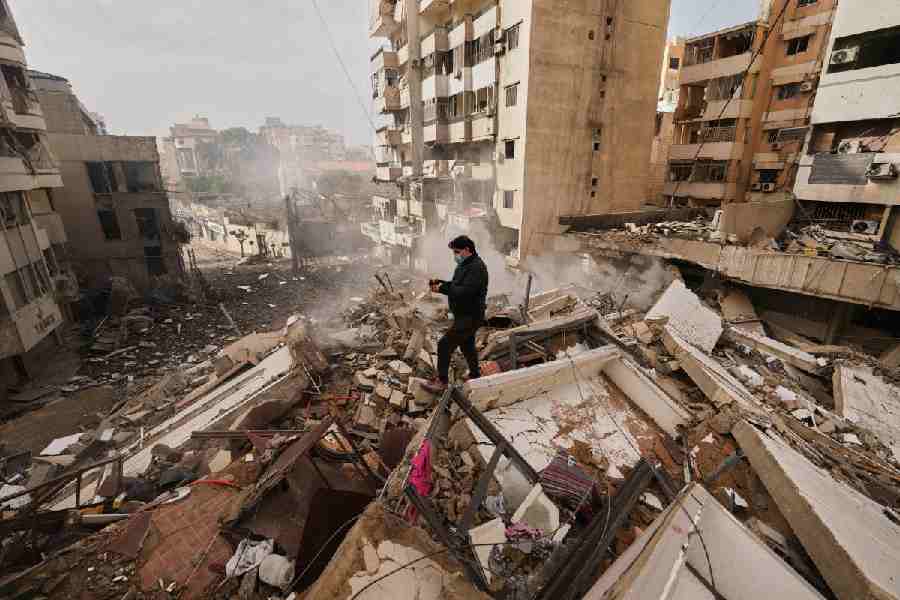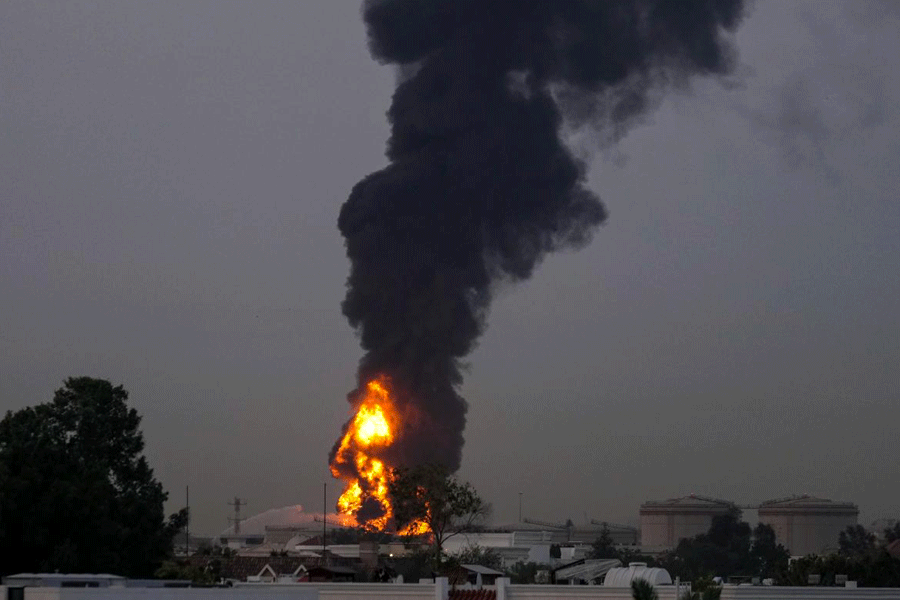
India on Thursday described the recent attacks on energy installations across West Asia as “deeply disturbing”, fearful that this would further destabilise an already uncertain energy scenario for the entire world.
The external affairs ministry’s three-line response to media queries on the attacks on gas fields in Iran and Qatar did not name any country.
This marked a departure from earlier statements that had condemned Iran’s retaliatory strikes on other Gulf nations but issued no similar condemnation of the US-Israel attacks on Iran that started the conflict.
“India had previously called for the avoidance of targeting civilian infrastructure, including energy infrastructure, across the region,” the ministry said.
The external affairs ministry said: “Recent attacks against energy installations in different locations across this region are therefore deeply disturbing and only serve to further destabilise an already uncertain energy scenario for the whole world. Such attacks are unacceptable and need to cease.”
Prime Minister Narendra Modi too described the attacks targeting the energy infrastructure in West Asia as “condemnable acts”, adding that “they are liable to lead to escalation that can be avoided”.
He made the remarks in his post on X about his conversation with Jordan’s King Abdullah II.
Modi also spoke to Amir of Qatar Sheikh Tamim bin Hamad Al Thani, “strongly condemning the attacks on West Asia’s energy infrastructure”. “We stand for safe and free navigation through the Strait of Hormuz,” Modi told Sheikh Tamim.
Modi also had a conversation with French President Emmanuel Macron, Malaysian Prime Minister Anwar Ibrahim andOmani monarch Sultan Haitham bin Tariq on Thursday. He stressed the need for de-escalation and called for ensuring the freedom and safety of navigation through the Strait of Hormuz.
On Wednesday, Israel struck the South Pars gas field and Iran retaliated by firing missiles at Qatar’s Ras Laffan Industrial City.
Nearly 50 per cent of India’s LNG (liquefied natural gas) import comes from Qatar. Since the conflict began, the government has been pushing people to switch to piped natural gas (PNG) to ease the pressure on liquefied petroleum gas (LPG) as a cooking fuel.
The LPG situation, the government has repeatedly admitted, is a matter of concern while maintaining that no LPG distributor has faced a dry-out yet.
“We were getting 47 per cent of our LNG supplies from Qatar. If the facility is affected, it will affect us. Now, what is the solution? The solution lies in diversification of your sources, from where you can pick up the cargos,” Sujata Sharma, joint secretary in the petroleum and natural gas ministry, told reporters at the inter-ministerial briefing.
She was answering questions on how the targeting of the gas fields would affect India.
Sharma said that as part of this diversification, some of the LNG being used in India has been coming from the US in recent months. “Now, some of our LPG is also coming from the US,” she added.
Asked if India was open to buying LPG from Russia, external affairs ministry spokesperson Randhir Jaiswal said: “We are trying to procure LPG from wherever it is available. If it is available in Russia, we will source it from there as well, because the situation right now requires us to ensure that the energy needs of our people are met....”