The government on Tuesday said it would not allow any misuse of the recently notified central rules on checking discrimination in higher educational institutions amid raging protests over the proposed law.
Education minister Dharmendra Pradhan told reporters that the UGC, the Union government and the state governments would prevent misuse of the provisions of the Promotion of Equity in Higher Education Institutions Regulations, 2026. Clause 26 (2) of the UGC Act says no regulation shall be made “except with the previous approval of the central government”.
“I want to say that nobody would be allowed to misuse the regulation in the name of discrimination. Either the UGC or the Union government or the state government will be responsible for this. Everything will be governed under the scope of the Constitution. Nobody will face any exploitation or discrimination,” Pradhan said.
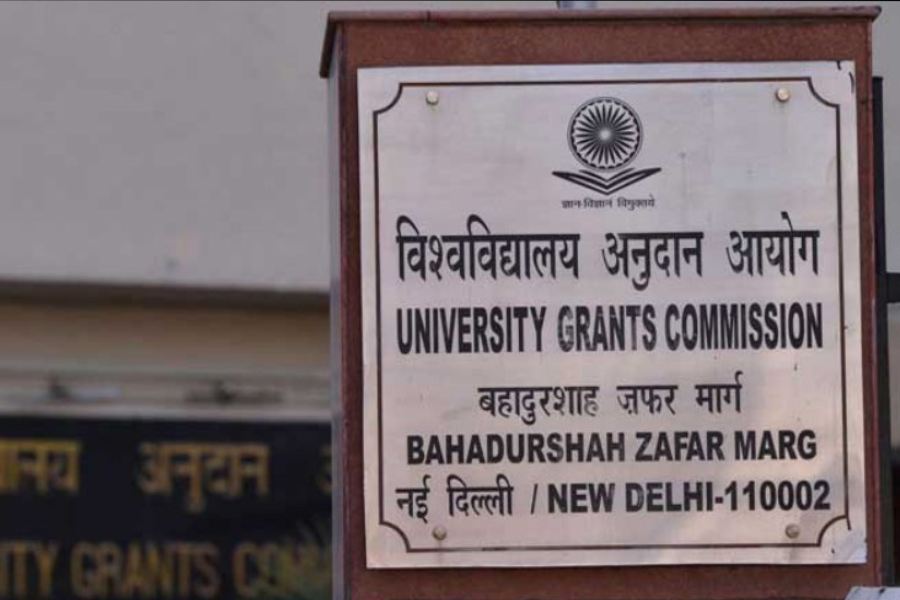
Students have been protesting in front of the UGC office here and in Uttar Pradesh and Uttarakhand, demanding a rollback of the regulations on the grounds of potential misuse. These new rules have included OBCs as victims of caste-based discrimination, thereby widening the ambit. Separately, it defined discrimination as any “unfair, differential, or biased treatment or any such act against any stakeholder, whether explicit or implicit, on the grounds only of religion, race, caste, gender, place of birth, disability, or any of them”.
N. Sukumar, a political science faculty member at Delhi University, said: “...But the rules talk about implicit actions to be offences. That becomes very subjective and difficult to prove. Such cases about implicit actions may take a lot of time for the institutions. Also, the institution head should be kept away from the apex committee to make the panel more effective.”
Ire at ‘discrimination’
Two PILs have been filed in the Supreme Court challenging the UGC’s Promotion of Equity in Higher Education Institutions Regulations, which restricts grievance mechanisms to tackle caste-based discrimination to SCs, STs and OBCs, on the ground that the exclusion of other castes is unconstitutional and impermissible.