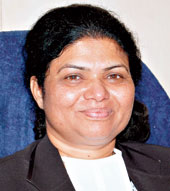

New Delhi, April 23: A former member of the National Commission for Minority Educational Institutions on Thursday said it would amount to discriminating against Christians if a member from the community was not appointed to fill the only post now vacant in the quasi-judicial body.
The four-member NCMEI, set up in November 2004 to promote education among minorities, does not have a chairperson now and Jessy Kurian's apprehensions came amid speculation that the HRD ministry could appoint a member from the Jain community to the post.
The Jains, who got minority status in 2014, have been pressing for a membership in the National Commission for Minorities. But there's a possibility the community could be accommodated in the NCMEI instead.
Two Muslims and a Sikh are the other members in the NCMEI, which decides on granting minority status to institutions.
Kurian said Christians, the country's second-largest minority grouping, had a "legitimate" expectation after being involved in running over 30,000 educational institutions where over two crore children study. "Despite praiseworthy contribution in education, if Christians are not represented in the NCMEI, it will be discrimination against the community by the central government," she told The Telegraph.
The commission has always been represented by a Christian since it was set up. The NCMEI Act says the commission would consist of a chairperson and three members from the minority communities to be nominated by the Centre. The chairperson must have been at least a high court judge while any person of eminence, ability and integrity can be a member, the act says.
The three members on the panel now are Zafar Agha, a journalist; Naheed Abidi, a Sanskrit scholar, and Baltej Singh Mann, an economist. While the UPA government had appointed Agha, the NDA government appointed Abidi and Mann last year.
Kurian said there was "no legal provision" that the NCMEI must have a Christian as a member. "But it is a legitimate expectation going by the population and contribution of Christians in education."
While Muslims make up 14.2 per cent of the country's population, Christians account for 2.3 per cent.
Kurian, an NCMEI member from 2008 to 2009, said the commission has always had a Christian member. Valson Thampu, till recently principal of Delhi's St. Stephen's College, was among the first three members appointed in 2004.
After he resigned in 2007, Vasanthi Stanley, a political leader from the south, was made a member. When she resigned in 2008, Kurian was appointed for the remaining term. Cyriac Thomas, a university professor who was appointed in 2010, completed the full tenure of five years that a member is appointed for.
Kurian appeared unimpressed by the appointments made in the last two years, saying none of the members had a legal background. "The NCMEI is a quasi-judicial body. The commission has to dispose of cases based on landmark judgments of the Supreme Court and high courts on minority issues. Hence the members should preferably have a legal background," she said.
The commission awards minority certificates to institutions set up by minorities. In 2011, it had declared the Delhi-based Jamia Millia Islamia a minority university. The decision has been challenged in court.
Till January this year, the NCMEI had awarded minority certificates to 11,623 institutions, including 4,447 in Kerala, 2,604 in Uttar Pradesh and 696 in Bengal.
The NCMEI Act, however, does not say that the members should have a legal background. This newspaper tried to contact Ghanshyam Goel, the HRD ministry's information officer, but couldn't reach him. Goel was on leave on Thursday, but the media section in the ministry confirmed that it had got the questions the paper had emailed.
No response had come in by the time this report was filed.