|
| Har gao |
Monsoon munchies have always meant pakoras and telebhajas in Calcutta but how about some har gao?
The Oberoi Grand is celebrating the wet weather with a range of dim sums that are light on the tummy and a delight for the taste buds. Trained by Chef Choy, the dim sum chef at The Oberoi in New Delhi, the Calcutta kitchen is rustling up chicken, seafood and vegetarian dim sums as a monsoon special.
“Dim sum comes from the Chinese concept of ‘yum cha’ or tea ceremony. Dim sum is what you eat with the Chinese tea,” explained Aditya Kulkarni, senior kitchen executive at The Oberoi Grand. Presenting a tasting platter, Aditya explained some common Chinese culinary terms on the way.
Dim sum: Bite-sized food, like tapas or bruschetta. The Chinese have it with their tea. Originated in the Cantonese region and characterised by mild spices but robust flavours. Most dim sums are steamed, but not all. In India, dim sums are very popular for brunch or as appetisers. “Low on spices need not mean bland. If the seasoning is right, one doesn’t need spices,” pointed out Aditya. Salt, sesame seeds, sesame oil, ginger, white pepper are some seasonings used in dim sums.
Dumpling: Steamed dim sums, they were originally the stopover food for Chinese farmers and travellers, since steaming is a relatively easier form of cooking. The hallmark of a good dumpling is the thinness of its dough and the moistness of the filling, so that one doesn’t need too much sauce, which would overpower the flavours.
Har gao: A dumpling with seven to 10 pleats in its dough. Folding the pleats is an art and shows the skill of the dim sum chef. The dough must be thin and translucent. The har gao on offer was steamed shrimp, the flavour of the seafood bursting beautifully in the mouth.
Sui mai: Another shape of dumpling, where the dough is in the form of a tiny cup, open at the top. The base is made from wonton sheets and pork and potato are popular fillings.
Fried dim sum: As we said, not all dim sum is steamed. For the fried variety, the dough is replaced with pieces of bread and sometimes topped with something crunchy. On offer was a deep fried shrimp toast, the sesame on top giving it a delightful crackle.
Parcel dim sum: This is not a traditional dumpling shape but it’s very pretty. Ours came gift-wrapped with a strip of bok choy. This is a leafy staple in Thai food, which retains its crunch even after cooking, unlike spinach, which goes limp and mushy. Our parcel dim sum was stuffed with tofu, bok choy and black fungus, a naturally-growing Chinese mushroom that has a lovely smoky flavour.
Four seasons dim sum: A vegetarian dumpling with a mix of veggie fillings. Ours had carrots, mushroom and corn, flavoured with coriander and soy sauce. The dough was almost transparent, with very delicate folding on the edges.
The dim sum festival is on till June 22 at the all-day dining restaurant La Terrasse, at The Oberoi Grand. Each dim sum portion, priced between Rs 550 and 850, has four pieces.
Maxed-up mangoes at la terrasse
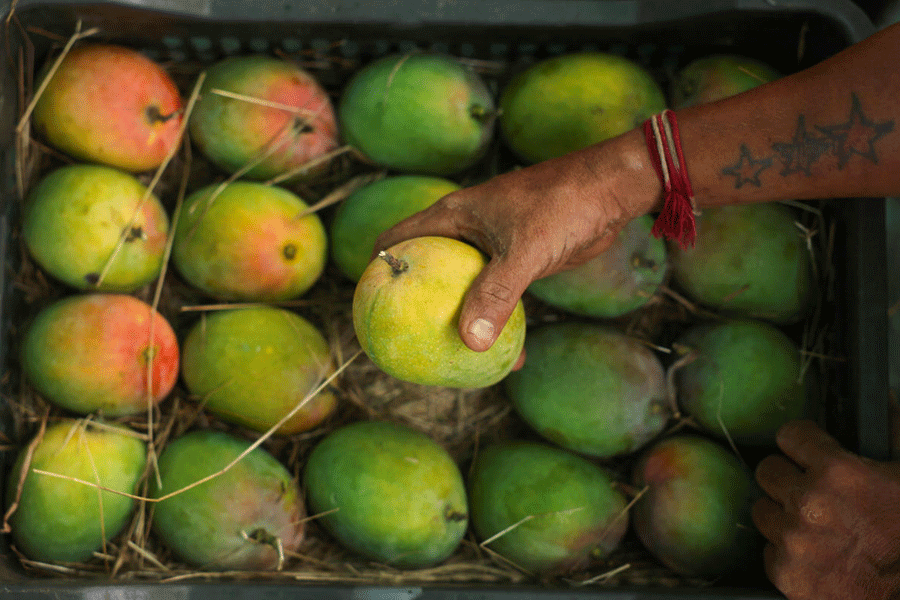
The Oberoi Grand is also rustling up a host of mango salads and desserts to serve the king of fruits in royal style.
Among salads is a Thai green mango salad with sesame, where the tartness of raw shredded mango is balanced with the salt of soy sauce and the sweetness of jaggery. Have this in between starters and main course to cleanse your palate and induce the taste buds into wanting more.
The mango salad with arugula, cucumber, mint and ginger juice is another summery mix, naturally cooling and light. The spicy bitter taste of the arugula lettuce (also called rocket) is offset by the sweetness of the mango.
 |
A must-try is the adventurous pairing of mango and beetroot (above), the double sweetness cut by the saltiness of crumbled feta, which is a Greek cheese. Another interesting pairing is Mango and Brie Quesadilla, a Mexican/ Spanish preparation of twin breads and a filling. The traditional filling of tomatoes or beans has been replaced with mango and salty brie cheese and it’s a current favourite at the Oberoi bar.
Among desserts, apart from the usual mango pudding, Mango Baileys cake and sorbet, there’s an elaborate Mango Mascarpone Crepe with cognac sabayon and vanilla ice cream. Mascarpone is a light Italian cream cheese used to make tiramisu. Watch out for the subtle caramelised flavour and texture of the frothy cognac sabayon, done with a blowtorch. The chilled Mango and Sago Pudding (left) is another interesting concoction, giving the humble saboodana or sago an exciting twist!
The mango festival is on till June 30, also at La Terrasse. The salads are priced around
Rs 700 and desserts around Rs 500.