Sriram Raghavan’s Ikkis was originally slated to clash with Aditya Dhar’s spy thriller Dhurandhar at the box office. Although both the films revolve around Indo-Pak relations, they couldn’t be more different in their approaches. While Dhar's film is violent, gory, jingoistic and hypermasculine, and thrives on the agenda of “ghar mein ghus ke marenge”, Raghavan bats for giving peace a chance. In the final moments of Ikkis, Dharmendra's Brig. Khetarpal tells his Pakistani counterpart Brig. Nissar (Jaideep Ahlawat), “yeh jung kab rukegi? Jab hum rokenge”.
This encapsulates the idea of Ikkis. A war drama and a biopic on PVC Arun Khetarpal, which vocally advocates for peace. It is a riveting tale of the human cost of war, and how humanity pervades all hate.
That idea is planted early and allowed to grow patiently. The film opens not with gunfire or bravado, but with a frail old man trying to reconnect with his roots. Madan Lal Khetarpal is in Lahore, ostensibly for a college reunion, revisiting the house where he grew up. But he also yearns to visit the place where his son Arun, a second lieutenant in the Indian Army, died during the 1971 war.
It is an emotional premise handled with restraint, and one that gains added weight because this turned out to be Dharmendra’s final role.
Dharmendra is visibly old, and that is Raghavan’s trump card in Ikkis. This is an actor at the end of his road, speaking from experience and wisdom. Madan Lal’s warmth, curiosity, and refusal to carry bitterness against the nation that killed his son feels cathartic. There is a deep generosity in how he interacts with people across the border.
Imagine a film coming close on the heels of Dhurandhar that does not treat Pakistanis as enemies!
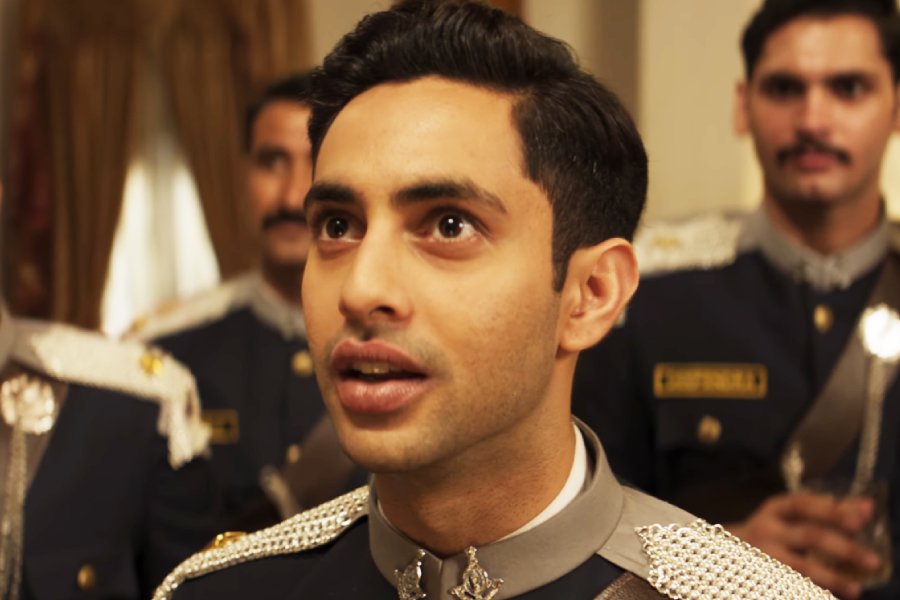
If Madan Lal Khetarpal’s compassionate old man is one side of the coin in Ikkis, on the other side is young Arun Khetarpal, played by Amitabh Bachchan’s grandson Agastya Nanda, who has just turned 21. “Sir, ladaai hone waali hai” is the first dialogue he says in the film. He hails from the family of armymen and wants to prove himself on the battlefield.
Raghavan, writing with longtime collaborators Pooja Ladha Surti and Arijit Biswas, structures the film as a conversation across time. Arun’s journey in 1971 runs parallel to his father’s visit to Pakistan decades later, just two years after the Kargil War. Despite the political climate, Khetarpal senior disarms everyone he meets with his kindness, including an embittered, disabled veteran played by Deepak Dobriyal.
His host in Lahore is Nissar (Jaideep Ahlawat), an ex-army man who was responsible for Arun’s death. Although this truth is clear long before the film spells it out, Raghavan builds the tension around how Nissar confesses before Khetarpal.
Enough war dramas have been made in India in the recent past. Many of them revolving around the 1971 war. But where Ikkis stands out is its message for peace. Scenes of battlefield and war are intercut with Khetarpal walking on those same lands, weighing on the fallout of war. “These lands have been witness to bloodshed, yet they continue to produce grains,” he says in the end. That summarises Raghavan’s approach.
The film also stays clear from jingoistic nationalism. The army is depicted as an institution that is motivated by their service towards the nation. There are no blood-curdling cries or dog-whistling dialogues. And the Pakistani side of the army also gets the same treatment. Nissar is a disciplined soldier who is out there to protect his country from the enemy. But when he sees the corpse of a young Arun being pulled out from the tank, he freezes, eyes welling up.
Ikkis is Agastya Nanda’s big-screen debut. His performance as Arun is sincere and honest. But the towering presence of Dharmendra and Ahlawat overshadows the 21-year-old. Raghavan’s film will live in our hearts as the last outing of Bollywood’s He-Man, not as a macho hero but as a kind, old patriarch who India desperately needs for a healing touch in this fractured political climate.