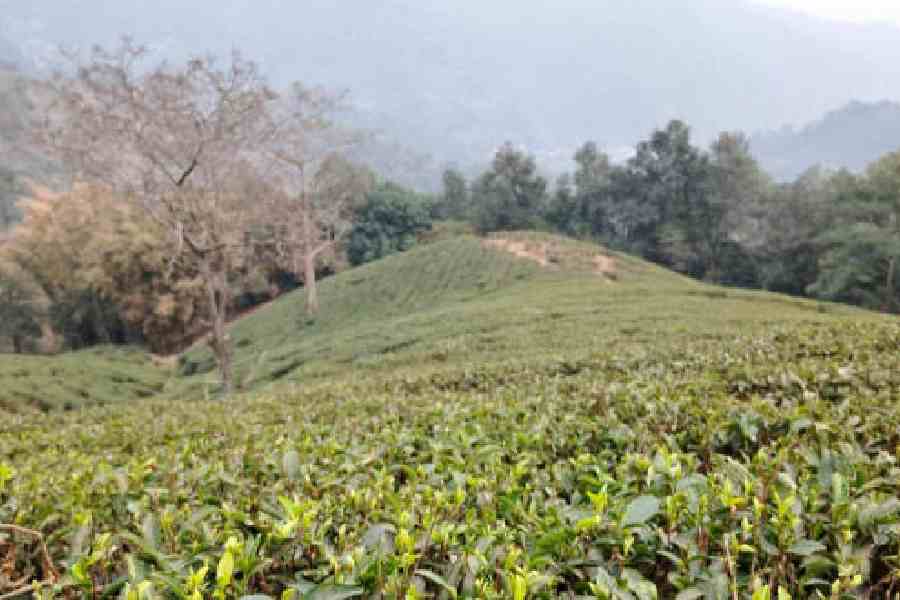
Darjeeling’s globally prized tea industry, which had shifted from coal-fired processing to industrial LPG following export concerns, now faces the new challenge of restricted fuel supply during the most crucial period of first-flush production.
Following the West Asia crisis, the Centre has curtailed the distribution of commercial LPG cylinders other than to hospitals and educational institutions.
Sandeep Mukherjee, principal adviser, Darjeeling Tea Association (DTA), said that most of the tea-garden factories had over the past decade switched to using industrial LPG following concerns over the contaminant anthraquinone, linked to coal-fired drying.
Mukherjee said: “The conversion had to be done in the last decade after anthraquinone was found in some consignments of tea exported abroad, resulting in the importers raising serious trade issues.”
Anthraquinone is an organic compound used primarily in industrial dyes and paper production, and as a bird repellent. It is classified as a possible humancarcinogen.
The crisis comes just when the production of the premier first-flush tea has begun, and Darjeeling’s planters areworried.
“Most of the first-flush production is exported by the Darjeeling estates and a crisis at this time would hit the industry hard,” Mukherjee said.
There are four plucking seasons: first, second, monsoon and autumn. However, tea from the year’s first plucking commands the highest price at the auctions.
First-flush plucking starts in February-end at the lower elevation gardens of Darjeeling and ends by mid-April.
“The first flush accounts for 20 per cent of the annual production but around 35-40 per cent of the annual revenue,” a source said.
Other sources saidDarjeeling’s tea industry needs around 6 to 7 tonnes of LPG every day during peak production.
“A commercial cylinder weighs 47.5kg. The supply of commercial LPG cylinders to the tea gardens has stopped since March 5,” a source said.
Many tea planters said the situation was “extremely grave”.
Mukherjee on Thursday wrote to the Tea Board of India deputy chairman for help.
“…This association requests to use your good offices with the concerned Ministry to ensure uninterrupted supply of industrial LPG to the factories of Darjeeling tea industry,” Mukherjee wrote.
DTA officials said the problem was particularly critical for the tea industry of Darjeeling, where a higher proportion of gardens have switched to LPG because of the heavier emphasis on export compared with other tea belts in the country.
Darjeeling Tea is India’s first Geographical Indication-tagged product. Only 87 gardens can sell their produce as Darjeeling Tea.