Thursday, 11 June 2026
Thursday, 11 June 2026
Thursday, 11 June 2026
‘Bangla cinemar pashe daran’ (please stand by Bengali cinema). This is an oft-repeated phrase that audiences in West Bengal hear whenever a Bengali film hits theatres. The industry is going through a tough phase with the number of films released annually dropping every year. Amidst this bleakness and efforts to revive the industry, 2025 produced some gems that made their way into our hearts.
Deep Fridge
Directed by: Arjunn Dutta
Cast: Abir Chatterjee, Tnushree Chakraborty, Anuradha Mukherjee
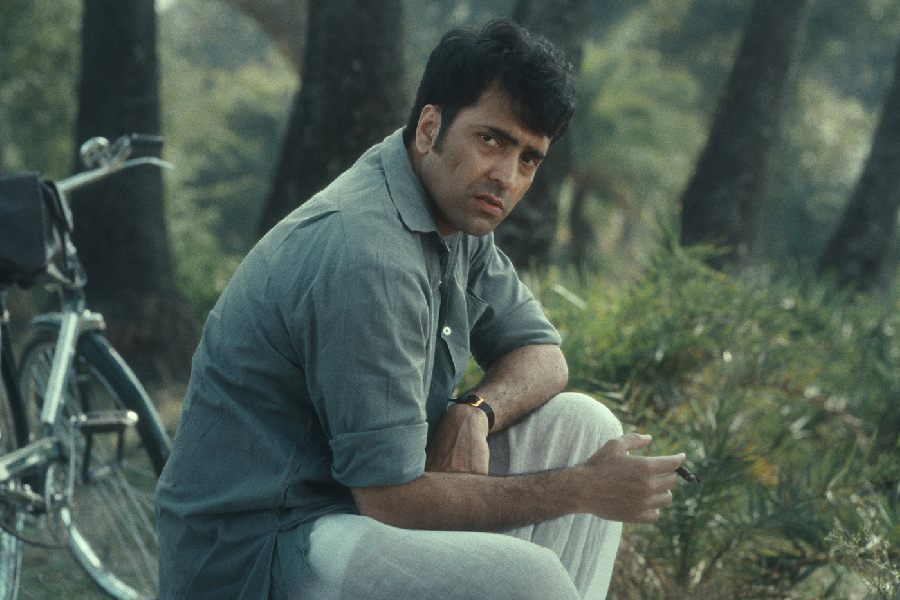
Arjunn Dutta’s Deep Fridge, which won the National Award for Best Bengali Film this year, is a nuanced drama that finds depth in simplicity. The story follows estranged couple Mili (Tnusree Chakraborty) and Swarnava (Abir Chatterjee), who meet five years after their separation and are confined in the same house when their young son falls ill.
As a storm rages outside, the tension inside the house builds alongside the persistent groaning of an old fridge on the verge of failure. This confined setting becomes a catalyst for long-buried emotional wounds being slowly revealed. Dutta structures the film into three chapters — Ice Cube, Melting Point, and Defrost — each reflecting the shifting emotional state between the two former partners.
Shotyi Bole Shotyi Kichhu Nei
Directed by: Srijit Mukherji
Cast: Parambrata Chattopadhyay, Kaushik Ganguly, Koushik Sen, Ananya Chatterjee, Ritwick Chakraborty, Anirban Chakrabarti
Adapting a classic book is always a delicate balancing act. The risks are immense — inevitable comparisons to the original loom large. But where Srijit truly succeeds as a filmmaker is how he takes Ek Ruka Hua Faisla and makes it his own in Shotyi Bole Shotyi Kichhu Nei. His adaptation carries a storytelling style that remains respectful to the original while layering it with cultural, social, and political anxieties of the present.
The story follows intense debates as the characters, each embodying different sections of society, grapple with reaching a unanimous verdict.
Unlike the 12 men from the original, here we have individuals from across the spectrum of gender, sexuality, and strata of society. What binds these characters together is their biases — each character is guided, and at times blinded, by their preconceived notions.
Putulnacher Itikotha
Directed by: Suman Mukhopadhyay
Cast: Abir Chatterjee, Jaya Ahsan, Parambrata Chattopadhyay, Surangana Bandyopadhyay
Based on a novel of the same name by legendary Bengali author Manik Bandyopadhyay, Putulnacher Itikotha premiered in competition at the 2025 International Film Festival of Rotterdam (IFFR).
The story revolves around Shashi, an urbane doctor, who visits his rural hometown, a place steeped in traditional and seemingly outdated practices, for what he plans to be a brief visit. However, as he becomes deeply entwined in the lives of the villagers, his temporary stay begins to take on a sense of permanence.
The narrative flows at a leisurely pace in Putulnacher Itikotha. Mukhopadhyay makes the audience stay with long silences and pauses. Editor Tinni Mitra allows moments to breathe. Cinematographer Sayak Bhattacharya captures the rural landscape with simplicity. Prabuddha Banerjee’s background score supports the narrative without overshadowing the emotions.
Ei Raat Tomar Amaar
Directed by: Parambrata Chattopadhyay
Cast: Aparna Sen, Anjan Dutt
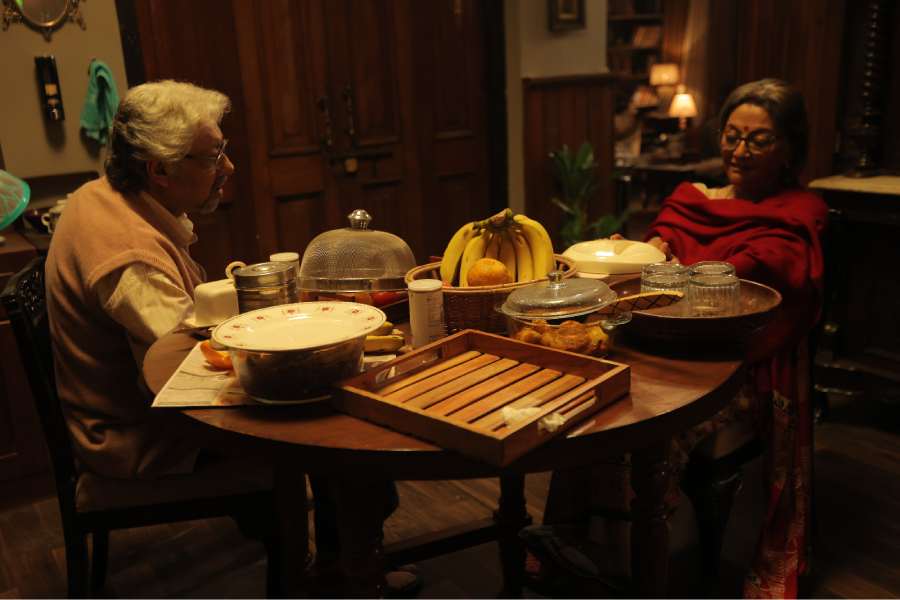
Ei Raat Tomar Amaar marks the first on-screen pairing of Anjan Dutt and Aparna Sen as a married couple in director Parambrata Chattopadhyay’s chamber drama about a relationship tested by time. Set over a single stormy night in a deserted tea garden, the film follows Amar and Joyeeta on their 50th wedding anniversary.
Joyeeta, terminally ill yet spirited, clings to her love for life, while Amar grapples with the physical and emotional strain of caring for her as age closes in. As the night wears on, long-suppressed truths come to the fore.
Parambrata’s direction is intimate, relying heavily on sharp, emotionally-charged dialogues. The gamble with a closed chamber drama pays off as the lead actors, both veterans, steal the show with their performances, without a single dull moment.
Puratawn
Directed by: Suman Ghosh
Cast: Sharmila Tagore, Rituparna Sengupta, Indraneil Sengupta
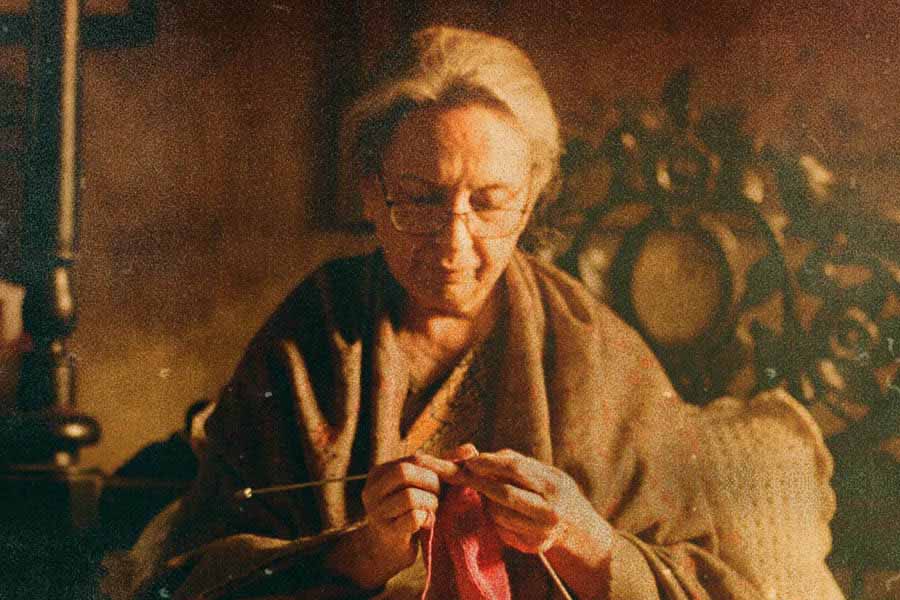
Suman Ghosh’s Puratawn marks Sharmila Tagore’s return to Bengali cinema after 16 years. She plays a matriarch whose 80th birthday becomes the setting for a week-long family gathering at their ancestral Kolkata home. Her daughter (Rituparna Sengupta) and son-in-law (Indraneil Sengupta) organise the celebration, but the unfolding days gently expose emotional distances between the characters.
A meditative exploration of ageing, memory and time, Puratawn relies heavily on silences and lingering shots than overt explanations. The ageing house by the Ganga functions as a character in itself, carrying traces of past lives, griefs and joys. Sharmila’s presence anchors the film.
Honourable Mention
Karon Greece Amader Desh Na Athoba Blue-Black O Transparent White
Directed by: Sudipta Laha
Cast: Anindya Sengupta, Gourab Chatterjee, Tnusree Chakraborty, Kamaleswar Mukherjee
Debutant director Sudipta Laha makes a mark as an indie filmmaker in this meta feature about the production of a film-within-a-film. Sudipto (Anindya Sengupta), a disillusioned filmmaker, grapples with failure after his debut film flops. Pressured by his producer, he reluctantly works on a mediocre thriller. His encounter with a painter, whose unique outlook on art and life challenges his beliefs, deepens his self-doubt. As his creative crisis intensifies, conflicts with the producer reach a boiling point, driving him to his limits.
Laha delves into constant friction between art and commerce and explores how an artist’s creative agency often becomes a casualty at the altar of ambition.