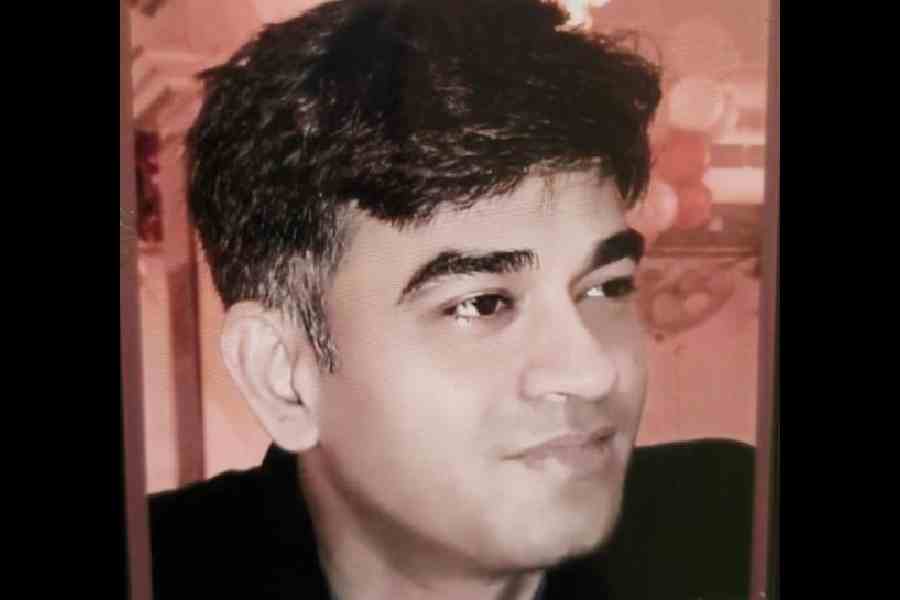

What started off as slurping McDonald’s milkshakes as a 17-year-old student of the University of Southern California has become his calling card. Amit Jatia, 47, is today the vice chairman of McDonald’s India (west and south region), responsible for 202 (of 368) outlets of the global brand. [McDonald’s restaurants in north and east India are managed by Vikram Bakshi’s Connaught Plaza Restaurants Private Limited, a joint venture with McDonald’s Corporation.]
A wedding in the family brought him back to Calcutta after 20 years and he managed to spend a few hours at a session –– I’m Lovin’ It –– organised by the Calcutta chapter of Young Ficci Ladies Organisation (YFLO), on January 27. t2 caught up with him before the event.
What have been the top milestones for McDonald’s in these 20-odd years?
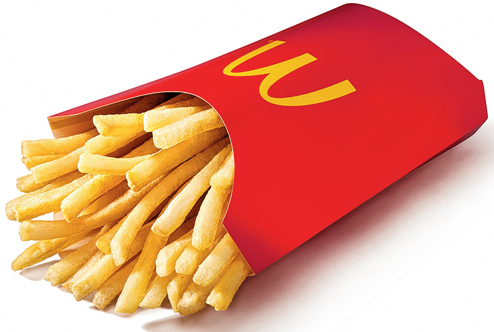
There have been quite a few landmarks for us. We established the QSR (quick service restaurant) model in the fast food industry in India. The first 10-15 years have been very important in building the foundation of the business and the eating-out market. We created products and habits which did not exist in the country before; we set up partnerships and attracted customers. The other big landmark is the establishment of our supply chain. Every ingredient that goes into the burger is locally sourced from farmers and is 100 per cent ‘Made in India’. We are proud that we worked on the ‘Made in India’ concept two decades back, which is now gaining momentum. We took every component of the burger, lettuce, fresh produce, cheese, patties, bun and the poultry, and worked with farmers and our suppliers, started local sourcing, created a food processing industry and then created a cold chain to connect that. Even the world-famous fries at our restaurants are made from locally-sourced potatoes, manufactured in Gujarat.
Today, McDonald’s has 368 restaurants (across India). We launched our global formats and brand extensions like Drive-thru’s, Breakfast, McDelivery, Kiosks and McCafe. We pioneered the Breakfast concept in the QSR industry in India and more recently we started McCafe (in-house coffee chain), which is housed within our restaurants.

Is competition tougher than before?
More the number of people (players), more the growth of the industry. I feel QSR is still at a nascent stage. On an average, people eat around 100 meals every month, of which eating-out frequency is seven-eight times, even in a city like Mumbai. Today it’s not about competition within the QSR industry. The idea is to take that eight times to 15 or 20. In Asia, a place with similar per capita income, people eat out 18 times. It’s about trying to grow the market.
Have same-store sales come down for you?
In the last 10 years, 2003-04 to 2012-13, we grew same-store sales very well. We were doing, say, Rs 100 in 2003, by 2013 it was Rs 180. So, our same-store sales almost doubled. As the Indian economy was sluggish, the consumer sentiment took a beating and with that the entire QSR industry has taken a bit of a softening as far as same-store
sales go.
Dieticians often go hammer and tongs at fast food…
It’s about having an active, balanced lifestyle, whether you eat at home or outside. It’s about what you eat and what you do. Even if you are eating home-cooked food every day but sitting on the couch for long hours to watch TV, it’s not going to work. If you eat a samosa or a dosa or chapatti with ghee but involve no exercise then you are in trouble! It’s about having a balanced lifestyle. We take the well-being of our customers very seriously and we’ve worked hard on our recipes and menu to add choices and variety –– from grilled breakfast to grilled veg- and non-veg burgers to steamed McEgg burgers and wraps, grilled veggie and chicken burgers and wraps at lunch and dinner.
We have brought down the sodium content across sauces, buns and McNuggets by 10 per cent and by around 20 per cent in our fries. We have reduced oil content in our sauces from 67 to 25 per cent, bringing down calorie intake by up to 40 per cent. And we serve low-fat mayo at our restaurants. Our dairy products, such as soft-serves, have less
than 3 per cent fat.
The real issue in India is around food safety. People are more concerned about water quality and hygiene. With our supply chain we have been able to bring safe food to the consumer.
Your wife Smita Jatia is the MD (of McDonald’s India, west and south). How do you separate your roles?
My wife is the managing director and runs day-to-day operations. My work involves the strategic view for three-to-five years. I spend most of my time on restaurant growth, real estate and industry relations. I look at treasury. Our responsibilities are well divided. She always had the desire... and when she discussed this with me in 1997, I agreed. Even before she joined, she had done very well academically. She has done a Harvard (Business School) programme and a marketing programme at the Hamburger University. That’s what helped her to get to where she is.

Members of YFLO (left to right): Avanti, Pooja, Isha, Shrinidhi, Manjri, Shillpi, Pinky and Amrita with Amit Jatia. Picture: B. Halder
You are a Mumbai boy who went to the States as a teen and then came back...
I was born and brought up in Mumbai and had an uneventful childhood, went to school, college.... My turning point came when my mom insisted that I go to the US for my under-graduation. This was in 1984 at the University of Southern California. I was 17 years old. It was a four-year programme but I finished in three years. I was keen to come back to India to get into manufacturing, which was my family business. I was always fascinated by India and even though I had an opportunity to settle down abroad, I said no way. I graduated and was on the next flight back to India.
Did your stay in America introduce you to McDonald’s?
I am a vegetarian. So McDonald’s visits were for French fries and milkshakes. I loved the milkshakes then. I first got introduced to McDonald’s in a big way when I was in Japan. When I first started talking to the company, what interested me was that they were ready to be local. Separate kitchens for veg and non-veg; no beef and pork; no egg in the mayonnaise. That’s when I learnt the true McDonald’s.
Though you don’t have a stake in the Calcutta market, what’s your take on it?
I don’t know about the Calcutta market and have returned to the city after 20 years to attend a wedding in the family. My maternal aunt lives here. After I got involved in McDonald’s, and given the fact that Calcutta is not my territory, I didn’t get the time to come here.
What is it about McDonald’s that excites you?
Everything is about perfection and there is a document for everything. For example, before I opened the first restaurant, I had been to Egypt, Hong Kong, Beijing and Tokyo; the idea was to learn from consumers there. We sent 25 managers to Indonesia where they spent nine months to one year working at a McDonald’s before our first restaurant opened.
Unlearning happens every day as we learn more. My philosophy is to selectively forget the past because if you hold on to the past too much, you won’t see the future. But I also say that don’t forget the reasons behind the core existence of the brand and why it’s successful. Beyond that, what worked yesterday may not work tomorrow.

AMIT JATIA
Designation: Vice chairman, Westlife Development Ltd, McDonald’s India (west and south region)
Age: 47
Joined McDonald’s family: In March 1995 as MD, Hardcastle Restaurants Pvt. Ltd. In December 2010, he bought out McDonald’s stake in the south and west joint venture and Hardcastle merged with Westlife Development, which is listed on the Bombay Stock Exchange
Wife: Smita Jatia, managing director, McDonald’s India (west and south region)
Family owns and operates: West Pioneers, a leading mall developer in the country
Education: Hamburgerology from the Hamburger University, Oak Brook, Illinois; Business Administration from the University of Southern California, Los Angeles
I love/ hate McDonald’s because... Tell t2@abp.in