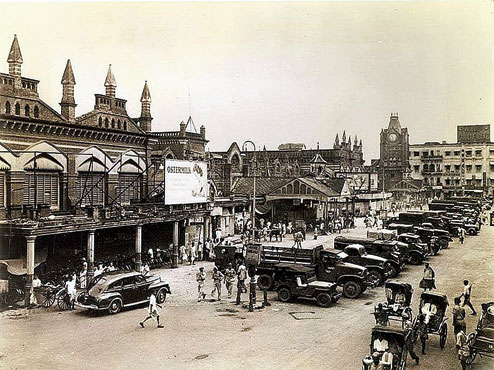

It was 1936. A young man was selling hosiery items at his brother’s shop in New Market. The business was running at a loss, so he was trying to clear his stock. Unknown to him, an Englishman was observing him — K. Jackson Marshall of the British publishers William Collins & Sons. Impressed by the young man’s art of selling, he asked him to come see him at
Great Eastern Hotel.
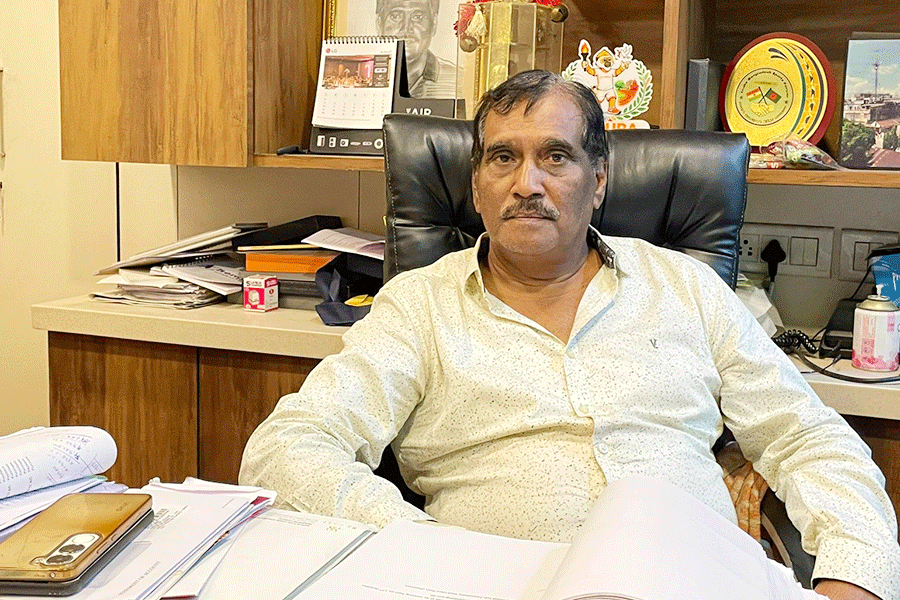
The young man in question was D. Mehra, the founder of Rupa & Co., one of India’s largest independent publishing houses that has just turned 80 years. Sitting in his College Street office, D. Mehra’s grandson Raju Barman, who looks after the Calcutta operations of Rupa, told t2 the story of that chance encounter.
“The first two days my grandfather didn’t go, he was not confident. One of his friends was in the book trade and he convinced D. Mehra, saying Collins was one of the biggest publishers in the world,” Barman said.
So D. Mehra went to Great Eastern. But he wasn’t allowed in, because he was wearing dhoti-kurta and chappals! He went back a second time and somehow managed to meet Jackson.
In those days, publishers came to India by ship and brought their stocks. They would stay for a month, display their books at the hotel and sell to distributors. Jackson told D. Mehra, “I want you to sell my books.” But the young man had neither the knowledge nor the capital to enter the book business. Jackson said, “That doesn’t matter, I trust you. I’ll make you a bookseller.”
That was the beginning, August 17, 1936. Rupa & Co. started with a cash capital of around Rs 590.
The naming of the company is quite a story too. While one would have imagined that it was named after a family member, Barman revealed “Rupa” came from theatre.
“My grandfather used to regularly watch plays in Calcutta. There was one particular play he was very fond of. It had two characters, Sona and Rupa. He was very impressed by them and thought to himself that if he ever started something of his own, he would choose one of these two names,” added Barman.
When Jawaharlal Nehru was in prison, Mehra would send him books to read. This has been acknowledged by Nehru in his letters to his daughter Indira.
Rupa’s logo was designed by Satyajit Ray — one in English, one in Bengali. Barman says Ray didn’t take any money, he just took some books instead.
D. Mehra started with sales and distributorship and ventured into publishing around 1960. Their first publication was the English translation of Herman Hesse’s Siddhartha, originally written in German.
Kapish Mehra, the present managing director and great-grandson of D. Mehra, said through these eight decades the company remained firm on its principles of quality, affordable prices and effective distribution. “It is not for us to decide what the reader wants to read,” he said over phone from Delhi, where the company has been headquartered since 1970.
Mehra feels the last 10 years was a decade of technology, and the next 10 will be all about content. “There are various ways in which content can be developed — physical books, e-books, apps, enhanced e-books. There has to be a 360-degree approach to content. We also have to realise that what works in apps and e-books may not work in a physical format and vice versa. We have to publish accordingly,” he stressed, adding that Rupa was looking ahead to the digital future of publishing, “marrying the traditional value system of our company with modern management.”
Samhita Chakraborty
A BOOKER NOMINATION, A 007 NOVEL & TWO VESPERS! A T2 CHAT WITH WILLIAM BOYD
 British writer William Boyd has penned over a dozen novels, apart from short stories, plays, screenplays and works of non-fiction. His 1982 novel An Ice-Cream War, set against the backdrop of World War I campaigns in colonial East Africa, was nominated for the Booker Prize. In 2013, he wrote Solo, a James Bond continuation novel that became a bestseller. The 63-year-old answered some questions for t2 over email ahead of the launch of his latest novel, Sweet Caress — The Many Lives of Amory Clay (Bloomsbury India, Rs 499), which is a story on one of the first women photographers of World War II.
What would be your elevator pitch for Sweet Caress?
The story of a woman’s life in the 20th century from cradle to grave.
How did you come up with the character of Amory Clay?
I’ve written two long lives of men — John James Todd in The New Confessions and Logan Mountstuart in Any Human Heart — and the idea came to me to write a woman’s life, as a kind of third panel of the triptych. Then I thought Amory, as I called her, should be a photographer (I’m extremely interested in photography), and so her
life began.
You are quite the James Bond fanboy. What is the craziest thing you have done as a 007 fan?
Actually, I’m more interested in Ian Fleming — James Bond’s creator — than I am in Bond. Perhaps the craziest thing I ever did was to have not one but two ‘Vesper’ cocktails (the Vesper was invented and described in Casino Royale, the novel). Possibly the most powerful cocktail on the planet. I’m lucky I managed to make it home!
If you could time travel, which time would you pick and why?
I think Vienna before the First World War. It was by far and away the most creatively interesting city on earth at the time. Everybody was there. Everything interesting — culturally, artistically, socially — was evolving exponentially.

If someone wanted to start reading you, which book would you suggest and why?
Tricky. For comedy, Armadillo. For my more ambitious side, perhaps The New Confessions.
A book you read recently and loved?
Monsters by Emerald Fennell.
A famous book or film you didn’t really care for?
David Lean’s film Lawrence of Arabia. Pure hogwash.
Your books have been turned into movies and TV series. Which is your favourite screen adaptation?
My favourite adaptation of one of my novels is Any Human Heart. An impossible book to adapt, I thought, but it works brilliantly well on screen.
Who should play you in a biopic on you?
William Hurt.
A question you wish a journalist would ask you.... And the answer to that please. What is your ambition? Answer: to keep the show on the road.
SC
BEST READS OF THE MONTH: Amazon India will publish a monthly list of 25 top sellers in print and e-books under the header ‘Amazon Best Reads’ and offer those titles at a 50 per cent discount. The list will be put up on the 5th of every month on www.amazon.in. September’s list includes Wings of Fire by APJ Abdul Kalam, Scion Of Ikshvaku by Amish, Half Girlfriend by Chetan Bhagat, To Kill A Mockingbird by Harper Lee, The Secret by Rhonda Byrne and The Fault In Our Stars by John Green. While this reads like a fairy tale for booklovers, it’s yet another horror story for bookstores, who are struggling to stay in the game.