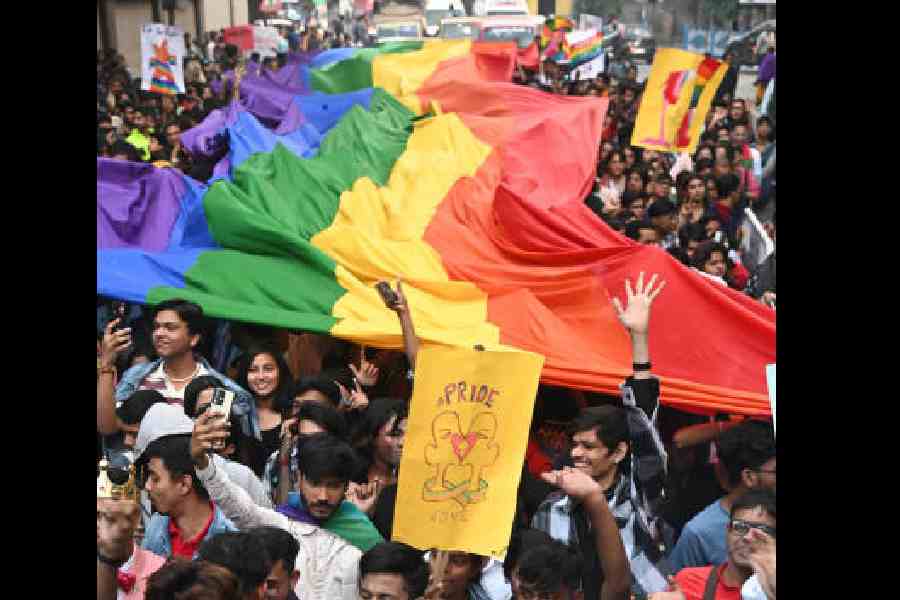
An amended law that many fear could push transgender individuals to the margins, along with concerns over unsafe housing and the possibility of being forced back into the closet, are shaping voting preferences of the city’s LGBTQIA+ community.
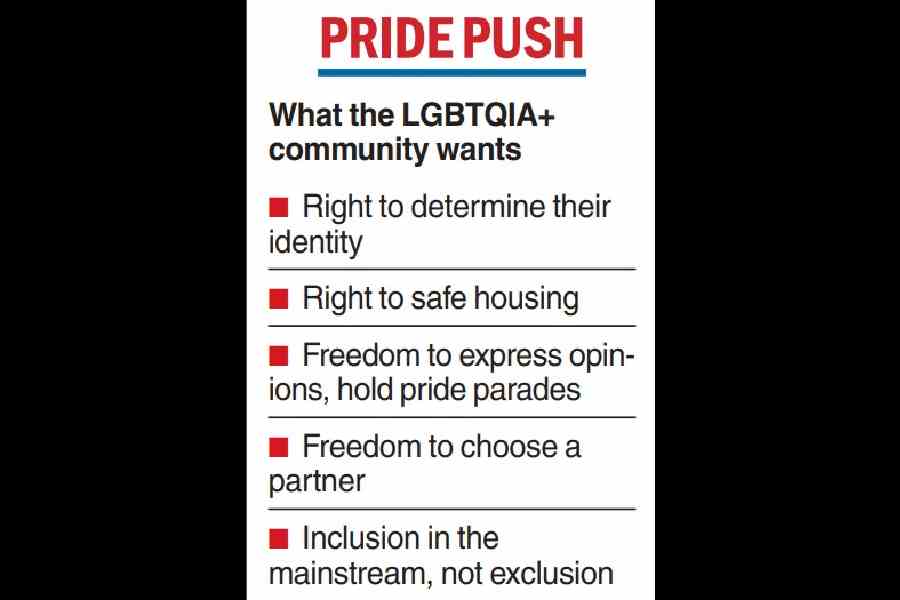
Across conversations over the past week, members of the community said they would support political parties that uphold inclusion and do not curb basic rights. Parties should, at the very least, stand in support of marginalised groups, even if their manifestos do not explicitly mention it, they said.
“Trans rights do not find a mention in political manifestos, but I will at least look for political parties that favour inclusion of those often excluded. At least the civic rights of the LGBTQIA+ community should not be taken away,” said Bappaditya Mukherjee, a bisexual cisgender man and gender rights activist.
Mukherjee added that Calcutta “should continue to provide the freedom to the community that it has so far”.
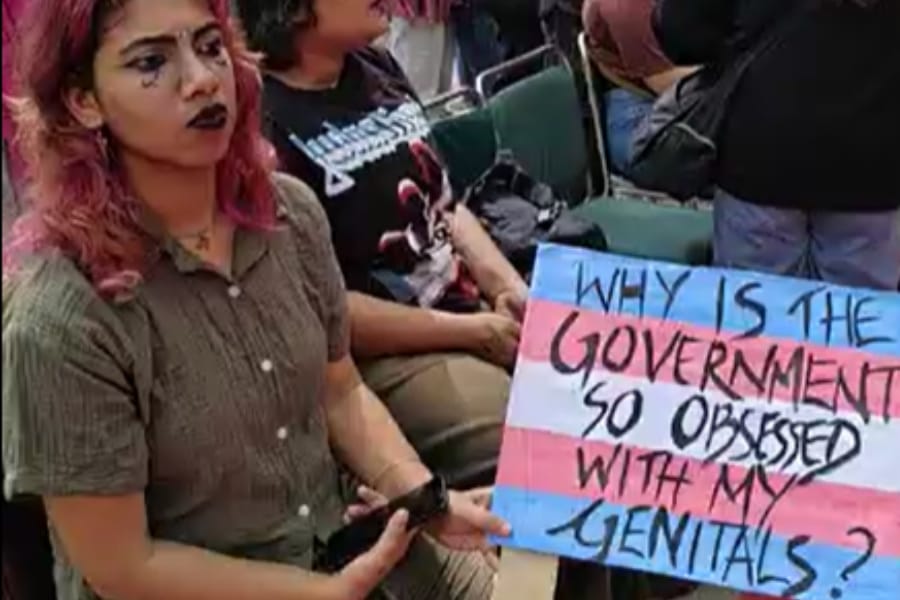

Many respondents emphasised the importance of preserving the city’s culture of openness. They said events like the pride parade must continue, and that community members should feel free to gather, speak and express themselves in public spaces such as Nandan, Rabindra Sadan, the Maidan and along the Hooghly.
“These are places where people sit, talk and express opinions. No one should be asked to leave. Two women should be able to hold hands, and two effeminate boys should not be bullied. If they face harassment, the state machinery must support them, not prosecute them,” Mukherjee said.
Concerns about restrictions on personal choice cut across age groups. Community members said they fear increased surveillance or control over fundamental aspects of life. “There should be no restrictions on what we eat, who we love or with whom we choose to live,” one person said.
Calcutta goes to the polls on April 29. While many from the community will vote, others have found their names deleted from the electoral rolls during the SIR.
“People are being denied the right to vote in a democracy, and I still believe that we are living in a democracy,” said Koyel, managing trustee of Sappho for Equality, an
organisation working for social justice for individuals with diverse gender identities and sexual orientations. Koyel identifies as a non-binary lesbian.
A key concern influencing voting decisions is the Transgender Persons (Protection of Rights) Act, which omits a clause that recognised a transgender person’s right to self-identify.
“A lot of transmasculine people who were included under the transgender umbrella may no longer be considered trans. This has affected mental health, and their citizenship is at stake,” Koyel said.
State-sanctioned discrimination has far-reaching consequences for the transgender community. It affects everyday living. “Family violence may increase, livelihoods may suffer and people could be pushed back into the closet or become afraid to seek essential services,” said psychiatrist Ranjita Biswas, who identifies as a queer cis woman.
Members of the community pointed out that marginalisation often begins within the natal family, forcing many queer and trans individuals to leave home due to violence or aggression.
“Finding safe housing remains a challenge. Unconscious bias persists and landlords are often unwilling to rent to us. We want a government that addresses these gaps,” Koyel said.
They added that broader issues — from the LPG crisis to restrictions on gig workers — affect the LGBTQIA+ community as much as any other group.
“Most governments do not think about us. But we are tax-paying citizens, too. Many in our community lost jobs during the state’s teacher recruitment fiasco and received no family support. That creates a double marginalisation,” Koyel said.
Psychiatrist Biswas also raised concerns about workplace discrimination. “If the state fails to recognise someone’s identity, where do they seek redress?” she said. “In a workplace, a transgender person may not even be able to assert the need for appropriate washroom access. It is regressive and denies basic rights.”